
About FOODWISELAB
FOODWISELab is a digital food literacy programme designed to support teenagers, educators and families in making healthy and sustainable food choices. This initiative forms part of the Agro@tecverde project and is funded by the Recovery and Resilience Plan (PRR).
Based on scientific evidence and best educational practice, FOODWISELab provides interactive, age-appropriate resources for pupils aged 12 to 14 and 15 to 17, as well as content aimed at teachers and families.
At the heart of the programme is the Mediterranean diet, not only as a model of healthy eating, but also as a symbol of a cultural heritage and environmental sustainability.
Our Approach

|
Face-to-Face Activities
|
It encourages healthy behaviours through gamification and in-person activities, such as workshops, cookery sessions and visits to local producers.

|
Food Education
|
It supports formal and non-formal nutrition education, in line with national and European health promotion targets, thereby enhancing nutritional literacy and equity amongst the population.

|
Family Involvement
|
It values flexibility and inclusion and offers content tailored to a variety of student profiles, encouraging families to get involved in the educational process.

|
Teaching Materials
|
It promotes food literacy through accessible and useful educational content, games, infographics, quizzes and nutritional and ecological footprint calculators.

|
Created by everyone, for everyone
|
All the resources are created with input from teenagers, educators and experts in nutrition, education and digital media.
Mission
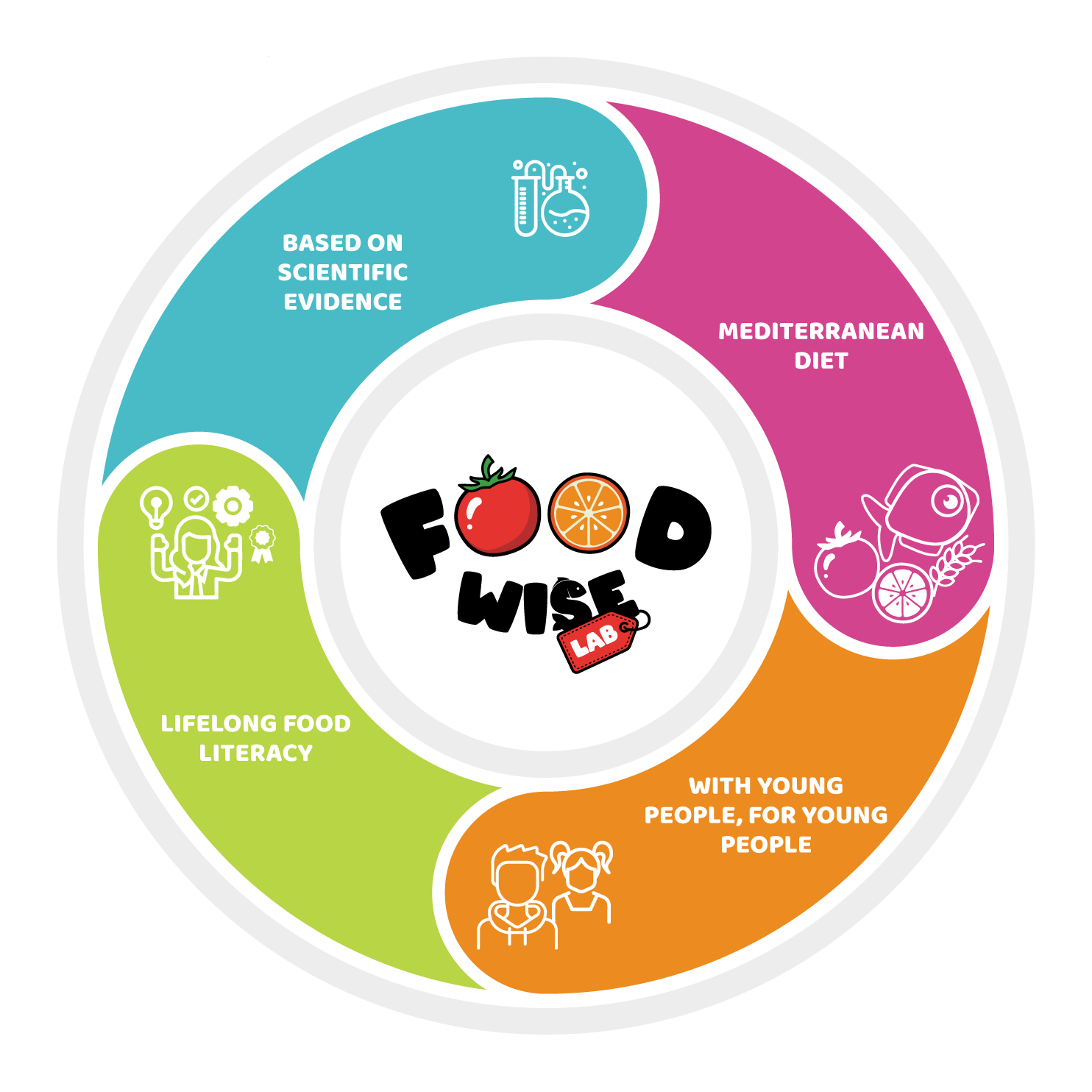
The content and activities of FOODWISELab are:
-
based on current scientific evidence and in line with public health recommendations.
-
rooted in the principles of the Mediterranean diet, emphasising variety, seasonality, cultural identity and sustainability.
-
designed to address the real obstacles and motivations that young people face in their food choices.
-
designed to encourage critical thinking, digital engagement and health-promoting routines, both online and offline.
FOODWISELab aims to be a trusted educational partner, supporting schools, families and communities in raising a generation that eats wisely, lives sustainably and understands that food is more than just a source of energy; it is knowledge, identity and power.
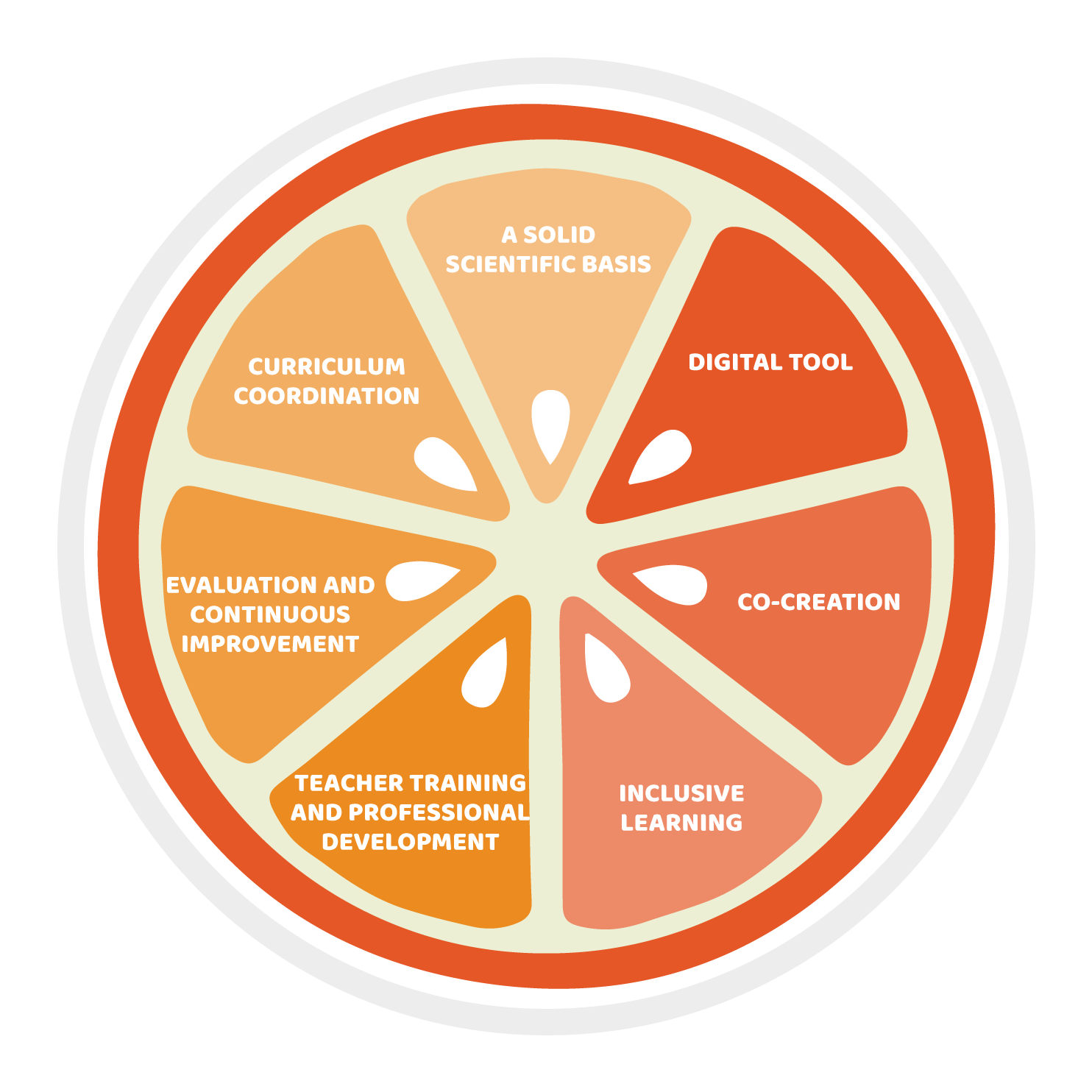
- The programme is in line with national educational objectives and promotes health and sustainability through food education.
- It is based on a progressive framework for food literacy underpinned by scientific research.
- It provides digital, flexible and editable resources that teachers can adapt to their own context.
- It caters for a range of learning styles and educational settings, including school, extracurricular and family contexts.
- It supports the professional development of teachers through innovative, evidence-based tools.
- It has been developed with the involvement of teachers, nutritionists, researchers and specialists in educational technology.
- It is constantly envolving based on feedback from students, teachers and families, ensuring its relevance and impact.
-
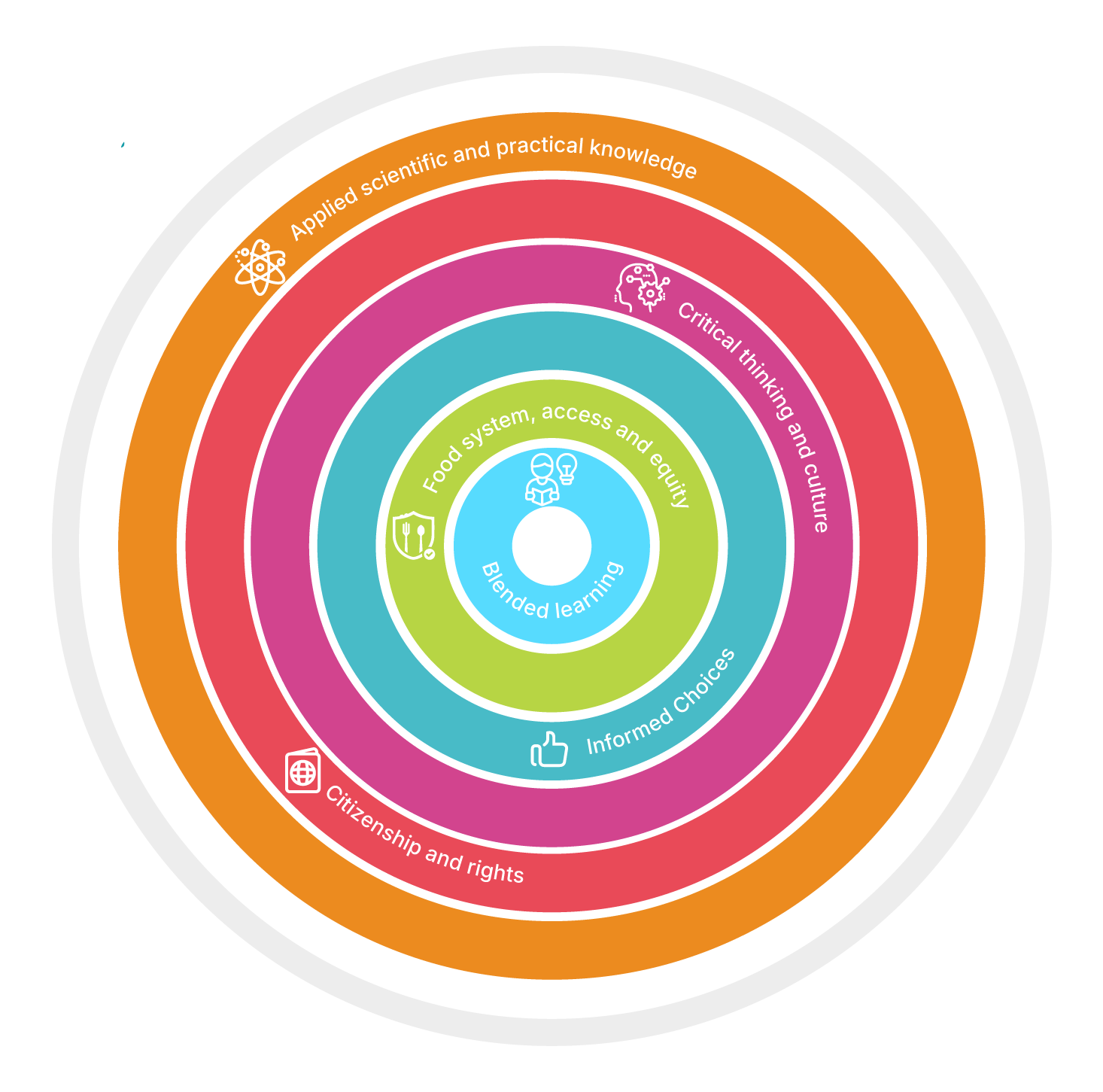
To empower teenagers to make informed, independent and sustainable food choices.
-
To develop scientific and practical knowledge of food, nutrition and health, with a focus on the Mediterranean diet.
-
To raise awareness of food production, processing and access to food in different social, economic and environmental contexts.
-
To encourage critical thinking and cultural reflection on food choices, taking into account sustainability, equity and well-being.
-
To promote intergenerational learning and the meaningful involvement of families and schools in fostering healthier food cultures.
-
To strengthen the role of food literacy in upholding the rights to health, education and environmental protection.
The FOODWISELab resources are developed in line with educational priorities and public health objectives in Portugal; they cover the 12 to 17 age group and support inclusive learning pathways that respect each pupil’s pace and context. The language is clear and accessible; the digital resources are compatible with different devices and include guidance on adapting them to various teaching and learning scenarios.
The teaching framework comprises four key dimensions — planning, selecting, preparing and eating — inspired by the principles of the Mediterranean diet. The programme is progressive and spiral-based; pupils revisit key ideas in greater depth over time, starting with eating habits, the origin of food and basic skills, and moving on to topics such as sustainability, environmental impact, food waste, food systems and equitable access to healthy food.
The resources are designed to be flexible in their use; some are intended for independent use, whilst others are designed to be used with support from families, teachers or older students acting as peer mentors. They are available in various formats, including interactive worksheets, practical guides, short videos, challenges and project guides, for use in the classroom, in extracurricular settings and at home.
All content is aligned with the curriculum units, regardless of age group, and includes alignment charts and suggested lesson sequences organised by learning objectives. Teachers are encouraged to select and adapt the activities based on their professional judgement and the context of each class, making use of formative assessment tools, simple rubrics, checklists, and opportunities for self-assessment and reflection, which support the monitoring of progress and continuous improvement.
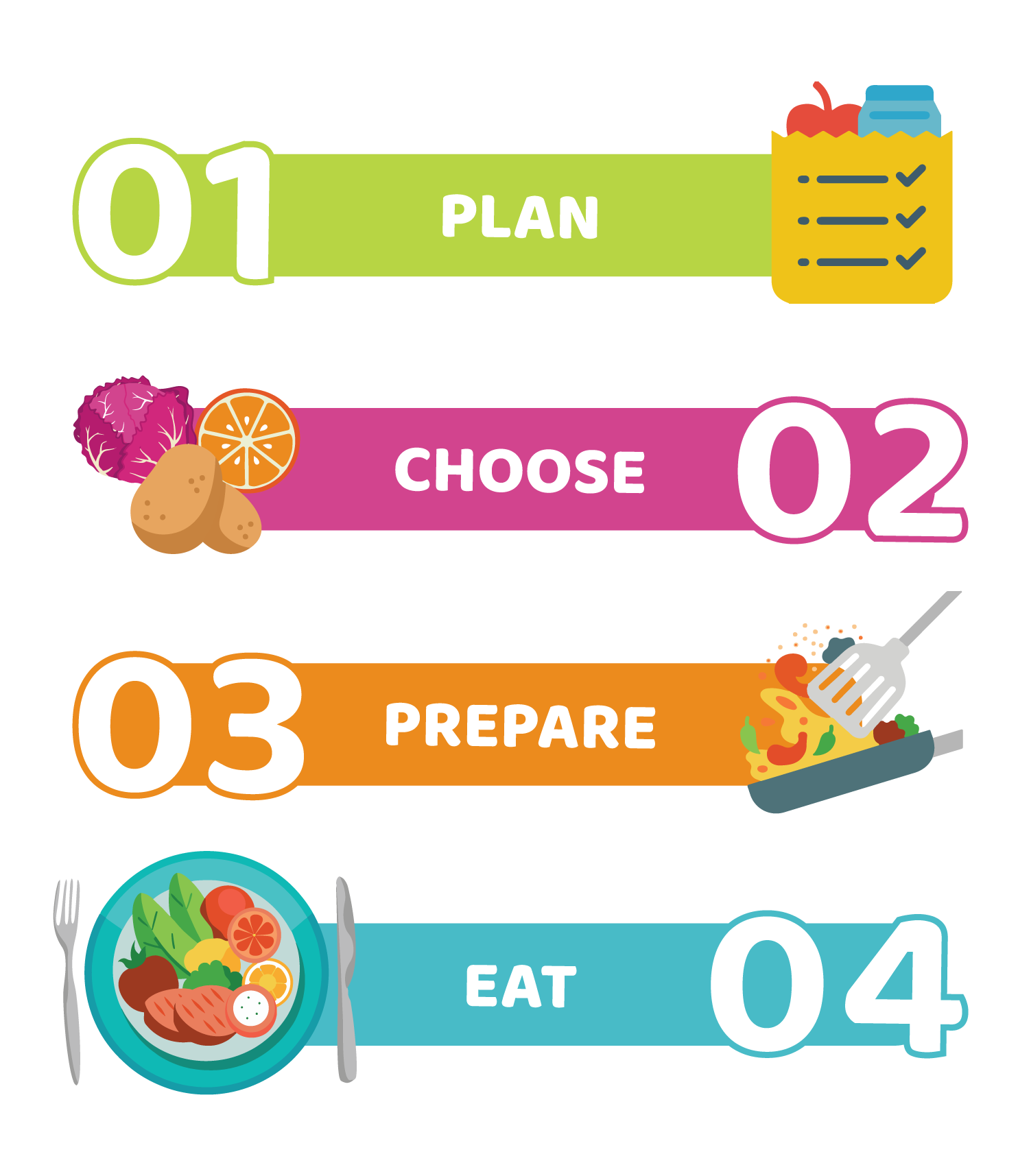

The content is organised into two age groups (12–14 and 15–17), but, regardless of age, it follows the same teaching strategy: planning, selecting, preparing and eating. The progression is spiral-based, revisiting key ideas in increasing depth, from the fundamentals to practical applications and citizenship.
We work across four interlinked areas: food and digital literacy, sustainability and the environment, culture and identity, and food systems and everyday choices. The combination and emphasis vary depending on the context and the learning objectives.
The materials are modular and adaptable; some are designed for independent use, whilst others are intended to be used with the support of families, teachers or older students, through peer mentoring. They are aligned with the curriculum units and can be used in the classroom, during extracurricular activities or at home.
FOODWISELab is a living project; its content evolves in line with scientific evidence and feedback from pupils, teachers and families.
The development of FOODWISELab is based on a rigorous review of the scientific literature and a participatory research process.
This work culminated in the publication of two peer-reviewed articles:
- Silva, P. (2025). Enhancing Adolescent Food Literacy Through Mediterranean Diet Principles: From Evidence to Practice. Nutrients, 17(8), 1371. https://doi.org/10.3390/nu17081371
- Silva, P. (2025). Adolescents’ Perceptions of Sustainable Diets: Myths, Realities, and School-Based Interventions. Sustainability, 17(12), 5323. https://doi.org/10.3390/su17125323
- Silva, P. (2026). Teaching Taste: The TASTE–MED Conceptual Framework for a Multisensory Mediterranean Approach to Food Literacy in Adolescence. Nutrients, 18(4), 635. https://doi.org/10.3390/nu18040635
- Silva, P. (2026). Digital Interventions Targeting Sugar-Sweetened Beverage and Energy Drink Consumption in Adolescents: A Promising but Fragmented Field. Beverages, 12(5), 55. https://doi.org/10.3390/beverages12050055
These studies validate the structure, objectives and implementation strategy of FOODWISELab, establishing it as a scientifically robust and culturally relevant intervention for Portuguese adolescents.
The name FOODWISELab captures the essence of the project: a space where teenagers, educators and families can become more knowledgeable about food through science, reflection and practice. It is both a digital learning laboratory and a platform for fostering informed, responsible and sustainable eating habits, guided by the values of the Mediterranean diet and underpinned by scientific integrity.

In Contact
Address Rua de Jorge de Viterbo Ferreira 228, 4050-313 Porto


