People: food and health
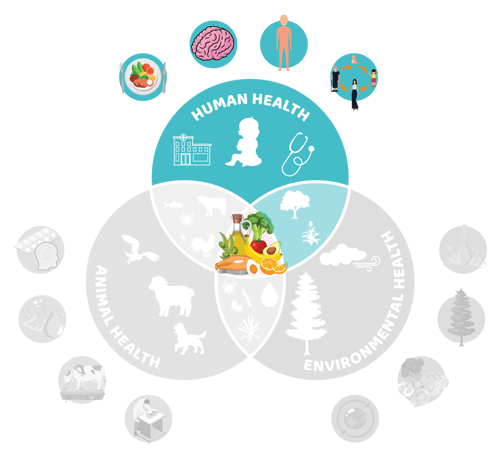
Food is one of the most direct and ongoing forms of interaction between people and the world around them. What we eat is the result of individual decisions, but also of production systems, environmental conditions, cultural practices, and social and economic contexts. Within the One Health framework, human health is not viewed as an isolated phenomenon, but as the result of this network of interactions between food, the environment, animals and society.
Food influences much more than just growth, body weight or available energy. It has a direct impact on brain function, hormonal balance, stress response, sleep, eating behaviour and emotional well-being. These effects become particularly relevant during adolescence, a phase marked by profound biological and neurological changes, in which the body exhibits high plasticity and sensitivity to everyday exposures.
Science shows that health does not depend on a single behaviour or one-off choice, but on the cumulative effect of exposures over time. This set of influences, which includes dietary patterns, food quality, exposure to contaminants, stress, sleep and the social environment, is known as the exposome. In this context, diet plays a central role, acting both as a source of essential nutrients and as a route of exposure to factors that may either protect or compromise future health.
Food safety and quality are therefore key determinants of human health. Microbiological contamination, chemical residues or hygiene failures throughout the food chain can have consequences for health, even when the diet appears to be nutritionally adequate. The One Health approach to food safety highlights that protecting people also means protecting ecosystems, ensuring responsible practices in animal and plant production, and guaranteeing control and surveillance at every stage, from farm to fork.
Throughout life, balanced, culturally appropriate dietary patterns based mainly on fresh and minimally processed foods are associated with a lower risk of chronic non-communicable diseases, better mental health and a higher quality of life. Eating is a complex behaviour, influenced by emotions, habits, family and social environment, food availability and economic circumstances. Understanding this complexity helps us develop a more mindful relationship with food and reinforces the central idea of One Health: looking after human health often begins on the plate, but always depends on wider systems that connect people, animals and the environment.

Before you start eating, pause for a moment and think about where your meal comes from. What foods does it consist of, how were they produced, and how do they contribute to your health today and in the future? This small gesture helps you realise that every meal connects your body to the environment and to the people involved in producing the food.
FOODWISELab Challenge

Over the course of a day, choose a meal and mentally trace its journey ‘from farm to fork’. Identify at least three decisions along that journey that could influence human health, such as the method of production, food preservation or the final choice on the plate. Finally, reflect on how small choices, repeated over time, can have an impact on health throughout one’s life.