Animals: welfare and food safety
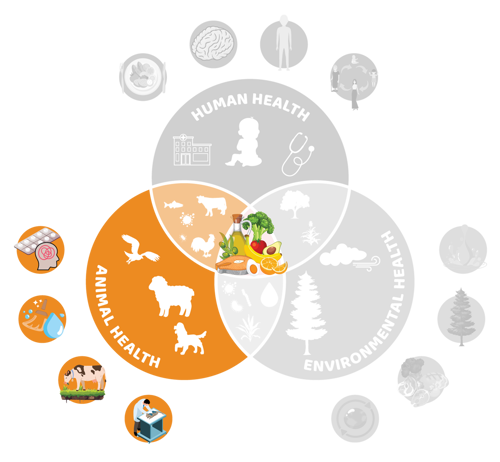
Within the context of One Health, animals are not viewed merely as a source of animal-derived food, such as meat, milk or eggs. They are an integral part of living systems that directly influence food safety and quality and, consequently, human health. In modern food chains, which are becoming increasingly long and interconnected, a problem originating in an animal, on a farm or at an early stage of processing can spread rapidly, affecting a large number of people. Prevention, therefore, before food reaches the kitchen, is one of the central pillars of food safety.
Animal welfare plays a fundamental role here. Adequate housing conditions, a balanced diet, access to water, stress-minimising husbandry practices and regular veterinary monitoring contribute to healthier animals and more stable, predictable production systems. When these conditions are not met, there is an increased likelihood of disease, the need for corrective measures and failures throughout the food chain, with a direct impact on the safety of the food reaching the consumer. The relationship between how animals are kept and the quality of animal-derived products is one of the clearest examples of the One Health approach applied to food.
The link between animal health and human health is particularly evident in the field of food hygiene and safety. Many microorganisms capable of causing disease in humans may be of animal origin and reach humans through the consumption of contaminated food or indirect contact with environments and excreta. For this reason, food safety depends on an integrated understanding of these pathways and the implementation of preventive measures throughout the entire chain – from production and transport to slaughter, collection and processing – and not merely on the practices adopted at the final stage of food preparation at home.
This One Health approach also applies to pets, such as dogs and cats, because living in close proximity creates daily points of contact between animal health and human health. Having a pet at home can bring real benefits to one’s well-being, but it involves care routines that make this relationship safer for everyone. Prevention, in this context, involves monitoring the animal’s health with the vet, ensuring vaccinations and worming treatments are carried out as recommended, maintaining simple hygiene habits (for example, washing your hands after cleaning the litter tray or picking up faeces) and paying particular attention to those who are most vulnerable, such as babies, pregnant women or people with weakened immune systems. The aim is not to be afraid of living with pets, but to realise that, when living in close proximity, the health of one inevitably affects the health of the other, and prevention is what maintains this positive bond.
In this context, the responsible use of antibiotics is a key issue. Antimicrobials are essential for treating infections when clinically indicated, but excessive or inappropriate use contributes to the development of antimicrobial resistance. The One Health approach emphasises the importance of reducing the need for antibiotics through disease prevention, clear prescribing guidelines and monitoring of use, both in animal production and in veterinary medicine for companion animals. Antimicrobial resistance is a shared problem, with consequences for animal, human and environmental health.
In short, healthy animals contribute to safer food and healthier people because they reduce risks at source, make production and coexistence systems more robust, and lower the likelihood of contamination and belated corrective action. Understanding this link helps us realise that safety and health begin long before the food reaches our plates, and also within our own homes, in the way we care for the animals we live with.

If you have a dog or a cat, consider two simple routines that protect the whole family: keeping up to date with veterinary check-ups and stepping up hygiene in the most ‘critical’ situations, such as the litter tray, picking up waste and cleaning the areas where your pet eats.
FOODWISELab Challenge

Choose a time of day when you interact with your pet (feeding, walking, cleaning the litter tray or playing). Identify a small improvement that enhances both your and your pet’s safety and wellbeing, and put it into practice for a week. At the end, write two sentences: one about what has changed for your pet and another about what has changed for you or your home.