Planet: environment and sustainability
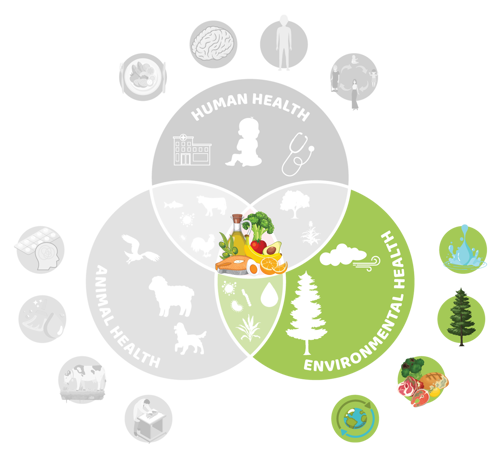
Within the One Health framework, the planet is not merely the setting in which food is produced: it is a living system that directly influences the health of people and animals. Soil, water, air, biodiversity and climate form the basis of food systems and determine what food can be produced, in what quantity, to what standard and with what long-term impact. When these natural systems are degraded, the ability to ensure safe, nutritious and accessible food is compromised.
Food production places significant pressure on the environment. Intensive land use, water consumption, biodiversity loss, greenhouse gas emissions and the contamination of ecosystems are some of the challenges associated with current food systems. However, these impacts are not inevitable. More sustainable agricultural practices, respect for natural cycles, the protection of biodiversity and the responsible management of natural resources all contribute to more resilient food systems, capable of protecting both the environment and human health.
Food waste is a clear example of how choices made throughout the food chain affect the planet. When food is wasted, all the resources used to produce it – water, energy, soil, labour and transport – are also lost, and emissions associated with waste management increase. Reducing waste is therefore one of the most effective ways of minimising the environmental impact of food, without compromising the nutritional quality of meals.
In this context, the Mediterranean diet emerges as a dietary model that is particularly aligned with environmental sustainability. Based mainly on plant-based foods, seasonal and local produce, simple cooking methods and a celebration of dietary diversity, this dietary pattern simultaneously promotes human health and the protection of ecosystems. More than just a list of foods, the Mediterranean Diet reflects a way of relating to food that respects the local area, food culture and the planet’s natural limits.
The food choices we make every day – what we buy, what we cook, what we waste or make use of – have a cumulative impact on the environment and on the availability of resources for future generations. Understanding this connection helps us realise that caring for the planet is not an abstract idea: it begins with concrete decisions, repeated over time, which shape food systems and environmental health.

When planning a meal, think not only about what’s good for your body, but also about what’s good for the planet. Choosing seasonal produce, reducing waste and making the most of simple ingredients are small choices that help protect natural resources.
FOODWISELab Challenge

For a week, keep track of the food that goes to waste in your home. Identify a situation where this waste could have been avoided, for example through better planning, storage or reuse. At the end, write a sentence about how this change could benefit the environment and another about how it could make your daily life easier.