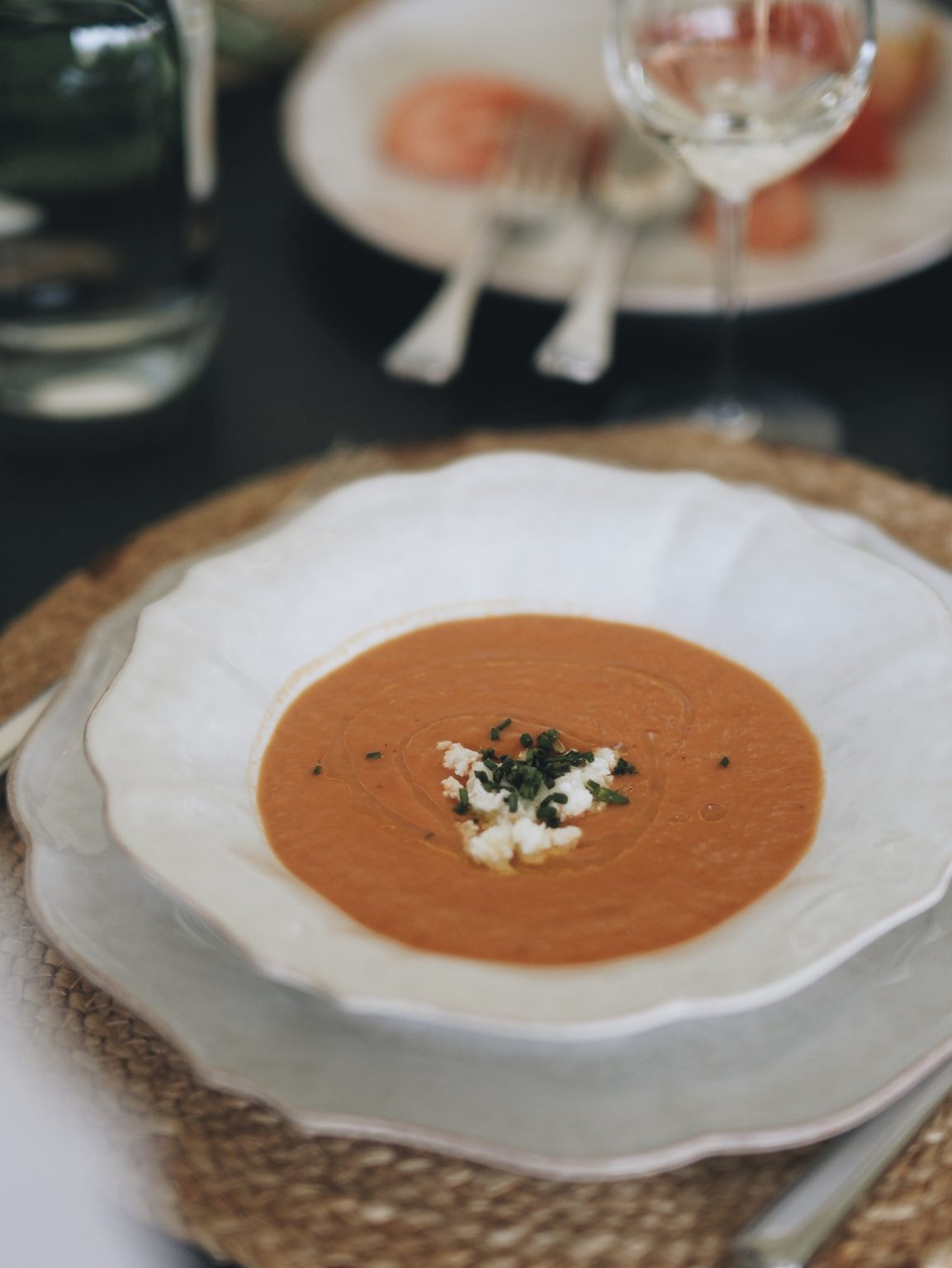
Tomato Soup
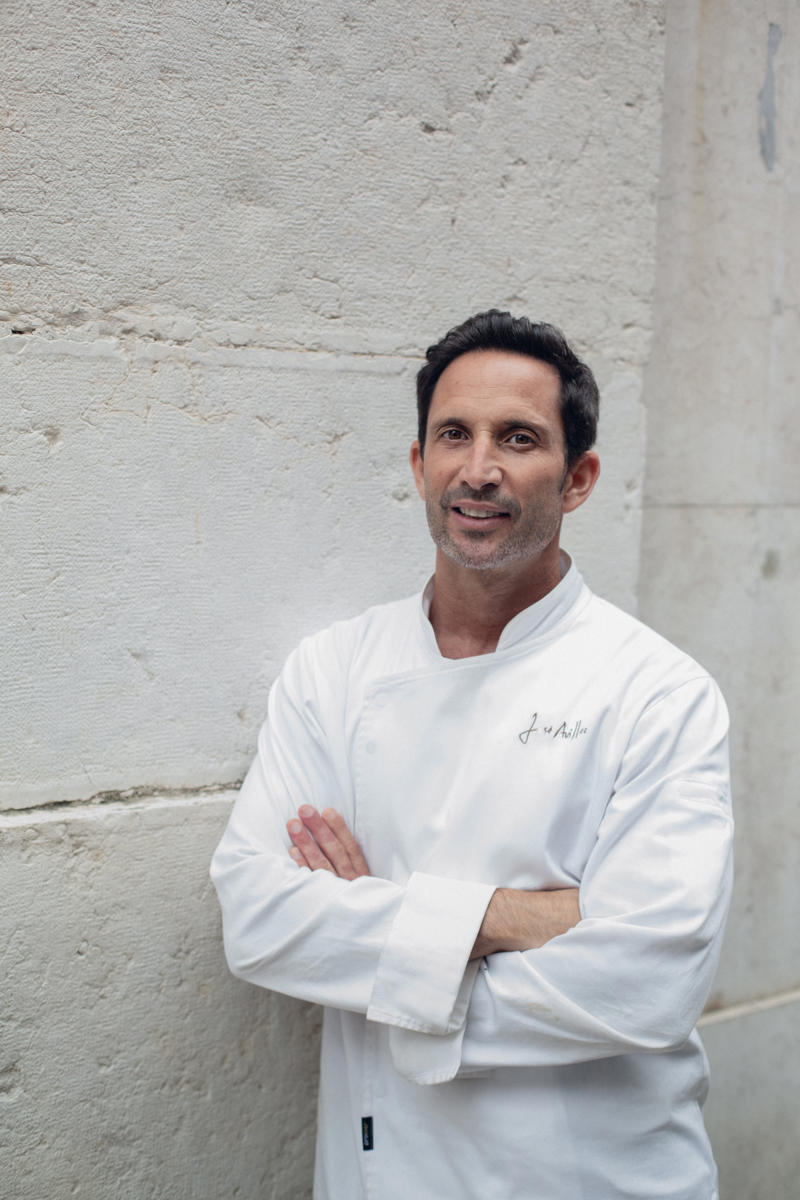
José Guedes

6 person/people
Ingredients:
- 2kg of very ripe tomatoes; if they’re “coração de boi” tomatoes from the Douro, so much the better
- 600 g of peeled onions, cut into segments
- 2 peeled garlic cloves
- 200 ml olive oil
- 10g mint
- 10g thyme
- “Fleur de sel”
- Black pepper
Preparation:
Preheat the oven to 180ºC. Wash and cut the tomatoes into wedges. Place the onion, tomatoes, garlic, thyme and 100 ml of olive oil in an ovenproof dish. Season with a little “fleur de sel” and roast for 20–30 minutes until the onion is lightly caramelised and tender. Leave to cool and, once lukewarm, blend everything together. Add the remaining olive oil and the mint, then blend the mixture again. If the mixture is too thick, add a little water. Adjust the seasoning with “fleur de sel” and pepper.
This soup can be served cold with a little crumbled quark, or hot with a nice slice of sourdough bread toasted with olive oil. As a tip, this soup can also be used as a base or tomato sauce for various dishes, such as pasta, pizza or rice.
The Mediterranean diet is part of our identity; it forms part of our culinary heritage and is something we follow instinctively. Although there are some culinary schools of thought that argue that the Atlantic diet best represents the traditional cuisine of the north of the country, I think it is undeniable that the foundations of Mediterranean cuisine are deeply rooted in our own culinary traditions.
Vegetables – particularly soups and salads – and fruit, which is often served as dessert, form part of our everyday diet. Carbohydrates such as bread, rice, pasta and potatoes – which are sometimes even combined – as well as beans and chickpeas, feature heavily in our cuisine. And, of course, olive oil is an essential ingredient in the preparation of all other dishes.
Nowadays, with the improvement in socio-economic conditions, we eat far more meat and fish than this diet recommends, but we can still say that the basic principles remain the same.
The truth is that during the many years I worked in the restaurant industry, the need for consistency and regularity in the products offered to customers was a priority, which meant that the seasonality of food was not particularly relevant. Supply chains ensure that everything is available at all times.
However, in recent years, the issue of local suppliers and choosing seasonal produce has become a challenge that is both relevant and important to me.
Later, when I took on the challenge of running the canteen at Quinta de Ventozelo, all of this became a reality. In the farm’s vegetable gardens, we follow the changing seasons and view them as challenges to harvest precious culinary resources from nature, whilst respecting their optimal ripening time and freshness, with the aim of providing the very best produce to our customers.
Furthermore, we have managed to forge partnerships with a number of local suppliers who develop products that stand out in terms of flavour and Portuguese culinary heritage.
Choosing the ingredients is the first step; minimally processed ingredients from low-intensity farming are naturally tastier and healthier. We have also been keen to reduce the amount of animal protein in our dishes and to give greater prominence to vegetables.
To cook more healthily, the advice is to cook as simply as possible. This way, most of the essential nutrients are preserved. Be moderate in your use of fats, always opting for olive oil, and use salt sparingly. To bring out the flavour, make the most of aromatic herbs.
José Guedes

In Contact
Address Rua de Jorge de Viterbo Ferreira 228, 4050-313 Porto