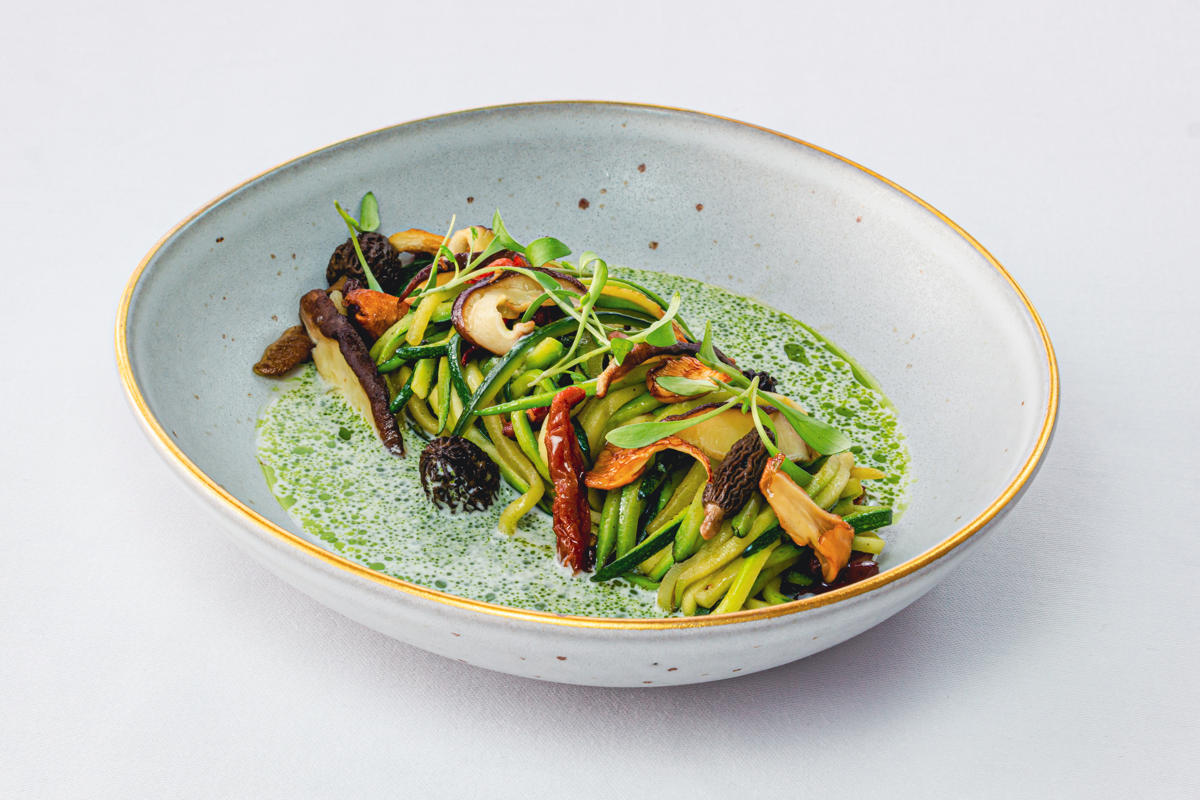
Zucchini and Mushroom Noodles
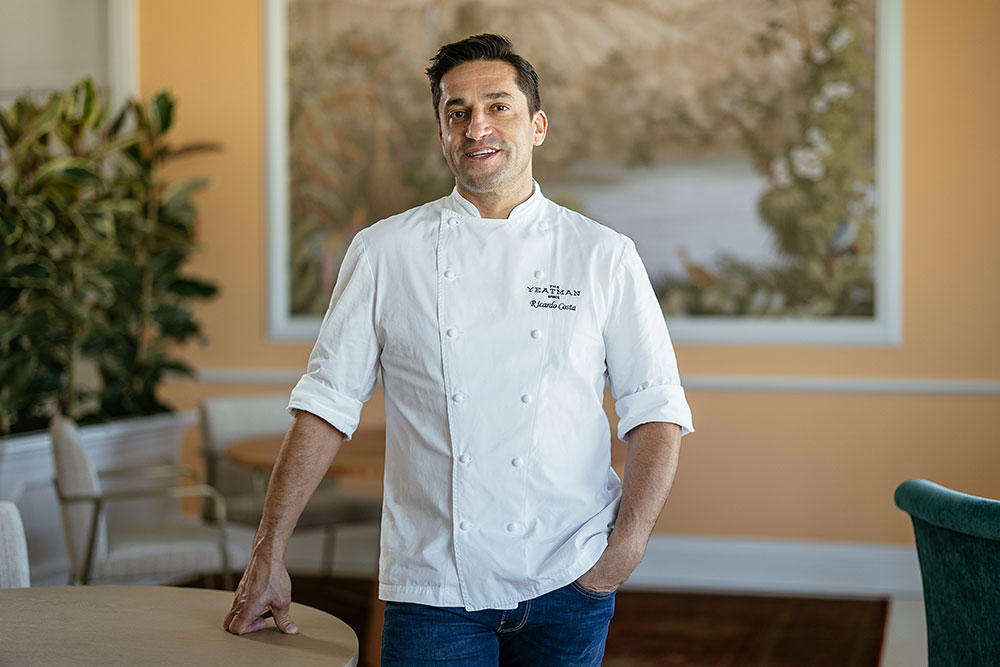
Ricardo Costa

1 person/people
Ingredients:
- 300g zucchini
- 60g fresh mushrooms
- 8g sun-dried tomatoes
- 20g olives
- 25g onion
- 50g olive oil
- “Fleur de sel” – to taste
- Coriander – to taste
Preparation:
Wash the zucchini thoroughly.
Cut the zucchini into long julienne strips using a mandolin, so that you end up with long strips with the skin still on. Place a frying pan on the hob, add olive oil and onion, and leave to caramelise.
Add the mushrooms and sun-dried tomatoes and leave to cook thoroughly.
Add the chopped zucchini and the pitted, sliced olives.
Sauté all the ingredients and season with salt.
Just before removing from the heat, add the coriander leaves.
Serve immediately.
TECHNICAL TERMS
Mandoline – A kitchen utensil used to cut vegetables in various ways.
Julienne – The name given to a method of cutting vegetables into thin strips.
Confit – Cooking slowly in fat, without frying, at a low temperature.
Noodles – A name associated with a type of pasta, but in this case, it refers to the effect created by the zucchini.
Tips
This dish can be served as an accompaniment to fish or meat. You can also serve it with various types of seafood and shellfish, or even other vegetables.
NOTES
It is important to turn up the heat as soon as you add the zucchini, so that it retains its juiciness and appearance. If it is overcooked, it will lose its juices, colour and texture, completely spoiling this dish.
The importance of a healthy diet;
As a chef, I believe that eating well is a way of looking after ourselves – with pleasure, respect and mindfulness. Mindful eating begins long before the food reaches the plate: it starts with the choice of produce, our connection to the local area and the way we respect the natural cycle of food. What we eat affects our bodies, our energy levels and even our emotional state. That is why it is essential to value the produce, the technique and the knowledge.
The value of the Mediterranean diet;
The Mediterranean diet is an excellent example of this balance. As well as being one of the healthiest diets in the world, it is also deeply rooted in cultural identity. It is based on simple, wholesome ingredients, such as vegetables, fruit, olive oil, fish and cereals, and on a seasonal approach that teaches us to eat in harmony with the seasons rather than against them. It is a model that combines nutrition, flavour and sustainability, and one that must be preserved and passed on, above all, to younger generations.
The importance of eating seasonal produce and buying from local producers;
In my kitchen, I always prioritise seasonal and locally sourced produce. When an ingredient is at its peak – authentic and full of flavour – all you need to do is treat it with respect and bring out its best through skilful preparation. Furthermore, working with local producers builds a relationship of trust and closeness that is reflected in the quality of the dish. This choice is not just a matter of flavour: it is a conscious decision that supports the local economy and reduces our ecological footprint.
How can you eat a healthy and tasty diet;
There are still those who associate healthy eating with bland or restrictive dishes. My experience suggests exactly the opposite. A balanced diet can be incredibly delicious, provided you respect the essence of the ingredients. Through carefully refined stocks, well-thought-out combinations and the clever use of herbs and spices, it is possible to create light, balanced dishes full of character. Ultimately, it is about rediscovering our connection with what is genuine. Eating well is not just a trend; it is a responsibility towards our bodies, our culture and the planet.
Ricardo Costa

In Contact
Address Rua de Jorge de Viterbo Ferreira 228, 4050-313 Porto