
Mindful eating: the body–mind–food connection
Eating isn’t just a response to hunger. It involves emotions, attention, social context, habits and even expectations. Between the ages of 15 and 17, you gain more autonomy over what you eat: you choose snacks, prepare quick meals, buy food from outside and decide when and how to eat. That’s why understanding how you eat is just as important as understanding what you eat.
Mindful eating helps you to better understand your body’s signals, make choices that are good for your health and the planet, and cope with a food environment full of stimuli, advertising and ultra-processed options.
Your body speaks — can you hear it?
Three types of signals influence the way you eat:
a) Physiological hunger
- appears gradually
- you can eat a variety of foods
- feels better after eating
- is linked to hormones that regulate energy (ghrelin ↑, leptin ↓)
b) Emotional appetite
- appears out of the blue
- cravings for specific foods (sweet, savoury)
- arises from stress, boredom, sadness or anxiety
- is not related to energy requirements
c) Signs of satiety
- appear during the meal
- These include a feeling of warmth, a sense of well-being, a full stomach, and a loss of interest in taste
- It takes 10–20 minutes for them to reach the brain
Learning to distinguish between them is a core skill of food literacy.
Your body’s signals become clearer when you eat regular meals. Eating very irregularly, skipping breakfast, living on snacks, or eating large meals late in the day makes it harder to interpret feelings of hunger and fullness. Stable routines help your hunger hormones to function more predictably, making it easier to make balanced choices even on busier days.
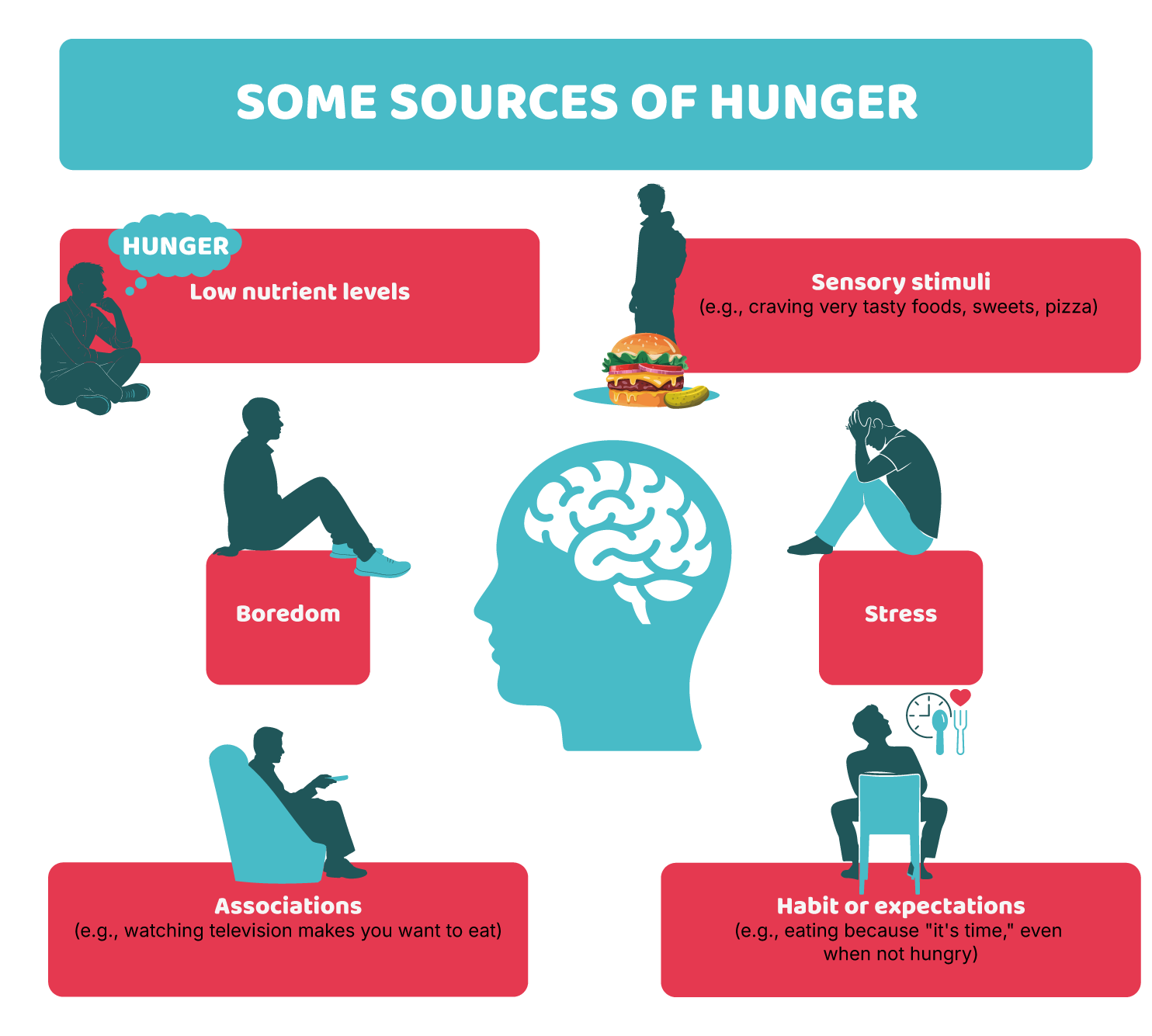
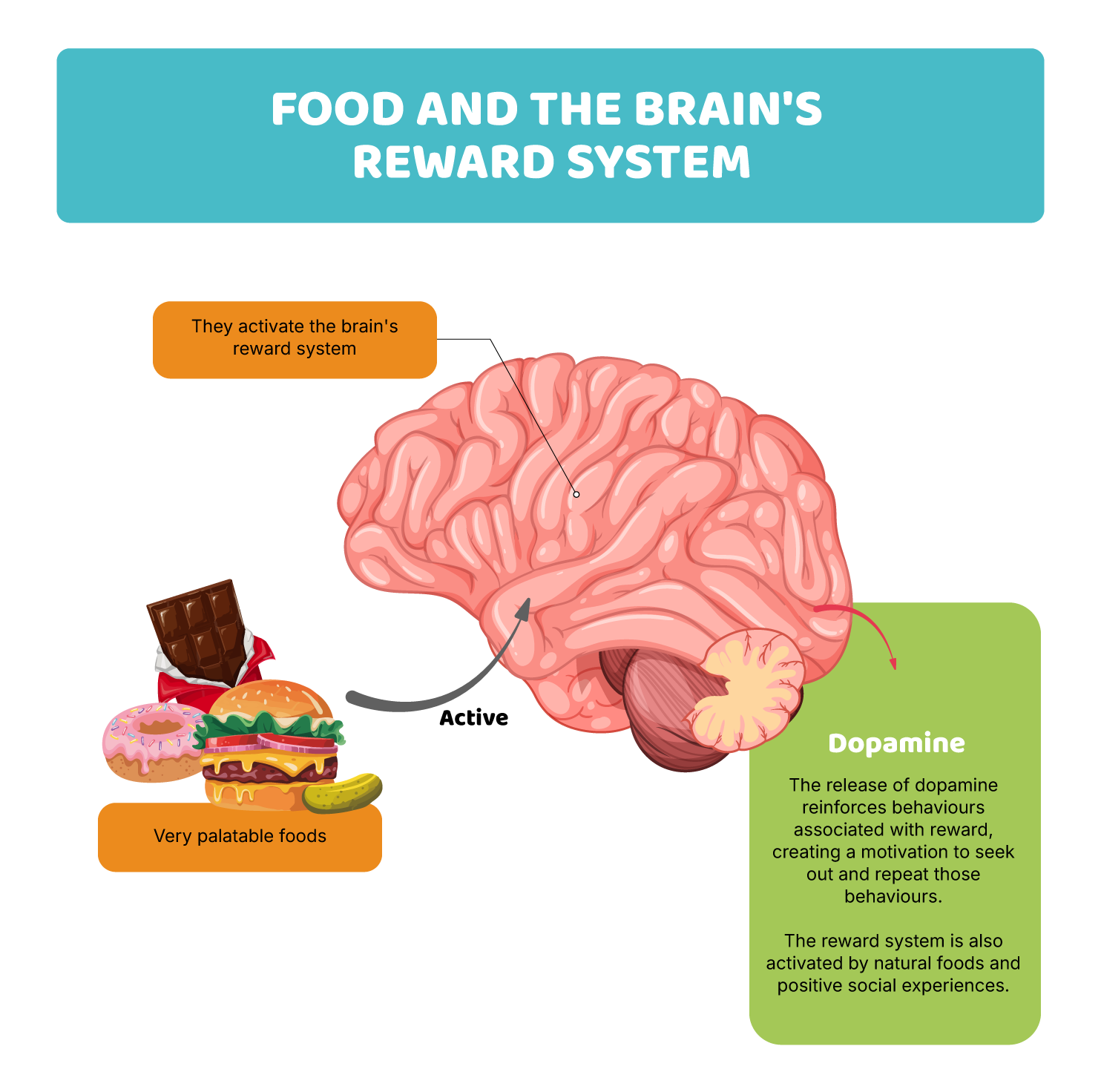
The brain’s stress and reward mechanisms directly influence eating behaviour. When under stress, the body releases hormones that increase cravings for very sweet or very salty foods. Short nights reduce leptin (the satiety hormone) and increase ghrelin (the hunger hormone), making it harder to recognise genuine signs of hunger. Understanding these mechanisms helps you make more mindful choices, even on the busiest of days.
The way you eat is influenced by:
- the environment (television, mobile phones, multitasking)
- speed (eating quickly reduces the feeling of fullness)
- stress (increases the desire for foods high in sugar and fat)
- sleep (short nights increase hunger and impulsive eating)
- advertising (encourages quick choices and ‘cravings’)
Adolescence is a time when the brain seeks more intense rewards. Understanding this helps you make more balanced choices.
It’s normal for your food choices to change on days when you’re particularly tired. When you’ve had little sleep or have a demanding day at school, your brain craves a quick energy boost, which increases your desire for foods high in sugar or fat. This doesn’t mean you’re ‘lacking willpower’: it’s biology. Recognising these patterns helps you to better plan healthy snacks for those days, avoiding impulsive decisions.
It isn’t a rigid technique; it’s a way of being during a meal.
The aim of mindful eating isn’t to eat less, but to eat more mindfully. When you’re truly mindful of what you’re feeling, the flavour and the pace of your meal, you’ll realise more quickly when you’re full, when you’re genuinely hungry and when you’re just eating out of habit. This mindfulness simplifies your choices and reduces overeating without the need for strict rules.
Small habits that make a big difference
- Take 2–3 deep breaths before you start eating.
- Take note of the smell, texture and temperature of the food.
- Eat without screens whenever possible.
- Work out whether you’re physically or emotionally hungry.
- Chew slowly — 20 chews per mouthful is a good aim.
- Take breaks whilst eating.
- Ask yourself: “Am I still hungry, or am I full now?”
Mindful eating and the Mediterranean diet: a natural combination
The Mediterranean dietary pattern promotes a balanced relationship with food because:
- provides complete and varied meals
- enjoys eating whilst seated and in company
- includes fresh, colourful and tasty food
- reduces ultra-processed foods, which alter the perception of fullness
- promotes regular eating patterns
Mindful eating is, in practice, a modern way of reviving ancestral habits from our food culture.
Mediterranean meals naturally encourage you to eat more mindfully. The inclusion of soup, vegetables, fresh produce and simple dishes reduces rapid spikes in blood sugar and keeps you feeling full for longer. Furthermore, the tradition of eating whilst seated and without rushing creates the perfect conditions for paying attention to your body’s signals, even when your day is packed with activities.
What does the science say?
Studies on adolescents show that:
- mindful eating improves hunger regulation
- reduces episodes of emotional eating
- decreases consumption of ultra-processed foods
- it improves body image
- it increases satisfaction with meals
- it helps with healthy weight management (without restrictive diets)

“Before taking your first bite, ask yourself this question: am I actually hungry, or do I just fancy a bite to eat?”
This single thought could change your whole relationship with food.
FOODWISElab challenge
Learn to eat more mindfully, recognising the signs of hunger, fullness and enjoyment, and understand how your surroundings and your focus influence the way you eat.
7 days of mindfulness at the table