
Advanced nutritional composition: beyond the basics
Over the past 12–14 years, you have explored fundamental concepts such as food groups, macronutrients and micronutrients. Now, the aim is to go beyond the basics: to understand how nutrients work together, how they interact with the body’s systems, and how food choices depend not just on numbers or calories, but on food matrices, bioavailability, nutritional density and processing.
This forms the basis of advanced nutritional literacy, grounded in current scientific evidence, helping you to make more informed, critical and independent choices.
Macronutrients: an integrated approach
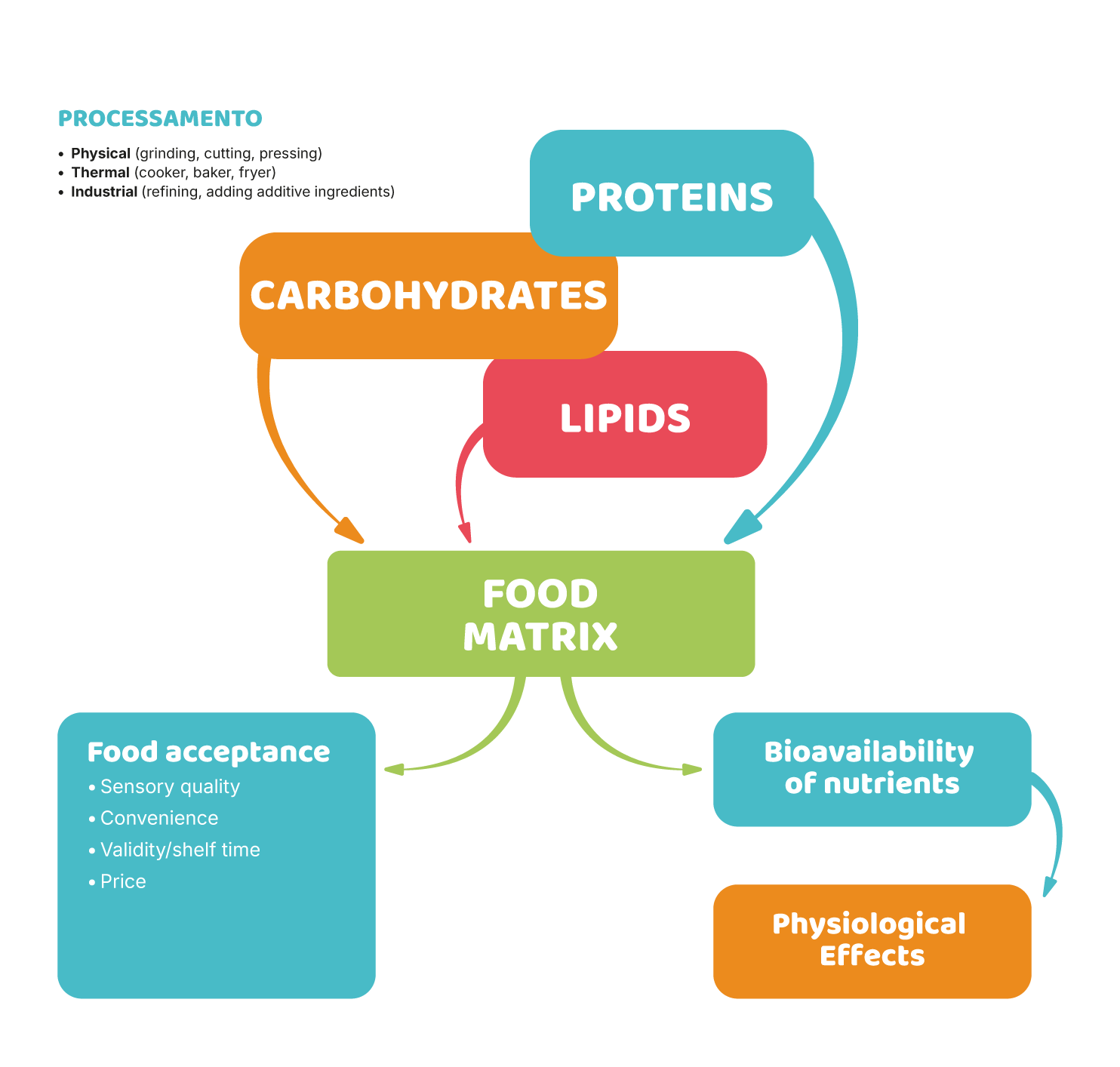
The food matrix refers to the way in which nutrients are organised within each food. This means that two foods containing the same amount of protein or fat do not have the same effect on the body.
Simple examples:
- 10 g of fat in olive oil ≠ 10 g of fat in a biscuit.
- 15 g of sugar in a piece of fruit ≠ 15 g in a soft drink.
- 200 kcal of nuts ≠ 200 kcal of crisps.
The matrix influences:
- • nutrient absorption (bioavailability),
• effect on blood glucose levels,
• satiety,
• gut health,
• inflammation,
• risk of chronic diseases.
These concepts explain why the quality of food matters more than simply counting calories.
The food matrix also determines how the body absorbs and utilises nutrients. For example, the iron found in plant-based foods is only absorbed efficiently when combined with vitamin C, whilst some natural components of whole grains, such as phytates, can reduce the absorption of minerals such as zinc and calcium. Furthermore, the way food is cooked alters its composition: frying a potato can triple its energy content compared to boiling it, thereby changing its impact on satiety and metabolic health.
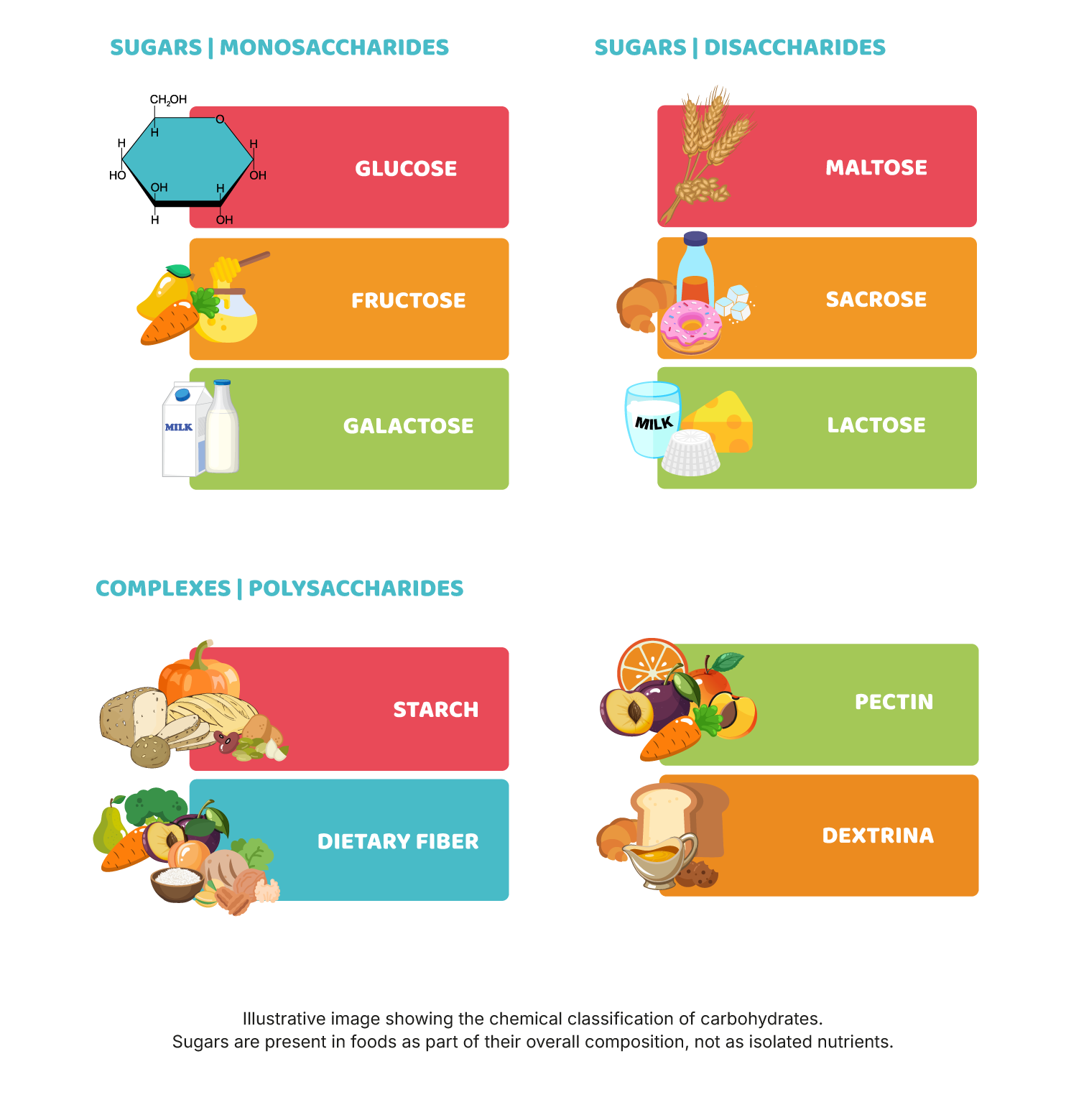
Carbohydrates are an important source of energy in the human diet. They are produced by green plants through a process called photosynthesis. Carbohydrates have two main functions:
- provide the body with energy (1 g provides around 4 kcal)
- have a ‘protein-sparing’ effect, allowing protein to be used for growth and repair rather than for energy
- provide dietary fibre to aid digestion and prevent bowel disorders.
The focus should not be on ‘avoiding carbohydrates’, but on ensuring quality and balance.
There are two groups of carbohydrates:
- simple
- complexes
Simple carbohydrates (juices, soft drinks, sweets):
- rapid absorption, blood glucose spikes, reduced satiety.
Complex carbohydrates (wholemeal cereals, potatoes, pulses):
- gradual release of energy,
- more fibre,
- microbiota nutrition.
The context of a meal affects the impact of carbohydrates: combining them with fibre, healthy fats and protein reduces glucose spikes. Another important distinction at this age is knowing how to tell the difference between sugars naturally present in food and added sugars. The natural sugars in fruit are accompanied by fibre, water, vitamins and antioxidants, which lessen their impact on blood glucose levels. Added sugar, on the other hand, found in fizzy drinks, biscuits and sugary cereals, provides only energy, without any vitamins or minerals, and increases the risk of tooth decay, blood glucose spikes and excessive energy intake. Many added sugars appear under different names on labels (such as glucose, maltose, dextrose or maize syrup), so it is important to learn how to identify them.
Effects of a very low carbohydrate intake
It is uncommon as a long-term dietary pattern, but it can occur in very restrictive diets.
| Effects | Why does this happen? |
|---|---|
| Lack of energy / tiredness | Few carbohydrates → low blood glucose → cells lacking sufficient energy |
| Weight loss | The body uses stored fat and, later, muscle protein for energy |
| Severe weakness | After burning fat, the body begins to break down muscle protein |
| Constipation and bowel disorders (e.g. diverticulitis) | Low fibre → hard, dry stools that are difficult to pass |
The effects of a diet high in carbohydrates
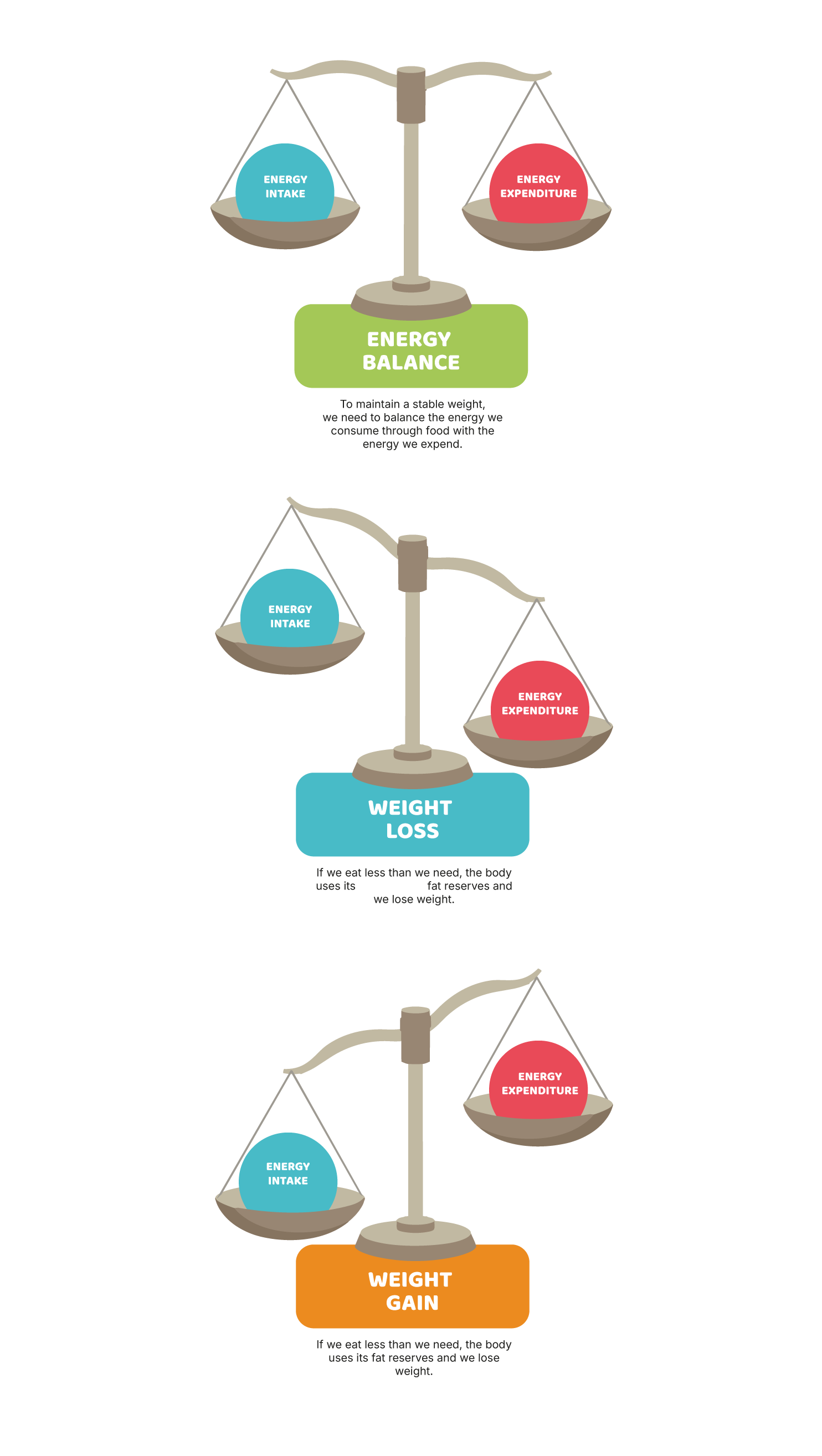
- If total energy intake exceeds requirements, the excess tends to be stored, often in the form of fat. This can lead to obesity.
- Refined and processed carbohydrates (e.g. sugar, fizzy drinks, cakes, white bread, white rice) are absorbed quickly. They cause rapid rises in blood glucose levels, triggering the release of insulin. Repeated consumption leads to insulin resistance and can result in type 2 diabetes.
- Eating too much simple sugar or eating it too often increases the risk of tooth decay. Much of the added sugar and the sugar found in products such as juices and syrups count as free sugars; it is therefore important to limit how often you consume them.
Dietary fibre
Daily recommendations:
- Adults: ≥ 30 g/day
- Children:
- 2–5 years: 15 g/day
- 5–11 years: 20 g/day
- 11–16 years: 25 g/day
Recommended daily intake of carbohydrates
The amount is measured as a percentage of total energy intake.
Table of recommendations
| Type of carbohydrate | % of daily energy intake |
|---|---|
| Total carbohydrates | 50% (most of which is likely to come from the fruit’s starch and sugars) |
| Free sugars | A maximum of 5% of total carbohydrate intake |
This means:
• Children aged 4–6: ≤ 19 g/day (≈ 4 teaspoons)
• Children aged 7–10: ≤ 24 g/day (≈ 5 teaspoons)
• Children aged 11 and over and adults: ≤ 30 g/day (≈ 6 teaspoons)
Protein is a macronutrient required by all animals, including humans. Protein molecules are made up of small ‘building blocks’ called amino acids. There are at least 20 different amino acids, and they can combine in any number or combination to form different proteins. When we eat foods containing protein, the body digests these proteins and breaks them down into individual amino acids, which it then uses to form new proteins. Amino acids are classified as:
- non-essential amino acids: these can be produced by the body
- indispensable amino acids: these cannot be produced by the body and must be obtained from food
- for this reason, indispensable amino acids are also called essential amino acids
Humans require around 20 amino acids, of which approximately 8 are essential.
Protein has three main functions:
- Growth – it helps the body to grow from infancy to adulthood and, once growth has finished, it helps to form parts such as hair, fingernails and toenails.
- Repair – repairs the body when it is injured or recovering from an operation or illness, and replaces parts that are regularly renewed, such as skin cells and red blood cells.
- Energy – provides energy, although the body prefers to obtain most of its energy from carbohydrates and fats.
Furthermore, many important natural substances produced by the body are made up of proteins, including:
- hormones that enable us to grow and reproduce
- enzymes that break down food
- antibodies that help the immune system fight off infections
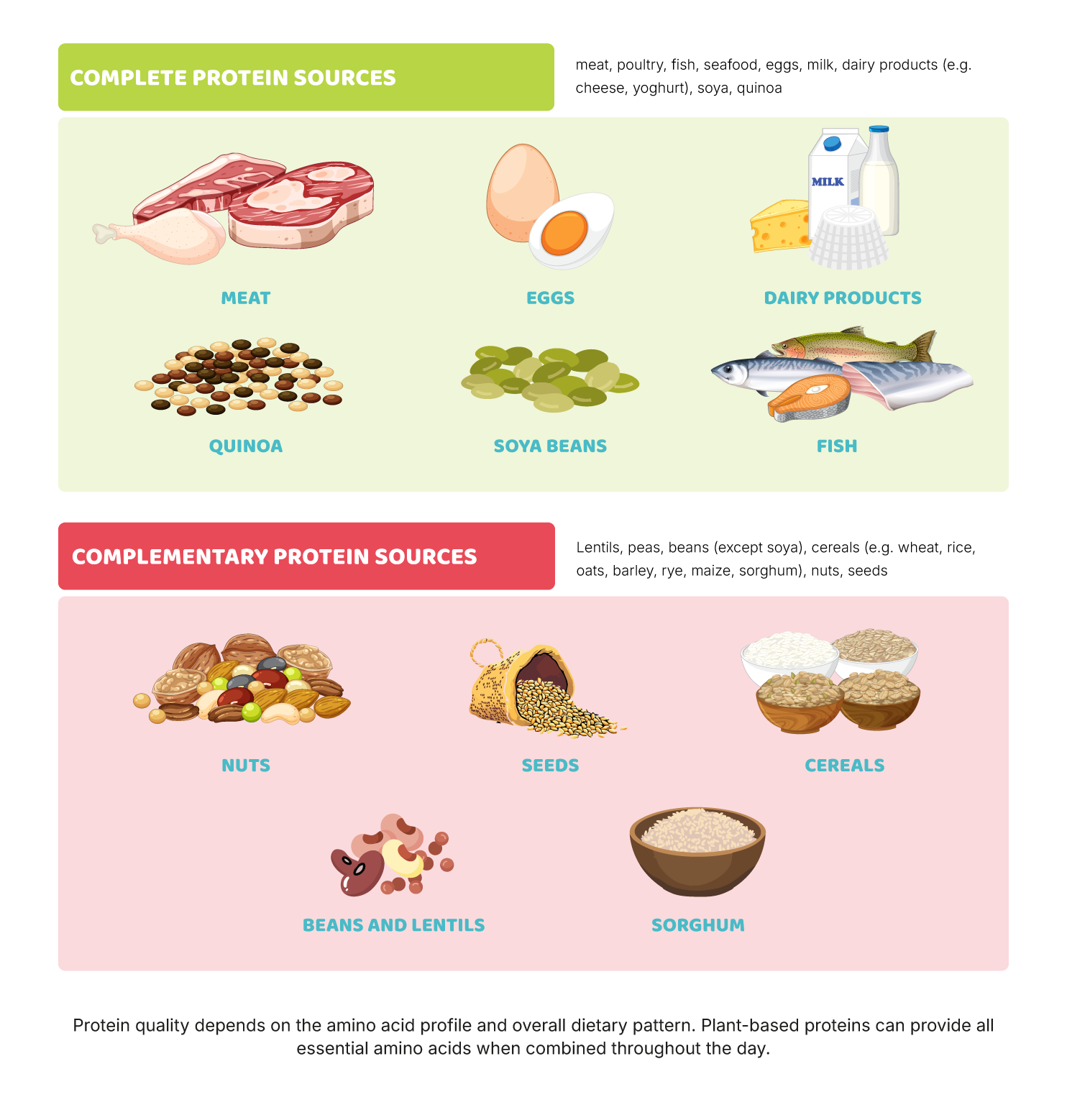
Proteins are found in both animal and plant sources. ‘New proteins’ are alternative protein-rich foods.
Sources of protein
| Animal protein | Vegetable protein | Protein alternatives |
|---|---|---|
| meat | pulses | |
| fish | beans | soldier |
| eggs | cereals | - |
| dairy products | nuts | - |
But be careful: too much protein does not mean better health. The body has limits to how much it can utilise, and excess protein can put a strain on the kidneys, increase calorie intake and displace plant-based foods from your diet.
The quality of protein also matters. Animal proteins are considered complete because they provide all the essential amino acids that the body cannot produce. Plant-based proteins, with the exception of soya, are incomplete, but can be made complete by combining different foods, such as pulses with whole grains. This strategy is particularly useful for teenagers who follow a more plant-based diet. Furthermore, during adolescence, protein is used not only for growth, but also to repair tissues, produce enzymes and support the immune system.
Effects of protein deficiency in the diet
Children and adults need protein for many bodily functions. If the diet is low in protein, various symptoms may arise:
| Effect | Why does this happen? |
|---|---|
| Children do not grow properly and may not reach their full height | Without sufficient nutrients (including protein), the body cannot build the structures it needs |
| Hair loss | Hair is made of protein; if there is a lack of protein, the body uses what it has for something more vital |
| Weak skin and nails | They contain protein; without enough protein, they become brittle |
| Frequent infections | The immune system is weaker without protein, so infections take hold more easily |
| Poor digestion | Protein deficiency affects the digestive system and prevents the proper absorption of nutrients |
Disabilities are rare in wealthy countries, but they do occur in countries with fewer resources.
Effects of excessive protein intake
Protein contains chemical elements, including nitrogen. Too much nitrogen in the body is dangerous and needs to be excreted in the urine.
If we eat too much protein:
- the liver and kidneys have to work harder to remove nitrogen
- This puts strain on the organs and can cause damage over time
Daily protein requirements at different stages of life
| Age/gender | Grams of protein per day |
|---|---|
| Children aged 1–3 | 14,5 g |
| Children aged 4–6 | 19,7 g |
| Children aged 7–10 | 28,3 g |
| Boys aged 11–14 | 42,1 g |
| Girls aged 11–14 | 41,2 g |
| Teenage boys, aged 15–18 | 55,2 g |
| Teenage girls (aged 15–18) | 45,0 g |
| Adults (male) aged 19–50 | 55,5 g |
| Adults (female) aged 19–50 | 45,0 g |
| Adults (men) aged 50 and over | 53,3 g |
| Adults (women) aged 50 and over | 46,5 g |
| Pregnancy | +6 g |
| Breastfeeding up to 4 months | +11 g |
| Breastfeeding after 4 months | +8 g |
These values are known as Dietary Reference Values (DRVs).
What is fat?
Fat is a macronutrient required by all animals.
- Fats are solid at room temperature.
- When they are liquid at room temperature, they are called oils.
- Fats and oils have the same basic chemical structure and provide the same amount of energy: 9 kcal per gram.
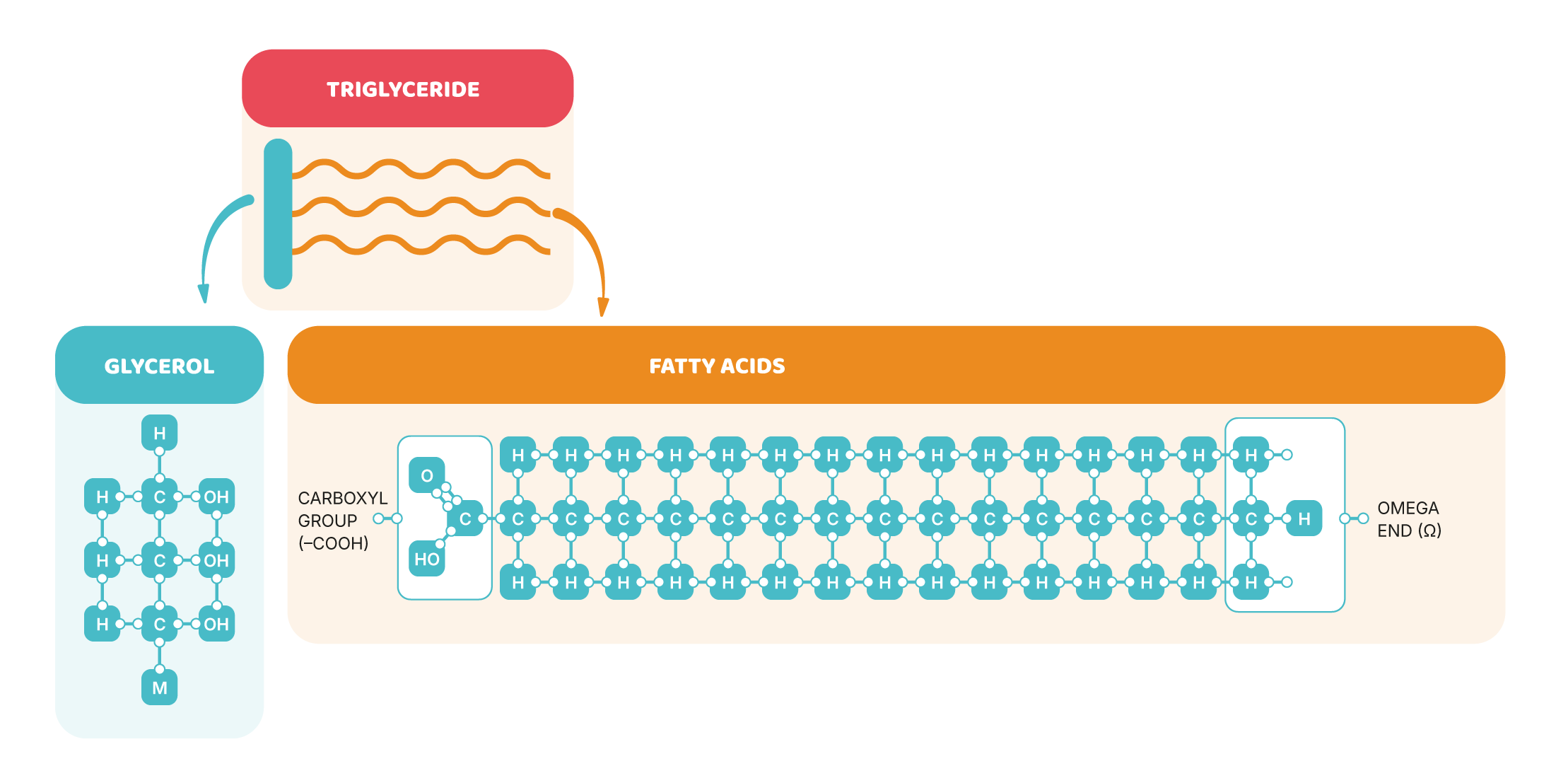
Chemical structure of fats
The basic structure of a fat or oil consists of:
- 1 molecule of glycerol
- 3 fatty acids
This complete molecule is called triglyceride.
Fatty acids are made up of carbon and hydrogen atoms. They can be:
- completely filled (saturated) with hydrogen
- not completely filled (unsaturated) with hydrogen
Unsaturated fatty acids have spaces where more hydrogen can bind.
- If it has one double bond → monounsaturated fatty acid
- If it has more than one double bond → polyunsaturated fatty acid
Saturated fats
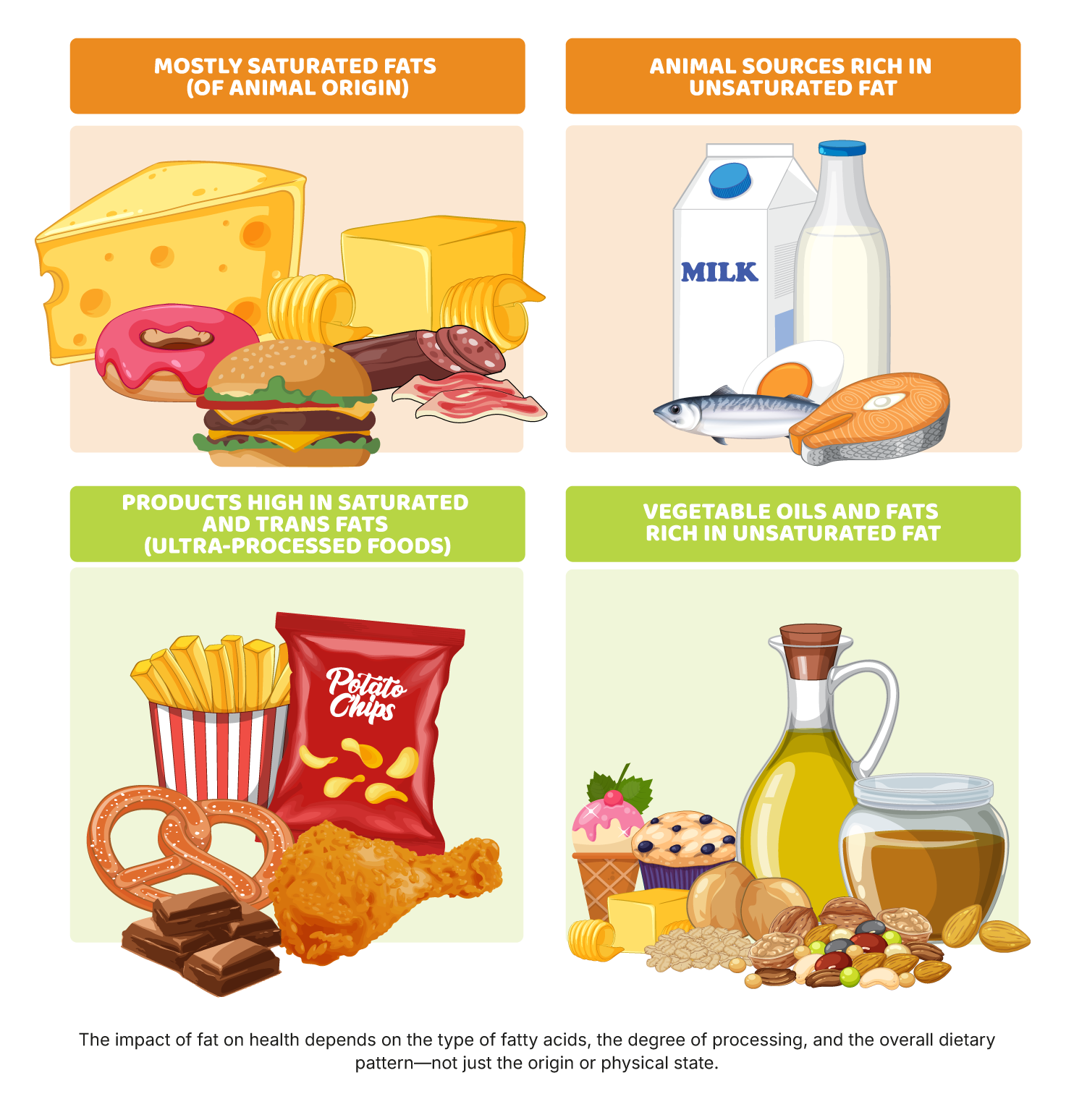
Saturated fats are:
- Solid at room temperature (e.g. butter and lard).
- Found mainly in foods of animal origin.
- A diet high in saturated fats is associated with increased levels of LDL cholesterol in the blood, which is a risk factor for cardiovascular disease (CVD).
Examples:
- butter
- lard
- oil
- hard vegetable fat
- fat in meat
- palm oil
- coconut oil
- chocolate
Unsaturated fats
Foods rich in unsaturated fatty acids are called unsaturated fats and include:
- vegetable oils: olive oil, rapeseed oil, sunflower oil, maize oil
- big fish
- avocado
- nuts and seeds
- some vegetable spreads
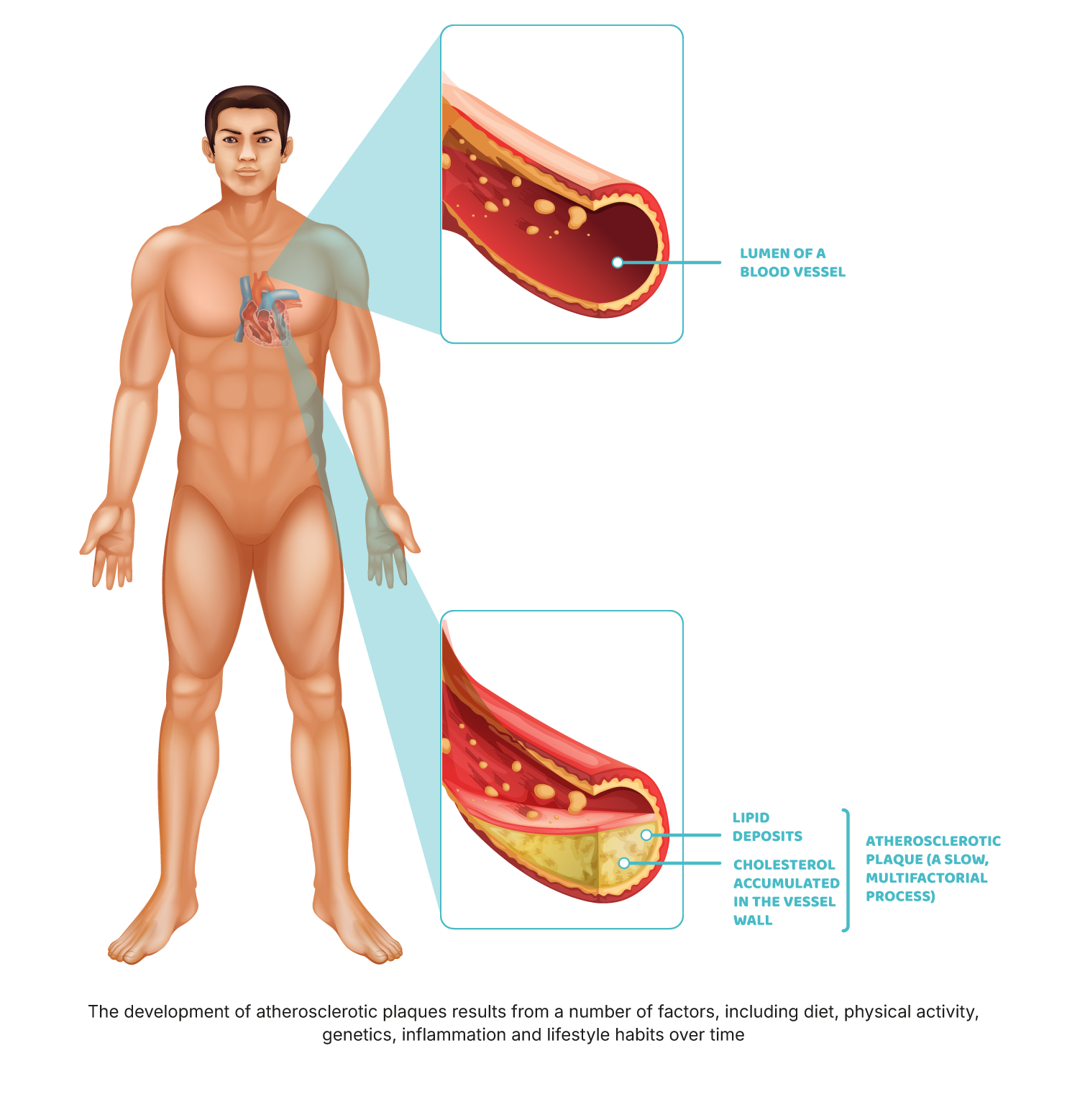
Hydrogenation
Vegetable oils can be converted into solid fats by adding hydrogen to unsaturated fatty acids. This is called hydrogenation and appears on labels as "hydrogenated fat".
Essential fatty acids
When we eat fatty foods, the body digests the triglycerides and produces:
- new fatty acids
- fats that the body can use
Omega-3 and omega-6 are essential fatty acids: they cannot be produced by the body and must be obtained from food.
They are mainly found in:
- vegetable oils
- big fish
- seeds
- eggs
- fresh meat
Benefits of omega-3 fatty acids
- help with blood clotting
- protect the heart
- reduce the risk of cardiovascular disease (CVD)
Oily fish (such as mackerel) is an excellent source of omega-3.
Benefits of omega-6 fatty acids
When consumed in moderation, it can help improve the lipid profile and reduce cardiovascular risk. Found in vegetable oils.
Fat has four main functions:
- Provide energy (stored in the adipose tissue beneath the skin).
- Insulate the body from the cold and help maintain body temperature.
- Protecting the organs and bones, forming a protective cushion.
- To provide the fat-soluble vitamins A, D, E and K (see Section 2.2.1).
Main sources of fat in the diet
When discussing the nutritional aspects of fat, we use the general term “fat”. In cooking, the terms “fat” or “oil” are used.
Fat in food can be:
Visible fat
Easy to see:
- fat in meat
- oil in a tin of tuna
- butter
Invisible fat
When mixed with other ingredients, it is difficult to identify:
- cakes
- pastry shop
- chips
- biscuits
- chocolate
- nuts
The consequences of a low-fat diet
| Effect | Why does this happen? |
|---|---|
| If your carbohydrate intake is also low, you will lose weight | The body uses stored fat and does not replenish it |
| The body cools down easily | Lack of body fat to insulate the body |
| I get bruises easily and my bones ache when I bump them | Lack of protective fat (adipose tissue) |
| The body does not receive vitamins A, D, E or K | These vitamins are found in fatty foods |
THE EFFECTS OF EXCESS FAT IN THE DIET
- Fat provides a lot of energy (9 kcal/g).
- High-fat foods are energy-dense.
- If the fat we eat is not used, it is stored:
- under the skin (subcutaneous fat)
- around the organs (visceral fat)
- under the skin (subcutaneous fat)
- This can lead to weight gain and obesity.
- A high intake of saturated fats is associated with:
- coronary heart disease (CHD)
- coronary heart disease (CHD)
Recommended daily fat intake
Fat intake is calculated as a percentage of total energy intake, not in grams.
| Type of fat | % of daily energy intake |
|---|---|
| Total fat | Maximum 35% |
| Saturated fats | 11% |
| Monounsaturated fats | 13% |
| Polyunsaturated fats | 6,5% |
| Trans fats | Maximum 2% |
Trans fats
They are formed in processed foods when liquid oils are converted into solid fats during hydrogenation. They are associated with an increased risk of heart disease.
Extra virgin olive oil stands out for its composition and antioxidant properties, and plays a central role in the Mediterranean diet.
Vitamins
What are vitamins?
- Vitamins are chemical substances that occur naturally in a wide variety of minimally processed plant- and animal-based foods.
- Vitamins promote good health and help to prevent illness.
- The body needs them in small amounts to carry out many different functions, which is why they are called micronutrients.
- Some vitamins can be stored in the body. If we do not consume enough vitamins, deficiency diseases may develop. The symptoms vary depending on which vitamin is lacking.
There are two main categories of vitamins:
- Fat-soluble vitamins
Vitamins A and D
- Found mainly in fatty foods of animal origin: butter, lard, dairy products, liver, oily fish
- They can be stored in the liver and adipose tissue
- If consumed in excess → risk of toxicity
- Water-soluble vitamins
- Vitamins B1, B12, folic acid and C
- They are found in fruit, vegetables and cereals
- They are sensitive to heat, air and water → they may be lost during cooking
- They are not stored in the body → daily intake is necessary
Each vitamin has a chemical name and a letter, which helps to distinguish them.
Table: Recommended daily intake of vitamins
(average values for groups of healthy people)
| Age/gender | Vitamin A | D | E | K | B1 | B2 | B3 | B9 | B12 | C |
|---|---|---|---|---|---|---|---|---|---|---|
| Children aged 1–3 | 400 mcg | # | – | – | 0,7 mg | 0,6 mg | – | 70 mcg | 0,5 mcg | 30 mg |
| Children aged 4–6 | 500 mcg | # | – | – | 0,9 mg | 0,8 mg | – | 100 mcg | 0,8 mcg | 30 mg |
| Children aged 7–10 | 500 mcg | # | – | – | 1,0 mg | 1,0 mg | – | 150 mcg | 1,0 mcg | 30 mg |
| Adolescents (M) aged 11–14 | 600 mcg | # | – | – | 1,2 mg | 1,2 mg | – | 200 mcg | 1,2 mg | 35 mg |
| Adolescents (F) aged 11–14 | 600 mcg | # | – | – | 1,0 mg | 1,1 mg | – | 200 mcg | 1,2 mcg | 35 mg |
| Girls aged 11–14 | 700 mcg | # | – | – | 1,5 mg | 1,3 mg | – | 200 mcg | 1,5 mg | 40 mg |
| Teenage girls (aged 15–18) | 600 mcg | # | – | – | 1,2 mg | 1,1 mg | – | 200 mcg | 1,5 mcg | 40 mg |
| Adults (M) aged 19–50 | 700 mcg | # | 4 mg | – | 1,4 mg | 1,3 mg | 17 mg | 200 mcg | 1,5 mcg | 40 mg |
| Adults (F) aged 19–50 | 600 mcg | # | 3 mg | – | 1,2 mg | 1,3 mg | 13 mg | 200 mcg | 1,5 mcg | 40 mg |
| Adults (M) aged 50 and over | 700 mcg | A | 4 mg | - | 0,9 mg | 1,3 mg | 17 mg | 200 mcg | 1,5 mcg | 40 mg |
| Adults (F) aged 50 and over | 600 mcg | A | 3 mg | 0.001 mg/kg body weight | 0,8 mg | 1,1 mg | 13 mg | 200 mcg | 1,5 mcg | 40 mg |
| Pregnancy | 700 mcg | – | – | – | 0,9 mg | 1,4 mg | 13 mg | 300 mcg | 1,5 mcg | 50 mg |
| Breastfeeding ≤ 4 months | 950 mcg | – | – | – | 1,0 mg | 1,4 mg | 13 mg | 260 mcg | 1,5 mcg | 70 mg |
| Breastfeeding > 4 months | 950 mcg | – | – | – | 1,0 mg | 1,4 mg | 13 mg | 260 mcg | 1,5 mcg | 70 mg |
Legend
- No specific values are given, as it is assumed that there is sufficient sun exposure to ensure adequate vitamin D levels
- *Vitamin D supplementation is recommended for:
- adults aged > 65 with limited sun exposure
- pregnant and breastfeeding women: 10 mcg/day*
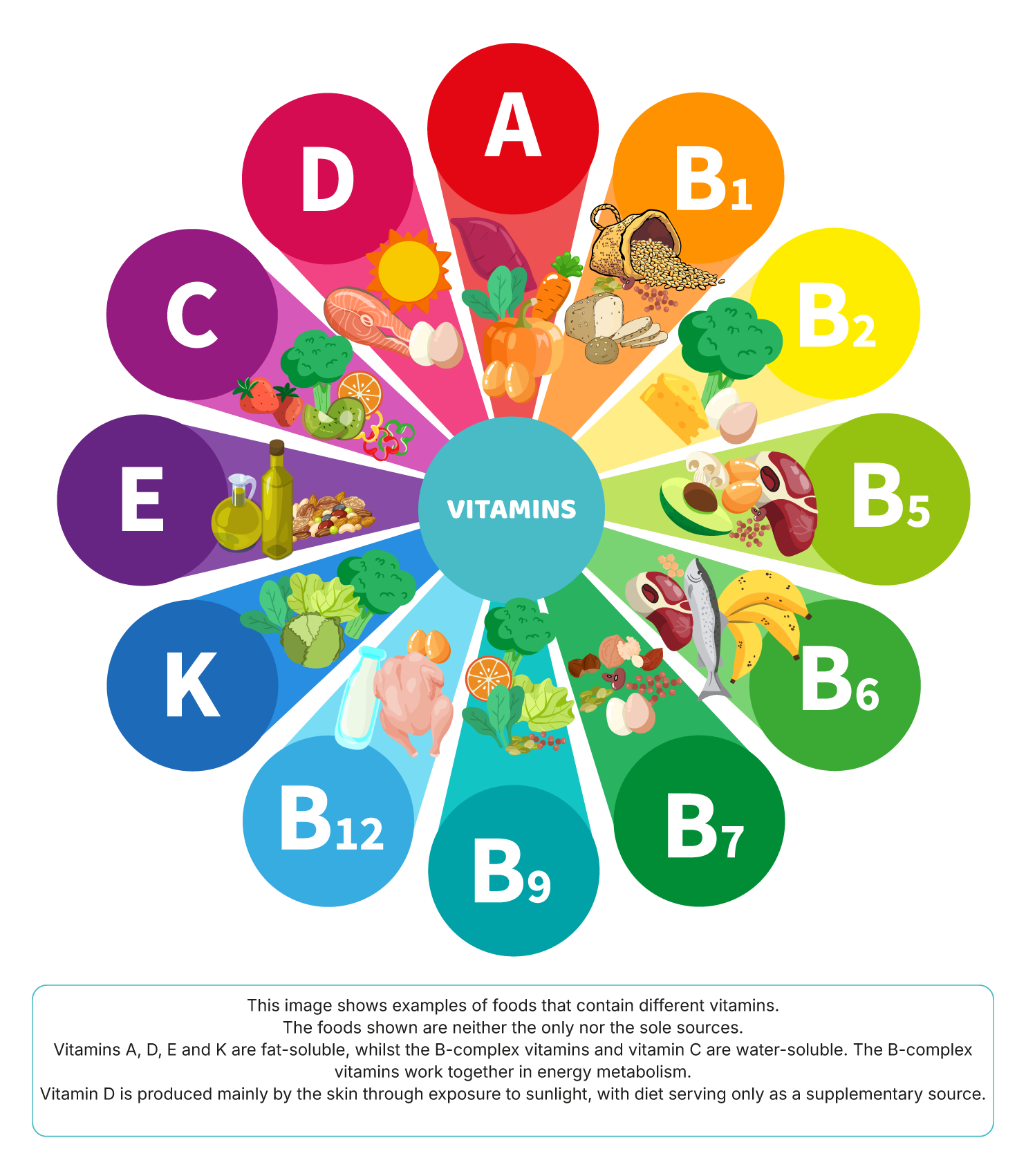
Water-soluble vitamins (vitamin C and B-complex vitamins) can easily be destroyed or lost:
- because of the heat
- due to exposure to the air
- as they dissolve in the cooking water
- from light (vitamins B2 and C)
How to minimise losses:
Storage
- Keep away from light and heat
- Store for as short a time as possible
Preparation
- Chop/grate just before eating → reduces exposure to air
- Avoid fruit and vegetables that are badly damaged
- Misshapen but healthy fruit and vegetables can be used (they’re cheaper)
Cooking
- Use a little water
- Cook just until they are tender
- Using the cooking liquid in soups and sauces
- Serve immediately
- Choose steaming → less loss of vitamins
Antioxidants
- Our bodies are exposed to chemicals (pollution, food, air) that produce free radicals
- These can damage cells → inflammation, heart disease, cancer
- Vitamins A, C and E are antioxidants; they help to:
- protect cells
- reduce the risk of various chronic diseases
Eating fruit and vegetables is important because they are rich in antioxidants.
Minerals
What are minerals?
- They are natural chemical substances found in plant- and animal-based foods.
- Required in small amounts → these are micronutrients
- Some may be stored
- A deficiency can lead to deficiency-related illnesses:
- Anaemia (iron deficiency)
- Muscle cramps (sodium deficiency)
Symptoms vary depending on which mineral is lacking
Daily mineral requirements
(average values for groups of healthy people)
| Age/gender | Calcium | Ferro | Sodium** | Fluoride | Iodine | Phosphorus |
|---|---|---|---|---|---|---|
| Children aged 1–3 | 350 mg | 6,9 mg | 2 g | – | – | – |
| Children aged 4–6 | 450 mg | 6,1 mg | 700 mg | – | – | – |
| Children aged 7–10 | 550 mcg | 8,7 mg | 1200 mg | – | – | – |
| Adolescents (M) aged 11–14 | 1000 mg | 11,3 mg | 1600 mg | – | – | – |
| Girls aged 11–14 | 800 mg | 14,8 mg | 1600 mg | – | – | – |
| Teenagers (M) aged 15–18 | 1000 mg | 11,3 mg | 1600 mg | 6 g* | – | – |
| Teenage girls (aged 15–18) | 800 mg | 14,8 mg | 1600 mg | 6 g* | – | – |
| Adults (M) aged 19–50 | 700 mg | 8,7 mg | 1600 mg | 6 g* | – | 0,14 mg |
| Adults (F) aged 19–50 | 700 mg | 14,8 mg | 1600 mg | 6 g* | – | 0,14 mg |
| Adults (M) aged 50 and over | 700 mg | 8,7 mg | 1600 mg | 6 g* | - | 0,14 mg |
| Adults (F) aged 50 and over | 700 mg | 14,8 mg | 1600 mg | 6 g* | – | 0,14 mg |
| Pregnancy | 700 mg | 14,8 mg | 1600 mg | 6 g* | – | 0,14 mg |
| Breastfeeding ≤ 4 months | 1250 mg | 14,8 mg | 1600 mg | 6 g* | – | 0,14 mg |
| Breastfeeding > 4 months | 1250 mg | 14,8 mg | 1600 mg | 6 g* | – | 0,14 mg |
Legend
- 6 g of salt = 1 teaspoon
- **The recommended sodium intake is the minimum, not the maximum**
Phytonutrients and antioxidants
In addition to vitamins and minerals, plant-based foods provide bioactive compounds, such as phytonutrients and antioxidants, which play important roles in protecting cells. These compounds help to neutralise free radicals, reducing cellular damage and inflammation. A varied diet featuring a range of colours – greens, oranges, reds and purples – ensures a rich and diverse combination of these protective elements, helping to reduce the risk of disease throughout life. These compounds cannot be replicated by supplements with the same effectiveness, which underlines the importance of eating a varied diet of fresh foods.
Nutritional density versus energy density
A key concept at this age is to distinguish between:
Nutritional density
The amount of vitamins, minerals and bioactive compounds per calorie. E.g.: vegetables, fruit, pulses, whole grains.
Energy density
Concentrated calories with few nutrients. E.g.: biscuits, fried foods, sugary snacks, fast food.
The key is not to ban these foods, but to understand that foods with high energy density + low nutritional density should be consumed only occasionally.
The way food is prepared alters both its energy density and its nutritional density. A whole piece of fruit provides more fibre and increases satiety far more than a juice. Conversely, a food that is initially nutritious, such as a potato or a cereal, can become much higher in energy and less beneficial to health when it is fried or served with high-fat sauces. Learning to recognise these differences helps you make smarter choices without needing to ‘count calories’.
Not all processing is negative.
Beneficial processing
- pasteurised milk
- frozen vegetables
- traditional bread
- tinned fish
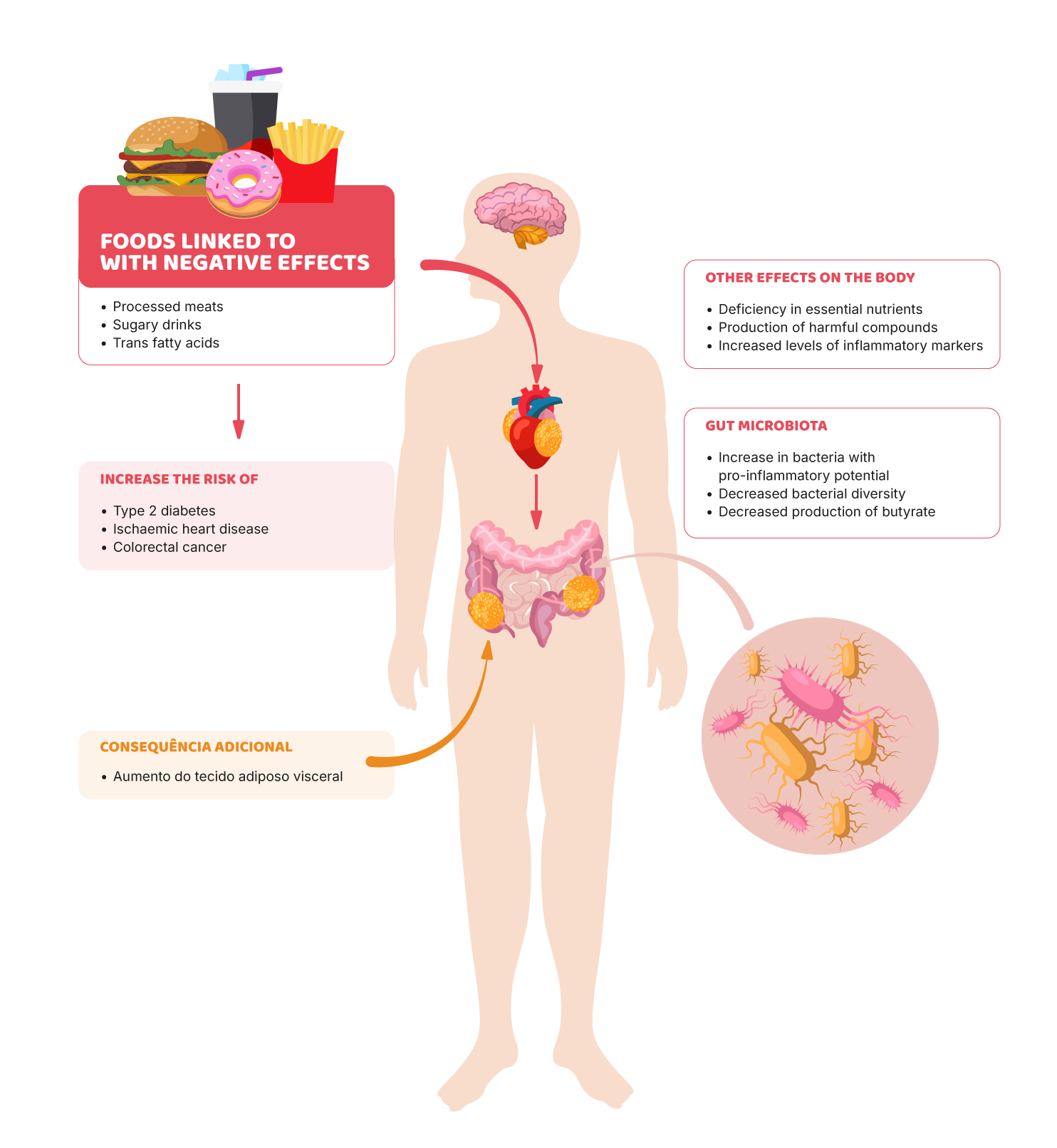
Ultra-processed foods (UP)
These are industrially produced foods containing additives, sugars, syrups, hydrogenated oils and flavourings.
Associated effects (growing evidence):
- greater inflammation
- less feeling of fullness
- impact on the microbiota
- higher energy consumption
- higher cardiometabolic risk
The best strategy is not to eliminate these foods, but to reduce their frequency and portion sizes, favouring natural and minimally processed foods.
Ultra-processed foods tend to contain combinations of sugar, hydrogenated fats and sodium that easily exceed the body’s requirements, whilst also losing some of the natural phytonutrients found in the raw ingredients. Even when fortified with vitamins or minerals, these products cannot replicate the diversity of compounds found in fresh foods. Therefore, rather than eliminating these foods entirely, the aim is to reduce how often they are consumed and to prioritise natural and minimally processed foods, which offer superior nutritional density.
Critical thinking: interpreting information and avoiding nutritional noise
With so many videos, posts, “miracle tips” and conflicting opinions, the most important skill is critical thinking.
Key questions:
- Who wrote this information?
- Is it based on scientific evidence?
- Are there any conflicts of interest?
- Is it too simple for such a complex topic?
- Does it promise quick results?
- Does it demonise entire food groups?
If the answer to any of these is ‘yes’, it is likely to be pseudoscience.

When analysing a food, focus first on the quality of the food and only then on the quantity.
Question:
“Does this food contribute to my health and energy, or is it just a source of empty calories?”
FOODWISElab challenge

Learning to analyse a meal or snack beyond just the calories, by looking at the food matrix, the nutrients, the degree of processing and identifying simple improvements that increase the nutritional density without completely changing the dish.