
Energy Throughout the Day: organising your routine for stability and focus
Now that you’ve learnt how the body turns food into energy and which nutrients keep you going throughout the day, it’s time to take a closer look at how to spread that energy out over the course of the day. Eating sensibly isn’t just about choosing the right foods: it’s about thinking about when and how you eat them, to ensure better concentration, wellbeing, mood and academic performance.
The energy levels you maintain throughout the day depend on three main factors:
- Quality of the food you choose.
- Regularity of meals and snacks.
- Daily rhythm, in other words, how you spread your food intake from the morning until the end of the day.
Balancing these three aspects is a powerful way to look after yourself and your daily routine.
How the body generates energy throughout the day
The body functions according to natural rhythms. In the morning, you are generally better able to use your energy efficiently; as the day goes on, this ability may diminish if you do not get enough rest and eat properly. If you go many hours without eating, you may feel:
- power cuts;
- difficulty concentrating;
- irritability;
- a sudden craving for very sweet or very salty foods.
When you stabilise your energy, you feel exactly the opposite: focus, mental clarity and a sense of well-being.
After several hours without eating, the body needs energy to fuel the brain, stabilise blood sugar levels and ensure concentration. A balanced breakfast, containing complex carbohydrates, protein and fruit, improves mood, concentration and performance in the early hours of the day. Conversely, skipping breakfast increases the likelihood of feeling very hungry and making less balanced food choices by late morning.
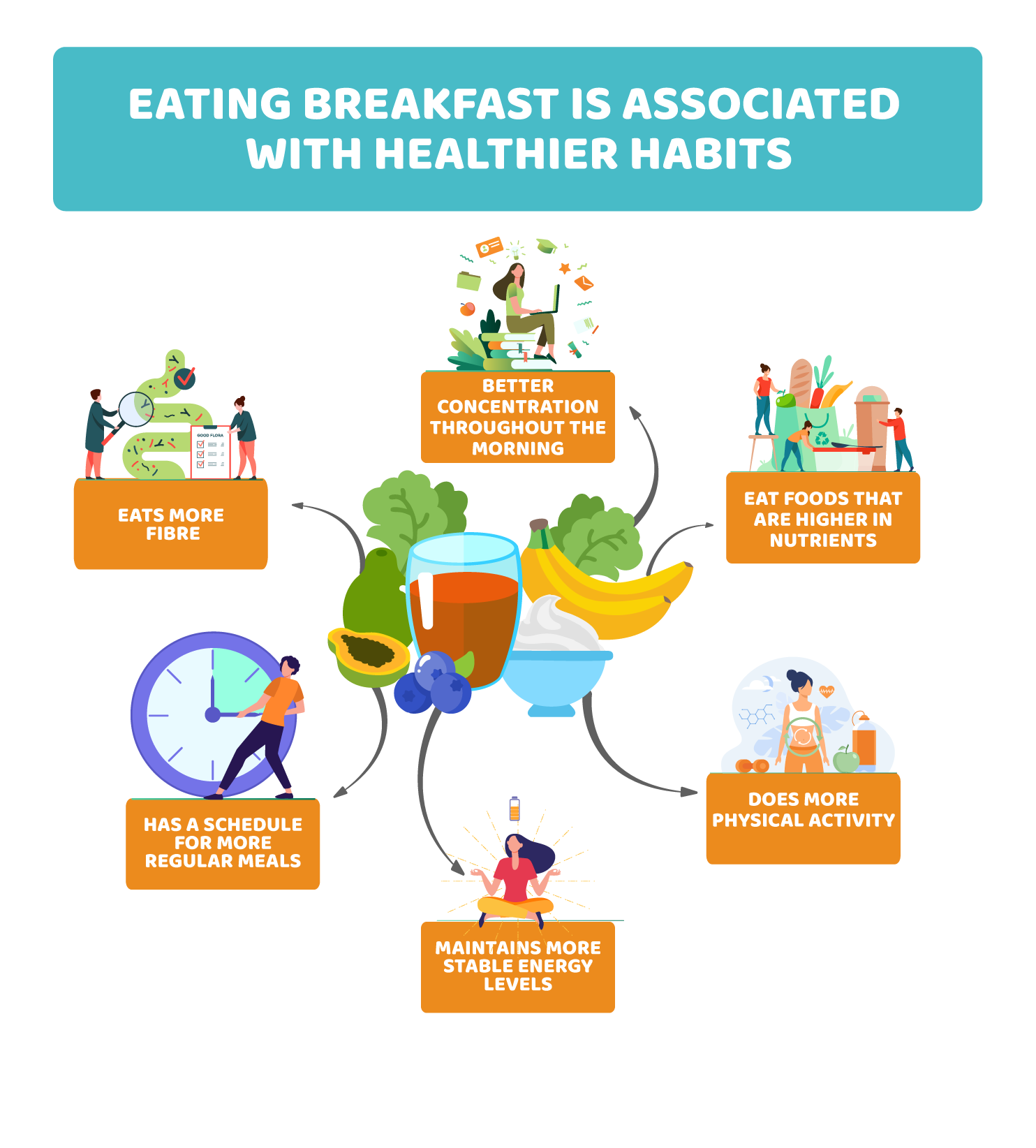
Skipping breakfast is quite common, especially when you’re short on time in the morning or go to bed late. But breakfast is one of the simplest ways to ensure a more balanced start to the day.
What do we know?
Studies show that eating breakfast:
- improves concentration, memory and the speed of thought;
- prevents sudden fluctuations in power;
- reduces the consumption of unhealthy snacks in the late morning;
- contributes to better academic performance.
But it’s not enough just to eat ‘any old thing’. Quality matters.
What makes a good breakfast?
- A source of complex carbohydrates (mixed-grain bread, oats, whole grains).
- A source of protein (milk, natural yoghurt, eggs).
- Fresh fruit (energy + fibre).
- Little or no added sugar.
The aim isn’t to have a perfect breakfast, but one that keeps you going until lunch.
Regular meals help to maintain stable blood glucose levels, preventing energy slumps and irritability. We are more prone to impulse eating when our blood glucose levels drop too low. Well-spaced meals, without long periods of fasting, promote a more stable metabolism and a sustained feeling of energy.
Smart snacks: your allies for sustained energy
A balanced snack can help prevent energy spikes and slumps. The trick is to combine foods that fill you up and fuel your brain.
Combinations that work:
- fruit + nuts;
- mixed-grain bread + chickpea purée or a hard-boiled egg;
- plain yoghurt + oats;
- carrots + hummus;
- roasted sweet potato (cold) + seeds.
Snacks that cause energy spikes and crashes:
- sweet biscuits;
- sugar-laden bars;
- sugary drinks;
- pastry shop;
- ultra-processed savoury snacks.
These foods provide a quick energy boost, but it doesn’t last long and can affect your concentration.
Late meals and unstable energy levels
With such a busy schedule, it’s easy to end up having dinner very late. But eating too close to bedtime can:
- impair digestion;
- make it difficult to sleep;
- affect the quality of the following day’s energy;
- increase the likelihood of an imbalance in appetite.
Ideally, try to leave 2–3 hours between dinner and bedtime.
Simple routine for stable power
| Moment of the day | Objective | Practical examples |
|---|---|---|
| Morning | Energy for concentration and learning | A balanced breakfast |
| Mid-morning | Preventing breakages | Fruit, yoghurt, nuts |
| Lunch | Main meal of the day | Soup + protein + vegetables + wholegrain cereal |
| Mid-afternoon | Energy for studying/training | Mixed-grain bread + an egg or yoghurt; fruit + nuts |
| Dinner | Lightweight and well-balanced | Soup + a simple main course; avoid eating too late in the evening |
| Before going to bed | Optional | Only if you’re hungry; something light |
This timetable isn’t set in stone; it can be adapted to suit your school timetable, training sessions and family routines.
The energy you use during exercise comes mainly from complex carbohydrates and your muscle glycogen stores. Eating too little or at irregular intervals before training can lead to early fatigue and reduce your performance. Balanced meals throughout the day, and a light snack before exercise, help your body respond better to the exertion and recover more efficiently.
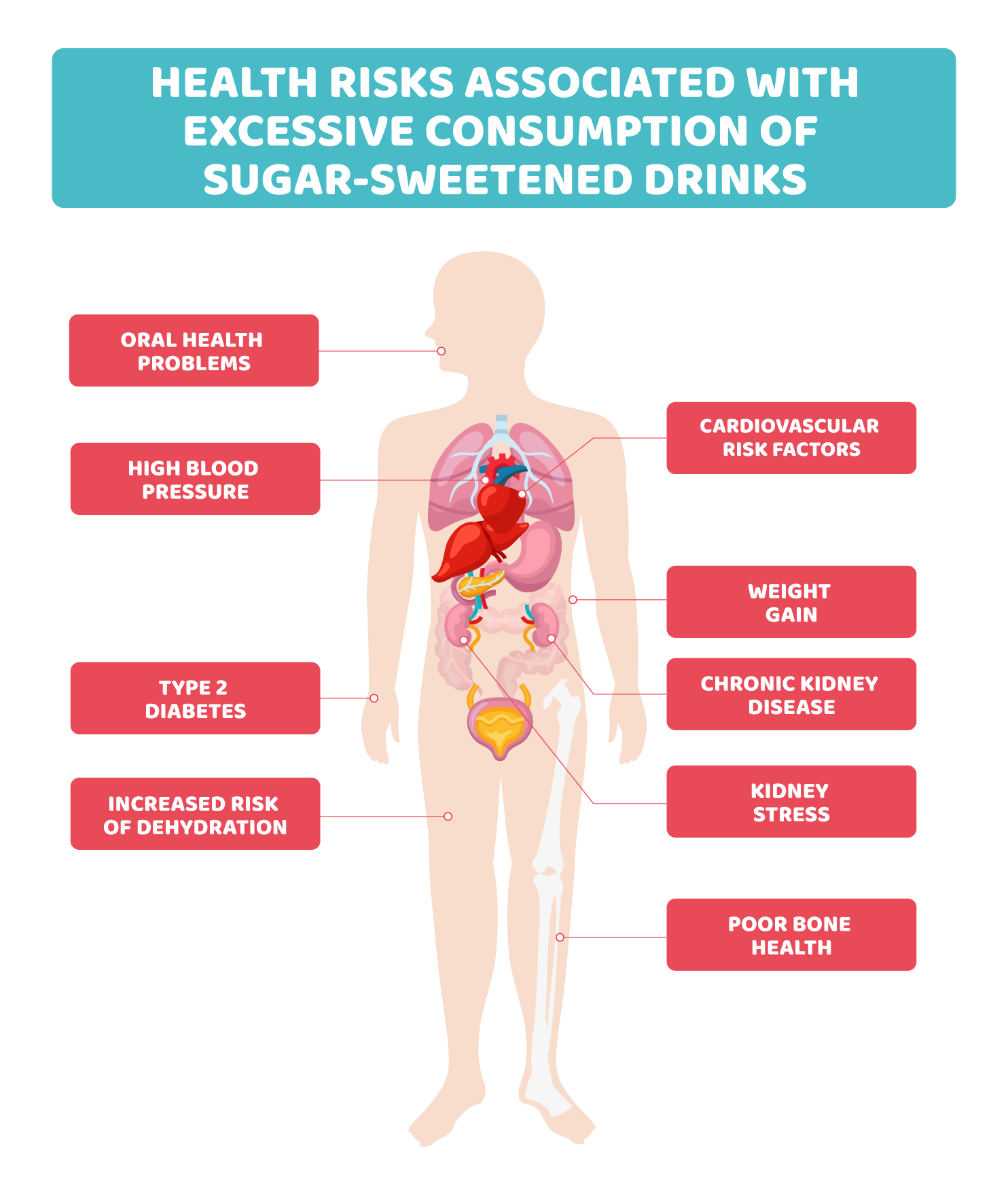
Sugary drinks are one of the main sources of added sugar in the diet and tend to replace nutritious drinks, such as milk or fortified alternatives, which provide calcium and vitamin D – essential for bone health. Furthermore, they cause spikes in blood sugar levels followed by rapid drops, creating cycles of unstable energy levels. Energy drinks provide a quick burst of alertness, but do not supply the body with any real nutritional energy.
Most have:
- high doses of caffeine;
- sugar;
- additives and stimulants.
They may cause:
- anxiety;
- heart palpitations;
- poorer sleep quality;
- greater drowsiness the following day;
- dependence on rapid stimuli.
Safer alternatives:
- water;
- fruit-flavoured water;
- milk;
- sugar-free drinks.
Planning isn’t about rigidity; it’s about thinking ahead. It helps you avoid moments of extreme hunger or impulsive decisions.
Practical strategies
- Prepare simple snacks at the start of the day or the week.
- Pack your rucksack with a small energy pack: nuts, fruit, simple sandwiches.
- He checks his training and study timetables and thinks: “How much energy will I need?”
- Avoid relying on vending machines or bakeries as your only option.
Small actions build great routines.

When you’re feeling low on energy, do this quick check:
HUNGER or SLEEP?
If you’re feeling hungry: choose a snack that combines fruit, fibre and protein.
If you’re feeling sleepy: avoid caffeine; drink some water and take a short break.
Distinguishing between hunger and tiredness helps you make smarter decisions.
FOODWISELAB challenge

To help you understand how your energy levels vary throughout the day and how your dietary choices affect your focus, mood and wellbeing.