
Why do we talk about ‘dietary patterns’ rather than individual foods?
The science of nutrition has changed a great deal over the last few decades. We now know that:
- the combination of foods is more important than any individual nutrient;
- A balanced diet reduces the risk of heart disease, diabetes, obesity and depression;
- A varied diet of plant-based foods strengthens the gut microbiota and boosts immunity;
- Cooking more at home and eating fewer ultra-processed foods is crucial for long-term health;
- Sustainable practices reduce our ecological footprint without compromising the enjoyment of food.
Therefore, the aim is not to “eat a healthy food”, but to maintain a consistent eating pattern over time.
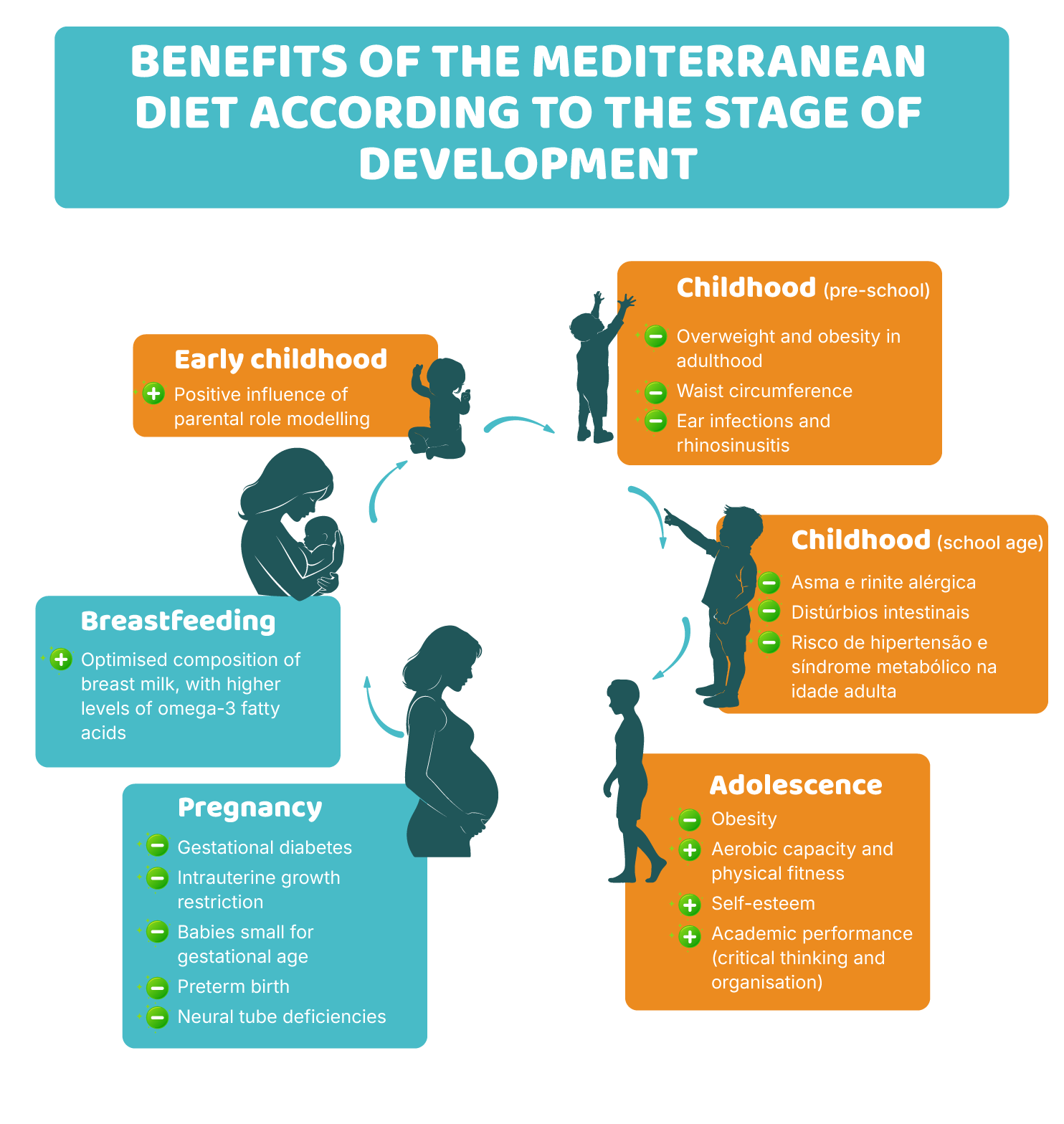
Adolescence is a key time for establishing habits that can stay with you for decades. At this stage, you have more independence, greater access to food choices outside the home, and greater exposure to conflicting information, from influencers to targeted advertising. That’s why it’s important to learn how to develop eating habits that are, at the same time:
- good for your body,
- sustainable for the planet,
- be realistic in your day-to-day life,
- in line with current scientific knowledge,
- enjoyable and culturally significant.
The Mediterranean diet embodies precisely this balance, and for many young Portuguese people, it forms part of their very cultural identity. But living by this model in the 21st century does not come naturally: it requires understanding, intention and a touch of creativity.
A Mediterranean diet adapted to the 21st century is not a rigid list, but includes:
a) A high intake of plant-based foods
- fresh and cooked vegetables
- pulses
- assorted fruit
- wholemeal cereals
- nuts and seeds
- aromatic herbs and spices
b) Olive oil as the main source of fat
Rich in phenolic compounds, antioxidants and monounsaturated fats.
c) Regular consumption of fish
In particular, sardines, mackerel, salmon and herring, which are rich in omega-3.
d) Moderate and context-appropriate consumption of dairy products
Opting for plain varieties (plain yoghurt, cheese in moderate portions).
e) Less meat
Focusing on white meat and avoiding processed meat.
f) Water as the main drink
g) Social meals
Eating with others improves eating habits, mood and one’s relationship with food.
h) Linking food to seasonality and origin
It promotes freshness, flavour, value for money and sustainability.
- Mediterranean Breakfast
- rye bread + olive oil + tomato
- natural yoghurt + fruit + nuts
- oats + seeds + seasonal fruit
- Traditional Lunch
- a dish consisting of 50% vegetables + 25% whole grains + 25% protein
- soup as a starter
- Smart Snacks
- fruit
- nuts
- wholemeal bread with natural peanut butter
- natural yoghurt
- A light, structured dinner
- soup + a simple dish with pulses
- omelette with vegetables + salad

The importance of consistency: throughout the week, not just at mealtimes
A healthy diet doesn’t require daily perfection. What matters most is not what happens on any one day, but rather consistency throughout the week, with variety and balance between more nutritious foods and those that are a bit of a treat. It is also essential to avoid extremes, whether in terms of restriction or overindulgence.
If you’ve had a pizza with friends one day, the next day you can simply focus on eating more vegetables, soup and greens, without feeling guilty and without going to extremes to make up for it. The aim isn’t to ‘make up for the slip-up’, but rather to return, naturally, to a balanced routine.
Benefits for current and future health
Studies show that adolescents with Mediterranean-style eating patterns tend to have more energy, less fatigue and better academic performance. They also tend to report a more stable mood, better body composition, fewer digestive problems and lower consumption of ultra-processed foods (UPs). Furthermore, they appear to develop more balanced relationships with food, with fewer extremes between restriction and excess.
In the long term, this dietary pattern is associated with a lower risk of type 2 diabetes and a lower cardiovascular risk, as well as lower levels of inflammation in the body. It is also associated with a lower likelihood of obesity and a lower risk of depression and, in several studies, greater longevity.
Sustainability

O padrão mediterrânico traz vantagens ambientais claras:
- mais alimentos vegetais: menor pegada carbónica
- menor consumo de carne vermelha: menos emissões
- uso de azeite: menor processamento
- produtos sazonais: menos transporte
- cozinhar mais: menos alimentos ultraprocessados
- valorização de alimentos tradicionais → preservação agrícola
Pequenos gestos somados ao longo da vida têm grande impacto planetário.
Identidade e autonomia: comer mediterrânico à tua maneira
Não há “versão perfeita”. Tu podes adaptar:
- incluir pratos do mundo com lógica mediterrânica
- combinar arroz integral com tofu e legumes
- fazer wraps com leguminosas
- criar snacks simples e nutritivos
- experimentar novas ervas e sabores
- escolher produtos locais e sazonais
- cozinhar mais vezes, mesmo refeições rápidas
O importante é manter o padrão, não seguir uma lista rígida.
A ciência da consistência
O que realmente funciona não são mudanças radicais de um dia para o outro, mas sim repetir pequenas boas práticas e construir rotinas que façam sentido no dia a dia. À medida que vais prestando atenção à forma como o teu corpo responde, mais energia, melhor sono, menos desconforto digestivo, torna-se mais fácil ajustar sem drama, em vez de entrar em ciclos de culpa ou perfeccionismo.
Também é importante manter a curiosidade gastronómica: experimentar novos pratos, sabores, combinações e formas de cozinhar pode tornar a alimentação saudável mais interessante e agradável. Comer mediterrânico é, no fundo, uma combinação de tradição, ciência e prazer, não é só “fazer bem à saúde”, é também respeitar a cultura alimentar e desfrutar da comida.

Include one new plant-based food each week.
It could be a vegetable you’ve never tried before, a different type of bean, a seasonal fruit, an aromatic herb or even a new type of cereal.
In just a few weeks, you’ll greatly increase the variety in your diet.
FOODWISElab challenge

To help you monitor your eating patterns over the course of a week, identifying the presence of plant-based foods, your consumption of ultra-processed foods (UPs) and opportunities for simple and realistic improvements in line with the Mediterranean Diet.