
Cereals and pulses in the future of food
Cereals and pulses have formed the basis of the human diet for thousands of years. But today, in the face of a growing global population, the climate crisis and the need for more sustainable food systems, these food groups are taking on renewed importance – scientifically, nutritionally and environmentally.
In this day and age, it is possible to understand not only the nutritional value of these foods, but also their crucial role in global food security, food sovereignty and the transition to more sustainable diets, such as the Mediterranean diet.
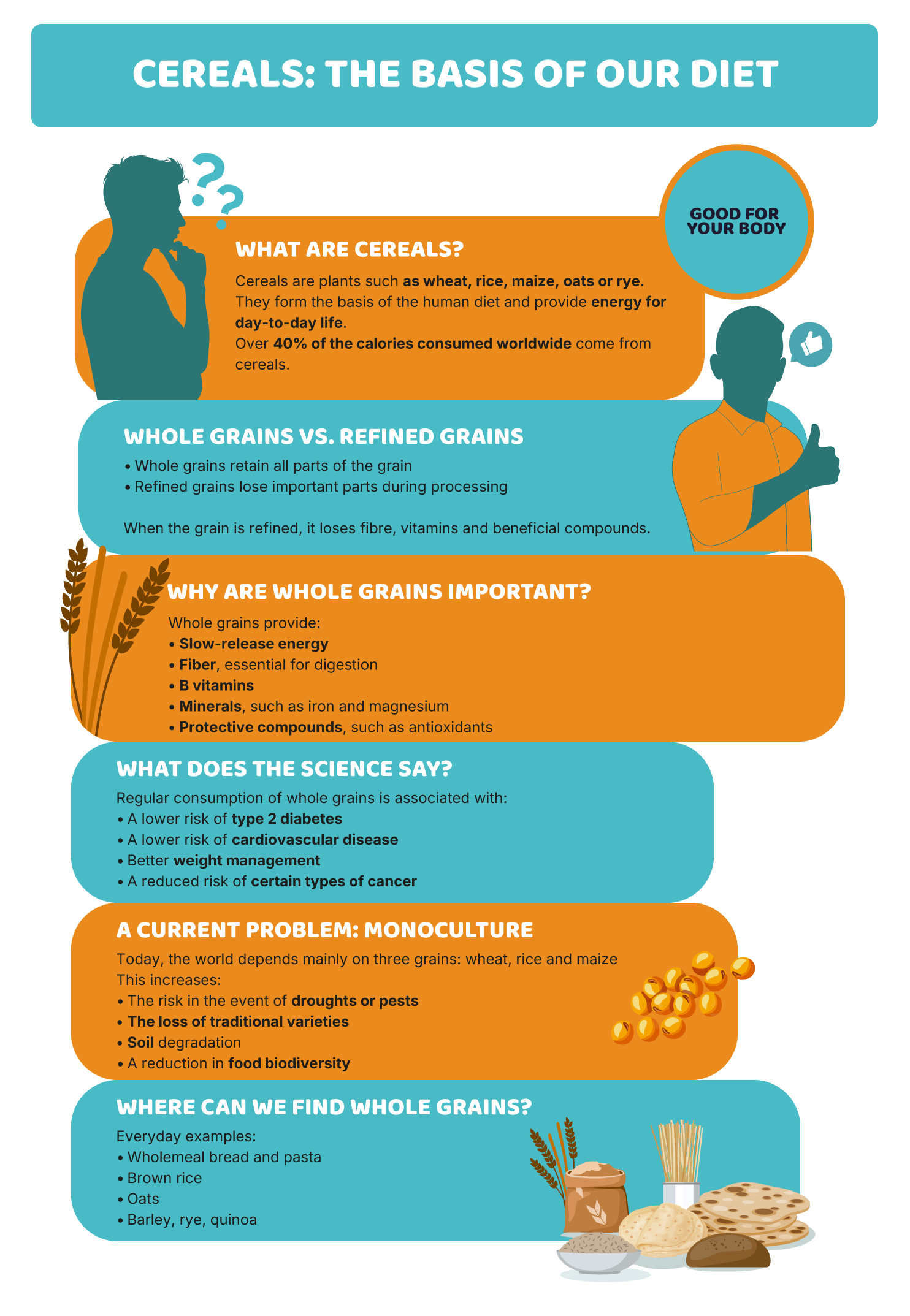
Cereals (wheat, maize, rice, rye, oats, barley, etc.) account for more than 40 per cent of global calorie intake, on average.
Key functions:
- a source of slow-digesting carbohydrates
- fibre intake (particularly when wholegrain)
- B-complex vitamins
- minerals such as magnesium and iron
- a range of traditional products: bread, pasta, rice, porridge
The problem of monocultures
Global dependence on just three cereals – wheat, rice and maize – increases vulnerability:
- greater risk in the event of droughts or pest infestations
- loss of traditional varieties
- genetic erosion
- less healthy soils
The benefits of whole grains
When they are not refined, they retain:
- fibre
- antioxidants
- vitamins
- plant-based proteins
- beneficial compounds such as lignans and phytochemicals
Scientific evidence links wholemeal cereals to a lower risk of:
- type 2 diabetes
- cardiovascular disease
- obesity
- certain types of cancer
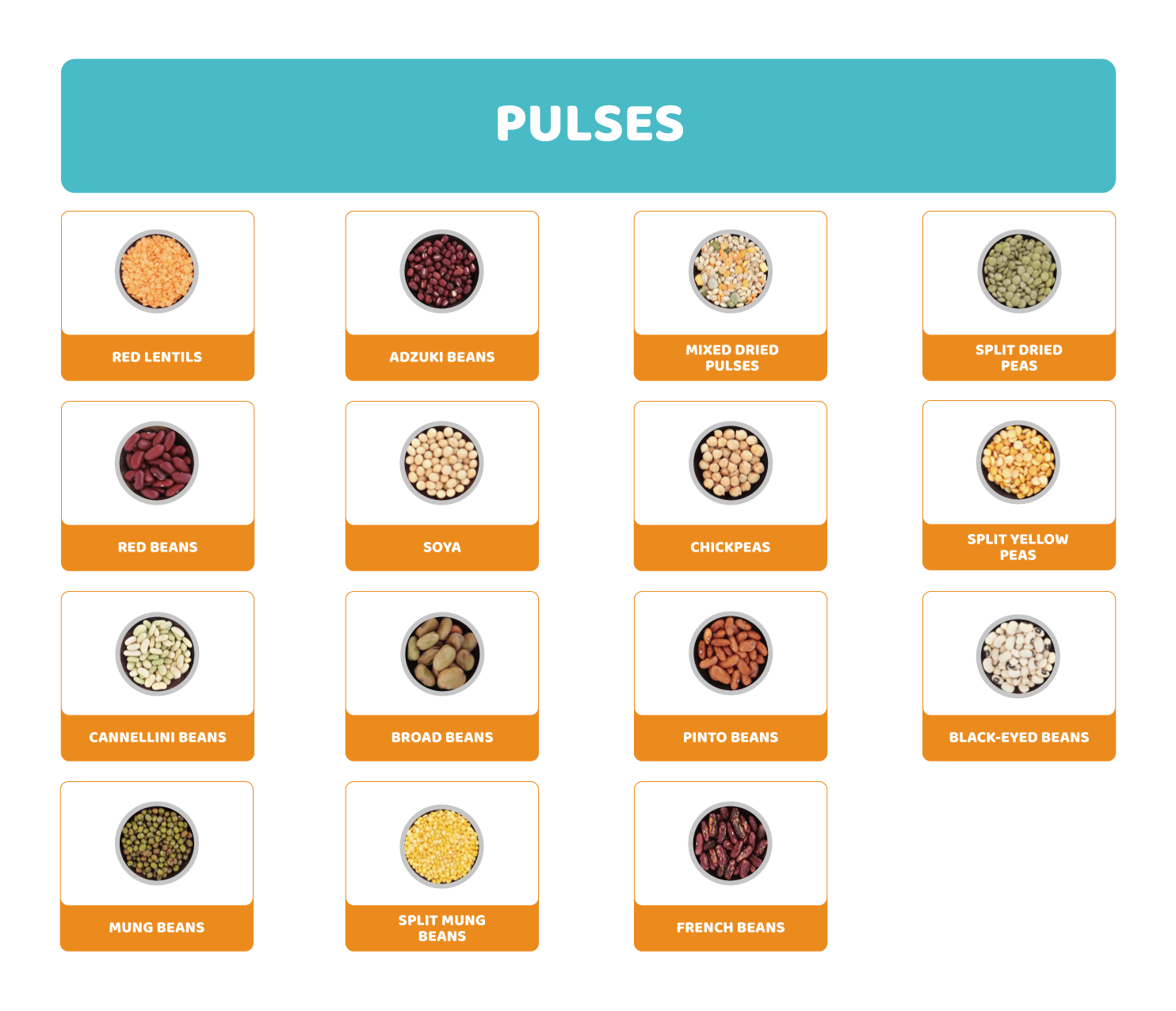
Beans, chickpeas, lentils, peas, lupins and broad beans are among the most nutritious and sustainable foods on the planet.
Why?
- rich in vegetable protein
- low environmental impact
- high satiety
- an excellent source of fibre
- support for the gut microbiota
- low cost
- long storage life
- long service life without cooling
The environmental superpower of legumes
Legumes play a special role in the soil because they are able to carry out biological nitrogen fixation, thanks to bacteria of the genus Rhizobium that live in symbiosis with their roots. These bacteria convert nitrogen from the air into forms that plants can utilise, naturally enriching the soil.
This process helps to reduce the need for chemical fertilisers, improve soil fertility, increase microbiological biodiversity and regenerate agricultural ecosystems over time. For all these reasons, legumes are considered one of the pillars of regenerative agriculture.

From a nutritional point of view:
- cereals: low in lysine
- pulses: low in methionine
When combined, they complete the profile of essential amino acids, providing protein of excellent biological quality.
Traditional Mediterranean examples:
- grain + pasta (e.g. pasta with grain)
- rice and beans
- lentils + couscous
- bread + hummus
This synergy protects health and promotes sustainability.
These foods do not need to be eaten at the same meal, provided there is variety throughout the day.
The impact of climate on future cereal and pulse production
Climate change is already altering the yield and nutritional value of crops. The rise in carbon dioxide (CO₂) in the atmosphere, for example, can cause some cereals to contain less protein, which reduces their nutritional quality. Heatwaves cause yield losses, prolonged droughts threaten irrigated crops, and the emergence of new pests makes it necessary to use more resistant varieties.
To address these challenges, scientists have been working with drought-resistant varieties, ancestral cereals such as spelt and millet, and neglected pulses, such as black-eyed peas, mung beans and white lupins, which often cope better with extreme conditions.
In a context of climate uncertainty, diversity – of species, varieties and production systems – is essential to ensure the future resilience of food systems.
The role of the Mediterranean diet
The Mediterranean diet emphasises the consumption of wholemeal cereals and makes use of a wide variety of pulses, incorporating them into many everyday recipes. It promotes classic combinations such as chickpeas, beans, broad beans and lentils, which provide high-quality protein, fibre and energy in a balanced way.
This dietary pattern also reduces meat consumption, placing greater emphasis on ‘one-pot’ dishes, such as soups, stews and casseroles, which are at once nutritious, economical and plant-based.
All of this makes the Mediterranean Diet a nutritionally complete and environmentally sound solution, in line with the health of both people and the planet.

Do you want to increase your fibre intake and curb hunger between meals?
Try swapping 50% of your white rice for brown rice, or adding a spoonful of pre-cooked pulses to your meal. Your gut microbiota will thank you — and so will the planet.
FOODWISELab challenge

Understanding how a simple dish made from wholemeal cereals and pulses can have a lower environmental impact than a meat-based dish, thereby encouraging healthier, more sustainable and more informed choices.