
Variety, Colour and Quality: turning the 5 portions into a balanced weekly plan
When you were aged 12–14, you learnt about the importance of the “5 Portions that Count” and why fruit and vegetables are essential for your health. Now, we’re taking this knowledge a step further: understanding how to use the variety, colour and quality of plant-based foods to create balanced meal plans that are consistent and in line with the Mediterranean diet.
Variety isn’t just a recommendation: it’s a smart strategy for maximising nutrients, supporting your gut microbiota, stabilising your energy levels and enriching your diet without making things complicated.
Each food group provides its own set of micronutrients. By varying the colours, textures and types of food you eat, you increase your chances of getting calcium, iron, zinc, folic acid and other micronutrients that are essential for the body to function properly. The more varied your diet is throughout the week, the more balanced your nutritional profile will be.
Why variety?

Each colour in plant-based foods indicates the presence of different compounds, which have specific functions in the body:
- Red ones → allies of the heart and of cell protection
- Oranges and yellows → essential for eyesight, skin and immunity
- Green vegetables → rich in fibre, vitamins K and C, and plant-based calcium
- Purples and blues → powerful antioxidants, important for the brain
- White and brown → bioactive compounds and fibre that help regulate cholesterol and support the immune system
The more colours you eat, the more different nutrients you consume, and the more balanced your day becomes.
During adolescence, this variety is particularly important for:
- muscle growth and maintenance;
- bone health;
- stable energy;
- concentration and academic performance;
- digestive health and the microbiota;
- future protection against chronic diseases.
Quality: what makes a good portion stand out?
Not all portions are the same. A portion of whole fruit, for example, contains fibre, vitamins and helps you feel full. A juice made from the same fruit contains natural sugar, but almost no fibre.
The quality of the food you choose has a direct impact on the strength of your bones and muscles: calcium, vitamin D, high-quality protein, pulses, vegetables and nuts all contribute to stronger bones and muscle development. A nutrient-dense diet not only supports your energy levels and wellbeing, but also helps build your future health.
To assess quality, use the following criteria:
How to identify a high-quality portion
| Criterion | What does it mean? | Examples |
|---|---|---|
| Place of birth | Minimally processed, ‘the real thing’ | apple, broccoli, carrot |
| Fibre | Keeps energy levels stable, nourishes the microbiota | whole fruit, pulses, whole grains |
| Colour | Variety of nutrients | three-colour salad |
| Seasonality | Better taste and a lower environmental impact | seasonal fruit |
| A simple ingredient | No added sugar or oils | plain nuts |
Using these criteria helps you make smart choices even in situations where your options are limited.

A teenager’s life is full of irregular hours, training sessions, studying and unexpected events. That’s why the five portions should be flexible, not rigid.
Practical strategies:
- includes fruit with breakfast;
- always carry a piece of fruit in your rucksack;
- add raw or cooked vegetables to your lunch;
- add vegetables to pasta, omelettes, wraps or rice;
- If you have soup as a starter, it’s a full serving of vegetables;
- Include vegetables in your evening meal, even if it’s just a simple dish.
The aim isn’t perfection, but consistency.
Weekly planning: turning variety into a habit.
An effective way to ensure variety and quality is to plan your weekly meals. This sort of planning doesn’t have to be complicated; you just need to lay down a few basics.
Examples of planning:
- 5-Colour Week: deliberately choosing foods in 5 different colours.
- Pulses Week: include 2 or 3 meals containing beans, lentils or chickpeas.
- Seasonal week: choose fruit and vegetables that are in season.
- Zero-waste week: use up leftover vegetables in soups, omelettes or stir-fries.
Variety doesn’t just improve nutrition: it reduces waste, saves money and boosts creativity at the table.
A simple model for ensuring colour, fibre and balance
The Mediterranean Diet is a dietary pattern that fits perfectly with the aim of variety.
This diet emphasises:
- fruit and vegetables with every meal;
- pulses several times a week;
- wholemeal cereals;
- nuts and seeds;
- olive oil as the main fat;
- simple, colourful, shared meals.
It is a flexible, economical and sustainable diet that is well-suited to a teenager’s lifestyle, and helps to maintain energy levels, digestion and wellbeing on a consistent basis.
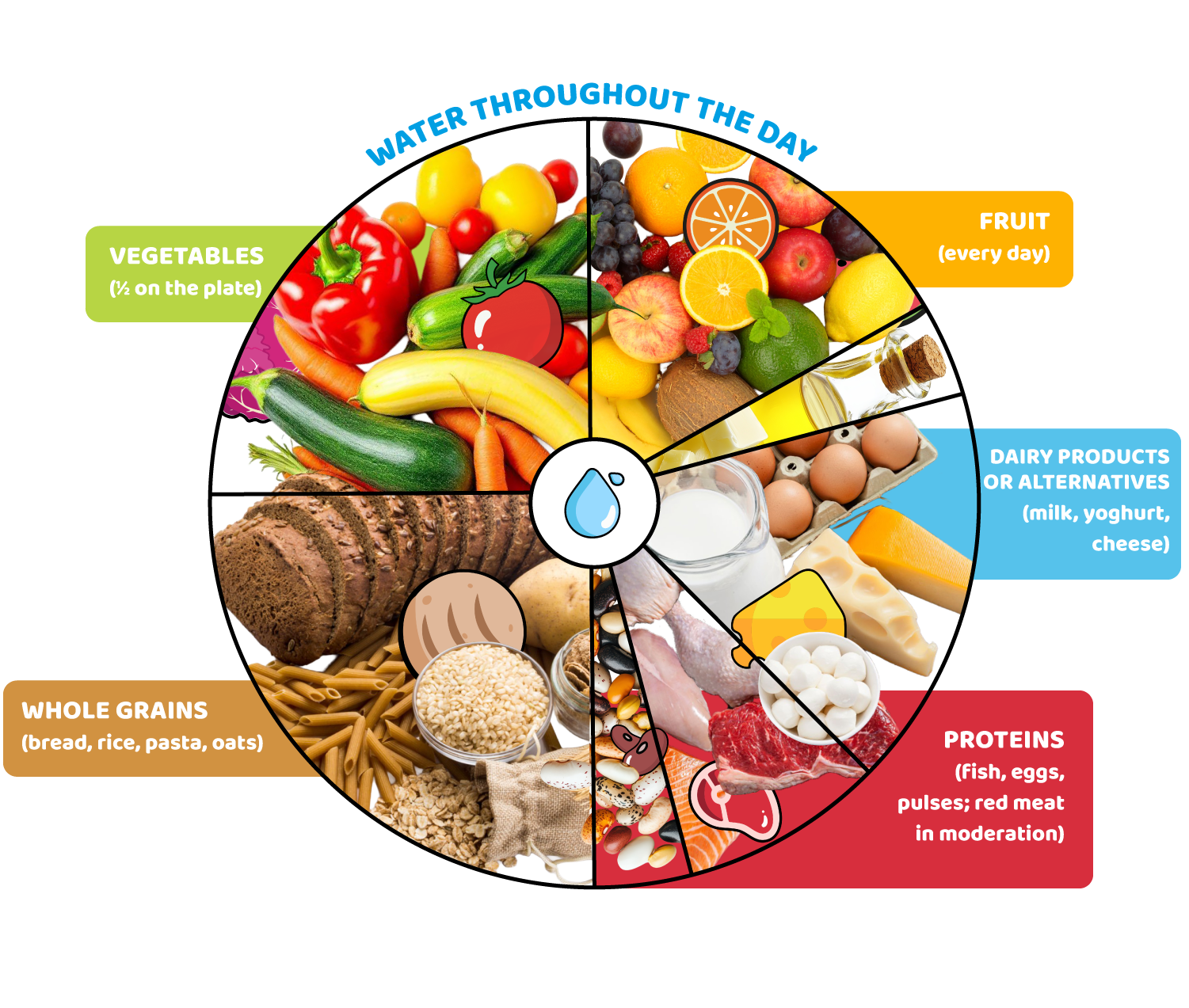

Try out the rule:
“3 colours per meal” or “5 colours a week”.
The more colourful your meal is, the more nutrients you’re giving your body — and the more balanced you’ll feel.
FOODWISELAB challenge

To promote dietary variety through the colours of food, recognising its link to nutrient diversity, digestion and energy throughout the day.
A colourful week