Fats

The word ‘fat’ often gives rise to doubts and myths, particularly during adolescence. But the truth is that not all fats are the same, and understanding their origin, quality and environmental impact is essential for making informed dietary choices. In this subsection, we’ll explore in greater depth what you began learning aged 12–14, now from a more analytical and critical perspective.
What are fats and what are they used for?
Fats (or lipids) play essential roles in the body and are not merely a source of ‘energy’. They provide long-lasting energy, aid in the absorption of fat-soluble vitamins (A, D, E and K), play a part in the structure of cell membranes and in hormonal regulation, protect vital organs and support the brain, which is made up of around 60 per cent fat.
During adolescence, the brain and the endocrine system (responsible for hormones) are in full development. Therefore, rather than simply considering the amount of fat consumed, it is essential to pay attention to the quality of the fats chosen.
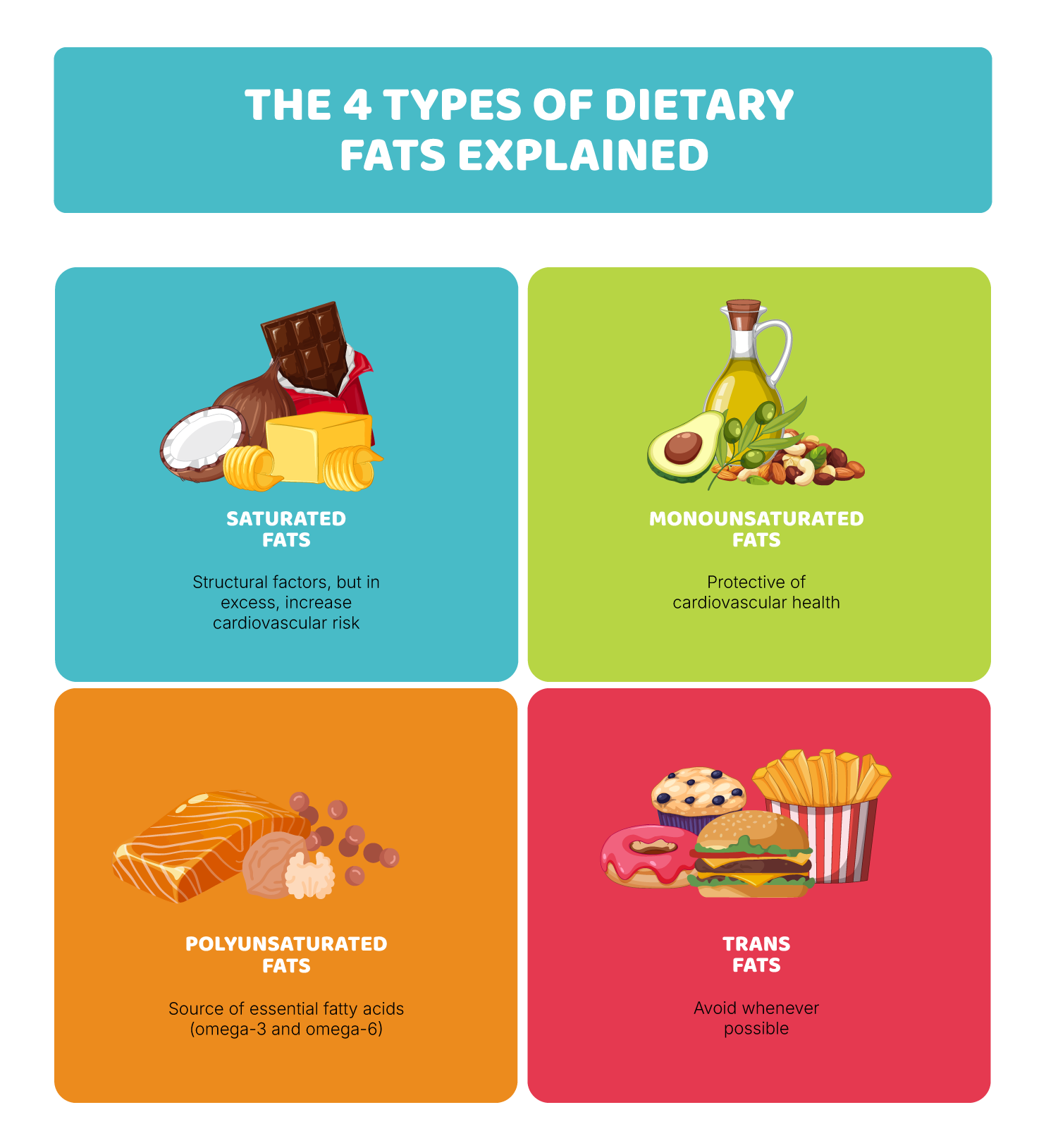
a) Unsaturated fats (the healthy ones). Found in:
- olive oil
- nuts and seeds
- big fish
- avocado
Benefits:
- lower LDL cholesterol
- reduce the risk of cardiovascular disease
- improve cognitive function
- have anti-inflammatory properties
b) Saturated fats (in moderation). Found in:
- Fatty meats
- butter
- cheese
- coconut oil
Excessive consumption may increase the risk of cardiovascular disease.
c) Trans fats (to be avoided). Industrially produced in:
- processed fried foods
- UP biscuits and snacks
- industrial bakery
Clear relationship with:
- increase in LDL
- chronic inflammation
- increased risk of cardiovascular disease
Olive oil: its origins, composition and why it is the cornerstone of the Mediterranean diet
Olive oil is extracted from olives, the fruit of the olive tree, one of the most striking symbols of the Mediterranean landscape. Its unique composition, rich in monounsaturated fatty acids and polyphenols, makes it a fat with health-protective properties.
What makes it special? Firstly, its good heat stability, which makes it ideal for cooking. Furthermore, it acts as a powerful antioxidant, helping to reduce oxidative stress, and has anti-inflammatory properties. Scientific evidence links regular consumption of olive oil, particularly as part of the Mediterranean diet, to a lower risk of stroke and heart attack, as well as to better support for the gut microbiota and a feeling of greater satiety after meals.
There are three main classifications: extra virgin olive oil, which is of the highest quality; virgin olive oil; and refined olive oil, which is of lower quality. To maximise health benefits, the best option is extra virgin olive oil.
Vegetable oils: environmental impact and key differences
Not all vegetable oils have the same environmental impact.
Low impact and good quality
- olive oil
- rapeseed (canola) oil
- linseed oil
High impact
- palm oil (linked to deforestation)
- soya oil (intensive monocultures)
Intermediate impact
- sunflower oil
- maize oil
Choosing the right oil is also an environmentally friendly choice.
What about the big one?
Sardines, mackerel, salmon and horse mackerel are sources of omega-3 EPA and DHA, which are essential for:
- brain function
- nervous system health
- humour and learning
- cardiovascular protection
Sustainability, however, depends on the species and the method of catch.
Small, locally caught fish tend to be the better choice.
How should you cook to preserve the quality of the fat?
The way we cook has a direct impact on the quality of the fats present in food. To preserve this quality, it is important to make choices that protect nutrients and prevent the degradation of oils. Olive oil should be the fat of choice for sautéing, roasting and cooking, thanks to its heat stability. On the other hand, it is advisable to avoid frequent deep-frying and reduce the excessive heating of oils, which can produce undesirable compounds.
It is also good practice to choose raw or unsalted roasted nuts, which retain their beneficial fatty acids, and to store olive oil in a cool place away from light, to prevent it from oxidising.
Taken together, these choices show how the method of cooking can significantly alter the final fat profile, affecting both health and the quality of the dishes.
The sustainability of fats: what you need to know
The sustainability of the fats we choose to consume is just as important as their nutritional quality. In many cases, the production of olive oil is linked to traditional farming practices, often associated with the Mediterranean landscape and agricultural systems that are more integrated with the environment.
On the other hand, some vegetable oils, such as palm oil and soya oil, are often linked to biodiversity loss, deforestation and ecosystem degradation, particularly when produced on a large scale without sustainability criteria.
The production of red meat generates, on average, far more greenhouse gas emissions than plant-based production, which means a larger ecological footprint for every gram of protein produced. Nuts, on the other hand, have a variable environmental impact (some crops consume more water), but they are very nutritious and energy-dense, so small quantities are sufficient to reap the benefits.
In the case of fish, larger fish tend to have a higher ecological footprint and accumulate more heavy metals as they move up the food chain, which raises both environmental and health concerns.
Ultimately, the best choice is one that combines health, the environment and the Mediterranean dietary culture: prioritising olive oil, nuts, pulses and fish in moderation, whilst reducing the consumption of animal fats with a greater environmental impact.
What can you do as a young consumer?
- Use olive oil as your main source of fat.
- Cut down on ultra-processed foods containing low-quality fats.
- Choose small, locally caught fish.
- Vary your sources of healthy fat.
- Cut down on fried and processed foods.
- To support small-scale olive oil producers.
- Read labels to identify oils and industrial processes.
- Choose natural snacks (nuts) rather than shop-bought bars.
- High in added fats.

If you can only make ONE change to your diet, make this one:
use extra virgin olive oil as your main source of fat.
It is the gold standard for health and one of the cornerstones of the Mediterranean diet.
FOODWISELab challenge

To learn how to distinguish between types of fat, understand their origin and environmental impact, and try out smart substitutions that promote health, wellbeing and sustainability.