
Microbiota and Fibre: looking after the internal ecosystem that keeps you in balance
At the start of FOODWISELab, you learnt about the journey food takes through the body and how digestion turns food into energy. Now, you’re taking it a step further: understanding that an invisible ecosystem lives inside your gut, made up of billions of microorganisms that influence digestion, your mood, your immune system and even your energy levels.
This ecosystem is called the gut microbiota, and it’s far more important than it seems.
The good news?
What you eat every day is the single biggest factor influencing the health of your microbiota.
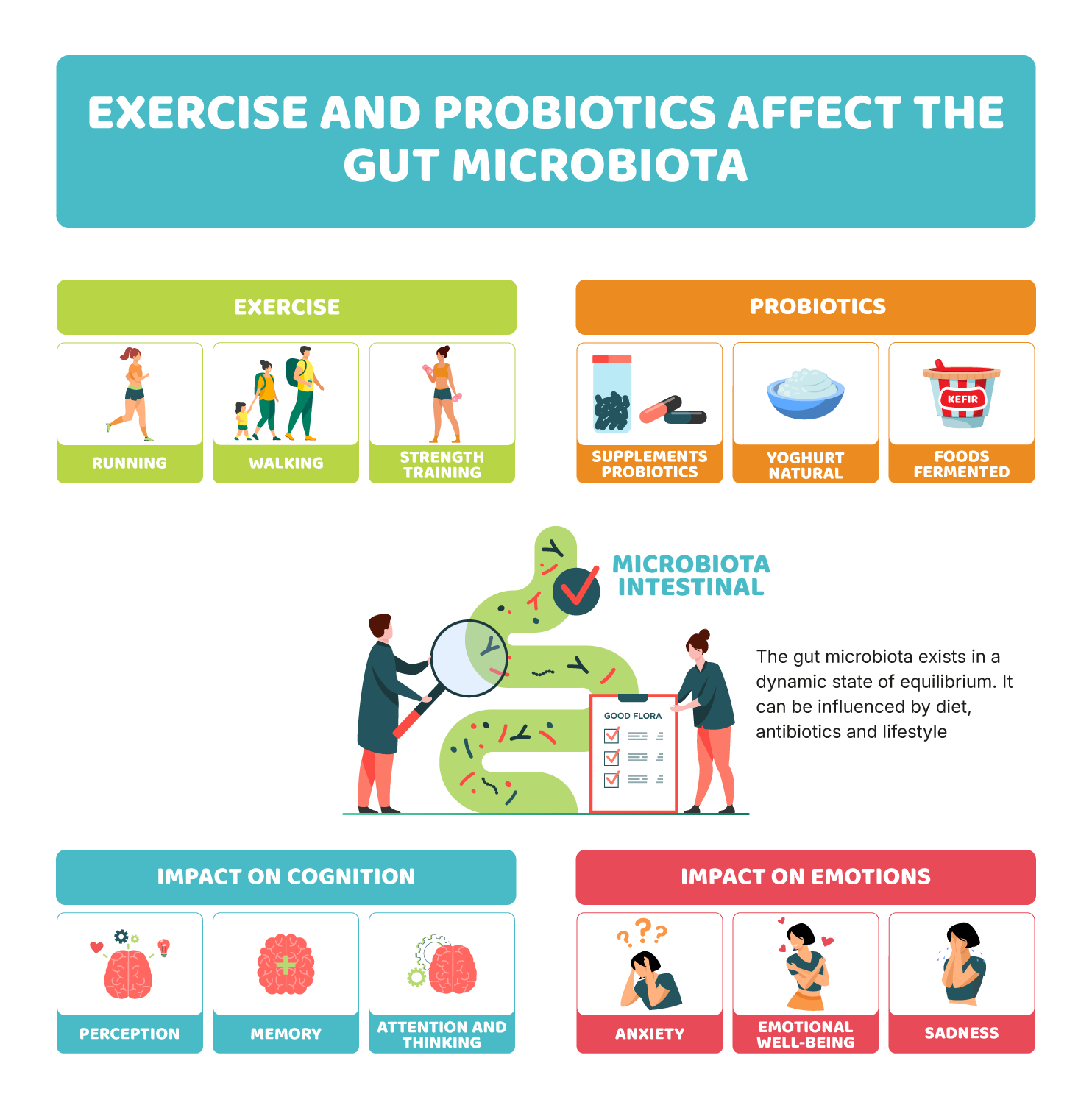
The microbiota is a community of mostly beneficial microorganisms that live mainly in the large intestine. Think of it as an internal garden:
- when you feed it well → it flourishes;
- when you deprive it of food or always feed it the same thing → it becomes malnourished;
- when you challenge it with unbalanced choices → it becomes unbalanced.
A healthy microbiota is associated with:
- better digestion;
- less abdominal discomfort;
- better appetite control;
- a more stable mood;
- greater resistance to infections;
- a more balanced energy.
Eating for your gut microbiota is eating for yourself.
Fibre is the part of plant-based foods that our bodies cannot digest, but our gut microbiota can, and it depends on it.
When you eat fibre-rich foods, the good bacteria:
- are multiplying;
- produce molecules that protect the gut;
- help regulate digestion;
- contribute to a more stable energy supply;
- play a part in the proper functioning of the immune system.
If fibre is the ‘fuel’ for the gut microbiota, then plant-based foods are the ‘super-tank’.
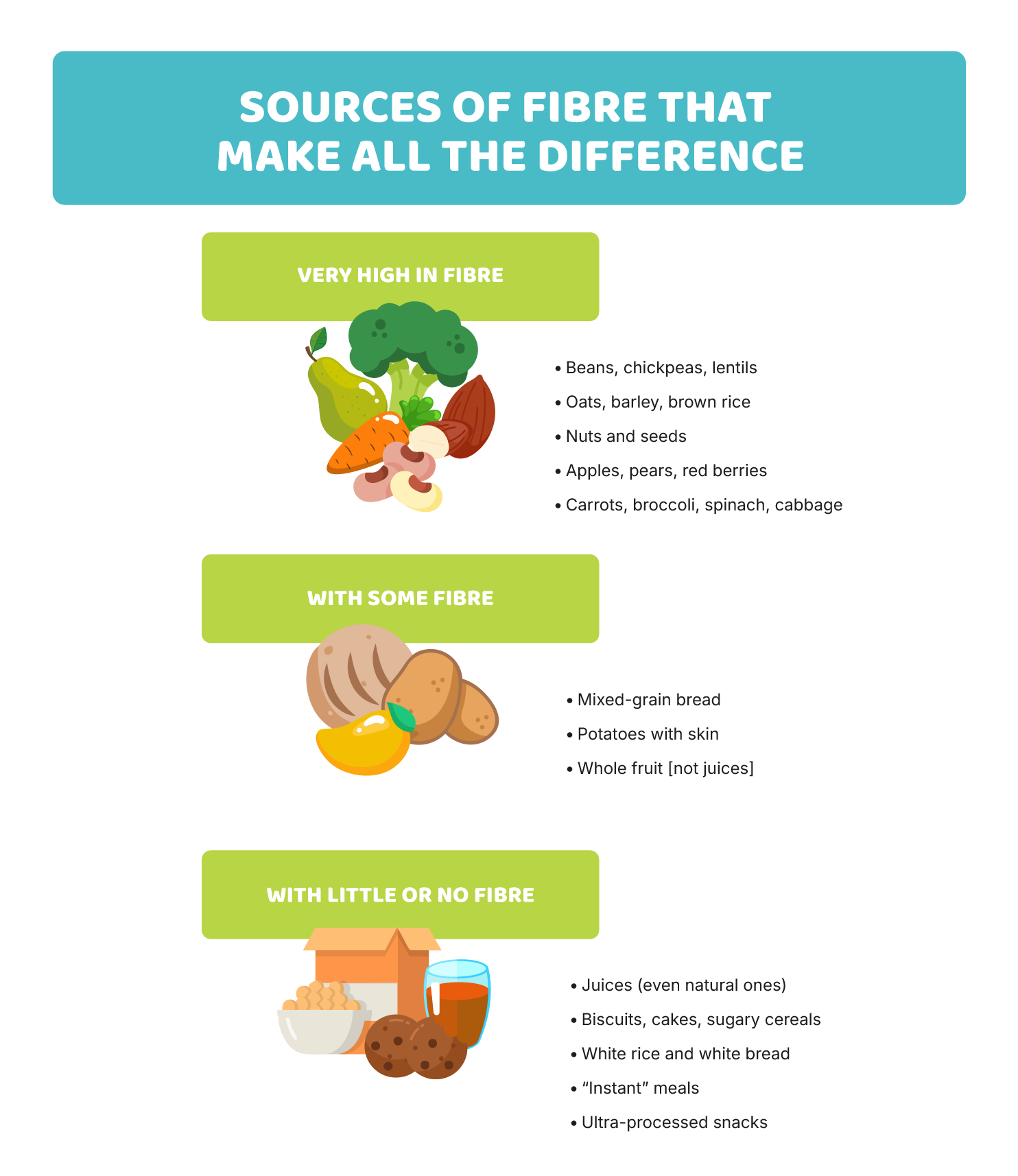
Sources of fibre that make a difference
Very high in fibre
- beans, chickpeas, lentils
- oats, barley, brown rice
- nuts and seeds
- apple, pear, red berries
- carrots, broccoli, spinach, cabbage
Contains some fibre
- mixed-grain bread
- potatoes in their skins
- whole fruit (not juice)
Low in or free from fibre
- juices (even natural ones)
- biscuits, cakes, sugary cereals
- white rice and white bread
- ‘instant’ meals
- ultra-processed snacks
Fibre is found in simple, affordable and versatile foods that are very common in the Mediterranean diet.
The microbiota thrives on diversity.
The greater the variety of vegetables, fruit, pulses, whole grains and seeds, the greater the diversity of beneficial bacteria.
Plant compounds such as polyphenols, flavonoids and antioxidants, found in colourful fruits, tea, pure cocoa, aromatic herbs and some vegetables, serve as food for beneficial species of the microbiota. These compounds also help to reduce inflammation and support gut function.
An easy tip:
Count how many different colours you eat in a day.
The more colours, the greater the diversity of your microbiota.
This ties in directly with the ‘5 portions that count’: eating a variety of fruit and vegetables is one of the most effective ways to nourish your internal ecosystem.
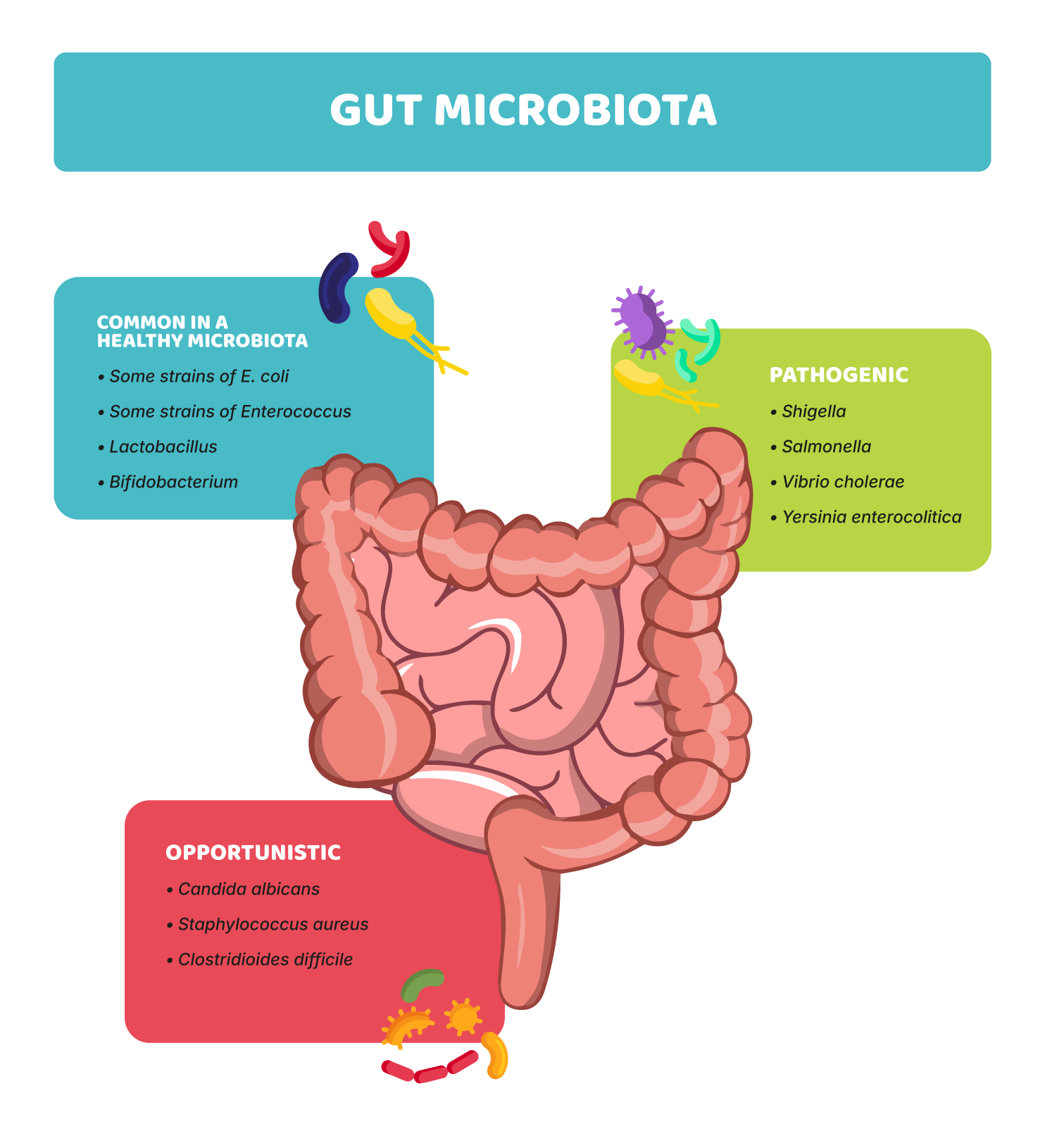
Gut microbiota
- Normal
- Lactobacillus
- E. coli
- Enterococcus faecalis
- Bifidobacterium
- Pathogenic
- Shigella
- Salmonella
- Vibrio cholerae
- Yersinia enterocolitica
- Opportunist
- Candida albicans
- Staphylococcus aureus
- Clostridium difficile
- Campylobacter
How the microbiota influences energy and wellbeing
Having a healthy microbiota isn’t just ‘good for the gut’.
It affects the whole body.
When it is in balance, it helps you to:
- to have more comfortable digestion;
- absorb nutrients more effectively;
- maintain a stable power supply;
- regulate appetite (fewer sugar cravings);
- reduce inflammation;
- to improve immune function;
- to keep spirits high.
When it is out of balance (a diet low in fibre, too much ultra-processed food):
- digestive discomfort occurs;
- power fluctuations;
- a greater craving for ‘quick snacks’;
- mood swings;
- greater risk of metabolic imbalances.
Looking after your microbiota means looking after your whole system.
How planning helps the microbiota
To nourish the microbiota, you need consistency and organisation:
Simple strategies:
- include 1 high-fibre food with every meal;
- plan 2–3 meals a week featuring pulses;
- vary the fruit you eat throughout the week;
- choose wholegrain cereals whenever possible;
- avoid relying on ultra-processed food;
- maintains relatively regular mealtimes.
Small, repeated choices have a big impact on your internal ecosystem.
Late meals, stress and the microbiota
The microbiota is adversely affected by:
- heavy meals late at night;
- long periods of fasting followed by very large meals;
- lack of sleep;
- prolonged stress;
- energy drinks and too much sugar.
All of this can throw your ‘inner garden’ out of balance.
Connection to the other topics:
- sleep → affects bowel rhythms
- energy throughout the day → a stable diet protects the gut microbiota
- hydration → aids digestion and bowel movements
- smart eating → informed choices protect the ecosystem
How to help (or harm) your gut microbiota in your day-to-day life
| Habit | Effect on the gut ecosystem | Examples |
|---|---|---|
|
Comer fibras diariamente |
Feeds beneficial bacteria |
fruit, oats, beans |
|
Vary your plant-based foods |
Increases diversity |
different colours throughout the week |
|
Regular meals |
Regulates digestive rhythms |
3 meals + 1–2 snacks |
|
Sleep well |
Regulates digestive function |
circadian rhythm |
|
Eating ultra-processed foods |
Reduces diversity |
biscuits, snacks, fizzy drinks |
|
Energy drinks/sugar |
Disrupts the microbiota |
peaks and troughs |
|
Dinner very late |
It worsens digestive comfort |
heavy meals in the evening |
Although diet is the main factor that shapes the gut microbiota, other factors also play a part. Short nights, constant stress and irregular schedules alter the hormones that regulate appetite and digestion, creating patterns that influence gut bacteria. Good sleep routines and taking time out help to maintain a healthy balance.

To help your gut microbiota, try following this rule:
“3 vegetables a day, 3 colours a day, pulses three times a week.”
It’s simple, practical and it works.
FOODWISELAB challenge

Encourage the consumption of a variety of fruit and vegetables, using coloursas a simple indicator of nutritional diversity and to aid digestion and energy levels.