
Food Quality, Processing and Impact
Choosing food isn’t just about comparing prices or picking the product that ‘looks best’. It’s about understanding how each type of processing affects the nutritional quality, texture, flavour, safety and even the environmental impact of what you eat. At the age of 15–17, you’re able to grasp nuances that would previously have been too complex, and this enables you to make truly informed choices.
Food processing: what does it really mean?
‘Processed’ is not synonymous with ‘bad’.
Most of the food we eat is processed in some way, from washing and cutting to cooking or preserving.
The important thing is to distinguish between types of processing and their effects.
Types of processing
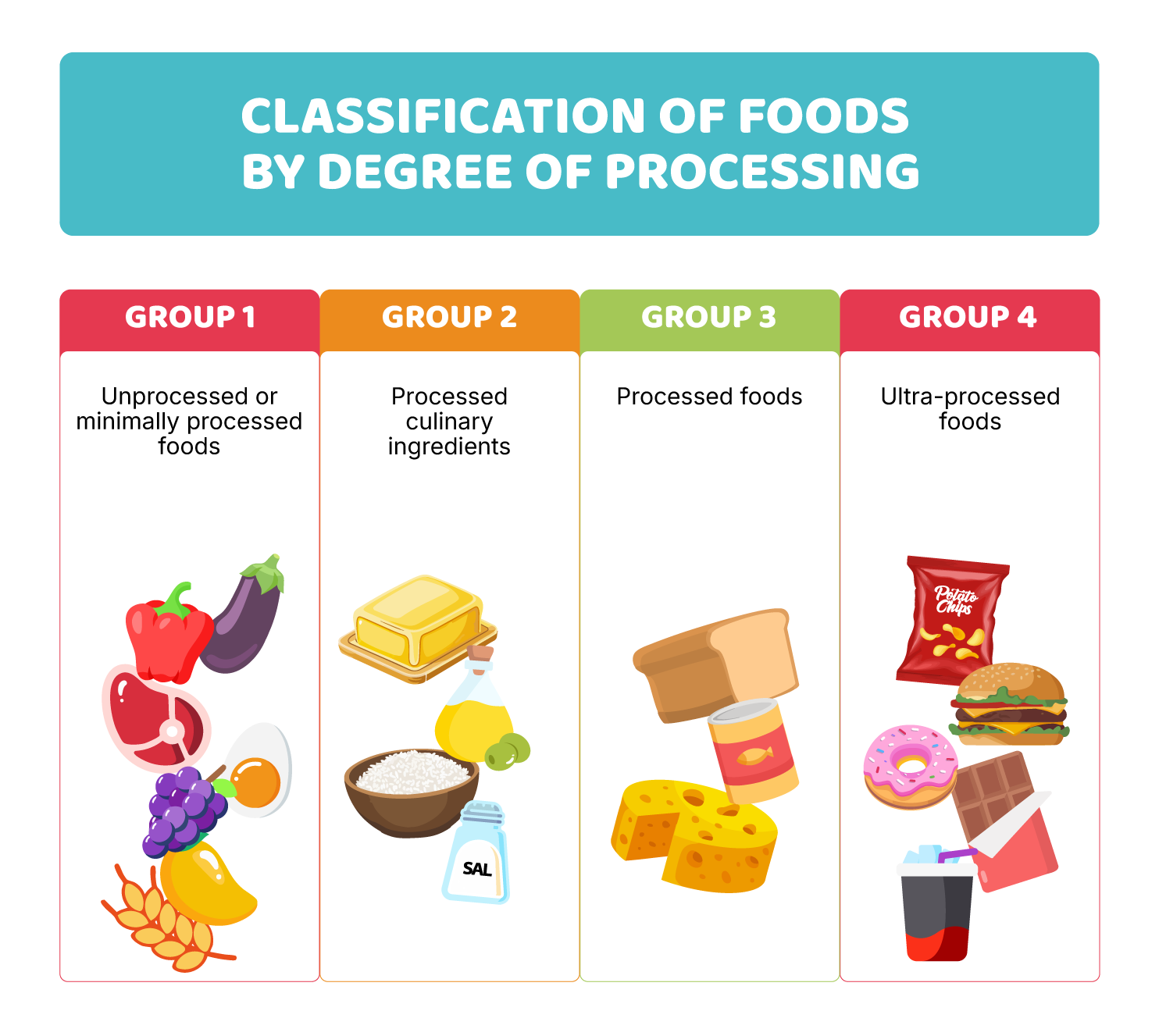
a) Minimally processed (good choices)
These include:
- washed or chopped fruit and vegetables; cooked pulses; wholemeal cereals; roasted nuts with no added ingredients; pasteurised milk
They retain their nutritional value and make life easier.
b) Cooked dishes
Ingredients used in cooking:
- • olive oil; vinegar; butter; spices; sugar (in small quantities); salt
When eaten in moderation, they form part of a balanced diet.
c) Processed foods
They contain some added ingredients, but the original ingredients are still recognisable:
- • sweetened natural yoghurt; cheese; traditional bread; plain tinned food (plain tinned tuna, cooked beans)
They can be balanced choices when selected carefully.
d) Ultra-processed foods
Industrially produced foods containing ingredients you wouldn’t use in your own kitchen:
- • syrups and modified sugars; flavour enhancers; ultra-refined flours; artificial flavourings; ‘cosmetic’ emulsifiers and stabilisers; refined fats
Ultra-processed foods are designed to be highly palatable, easy to eat even when you’re not hungry, and have a very long shelf life.
Scientific evidence shows that the problem is not processing itself, but the combined use of sugar, cheap fats, modified starches and cosmetic additives.
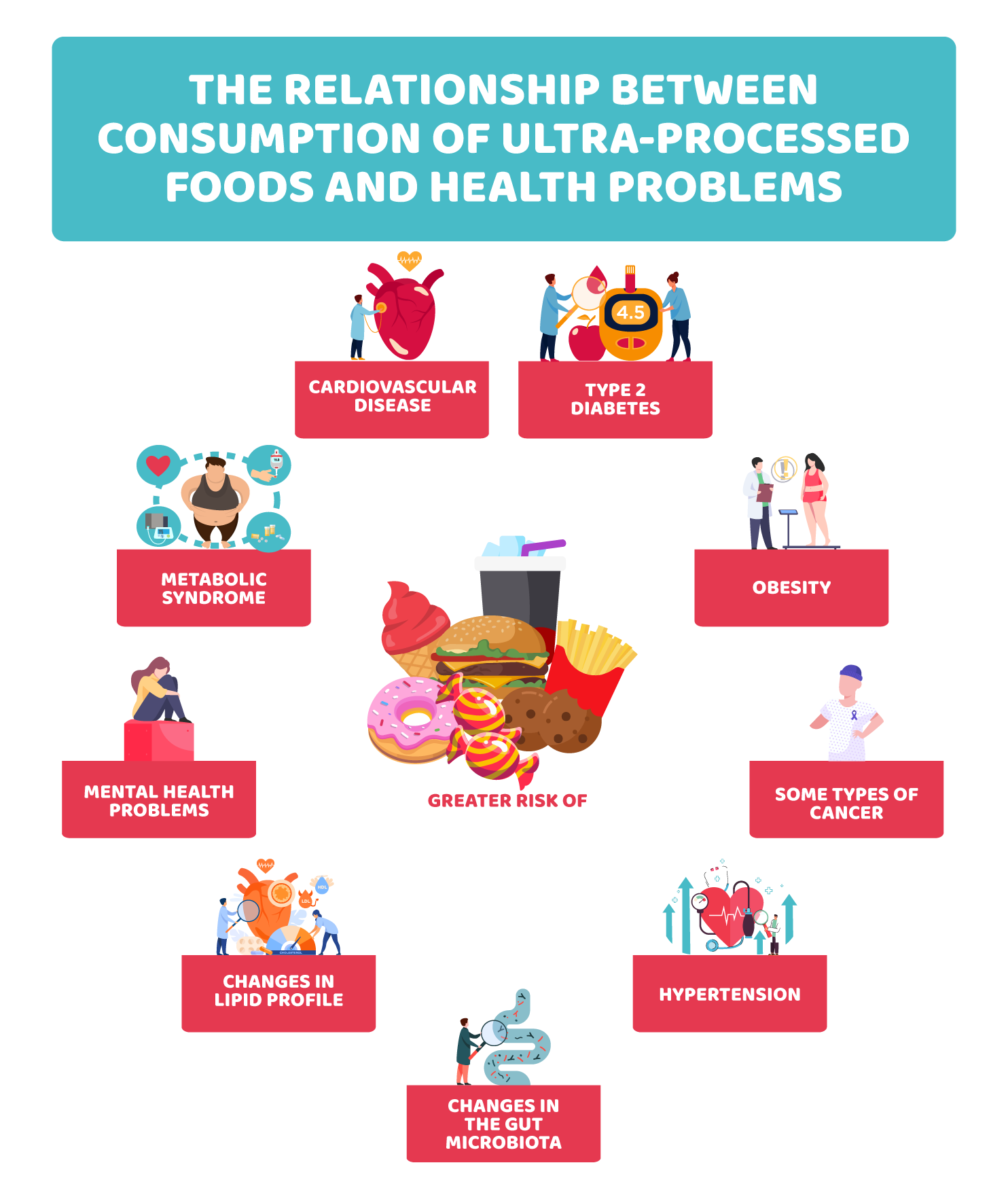
Impacts of ultra-processed foods:
- increase the risk of obesity and metabolic syndrome
- alter the gut microbiota
- cause blood sugar spikes and recurring hunger
- are associated with an increased risk of depression (emerging evidence)
- contribute to a calorie surplus and a loss of sensitivity to the natural flavour of food
The problem isn’t ‘having a piece of cake every now and then’. It’s the ongoing habit.
Environmental impact of processing
The level of processing is linked to the environmental impact:
- Ultra-processed foods rely on long supply chains, monocultures and extensive packaging
- Minimally processed foods are closer to nature
- Simple tinned and frozen foods may be more sustainable than fresh produce that is out of season
- Moderate processing can reduce waste (e.g. cooked pulses)
Nutritional quality and environmental impact often go hand in hand.
How can you make a sensible choice?
You don’t need to get rid of processed foods; you just need to know how to assess them.
To make a better choice:
- Choose foods whose list of ingredients you can picture in the kitchen.
- He prefers plain tinned food (in water or olive oil).
- Compare sugars, salt and fats.
- Check whether the product is in line with the Mediterranean diet.
- Use frozen food to reduce waste.
- Be wary of products with lots of health claims.
- Limit ultra-processed foods to occasional consumption.
- Look for labels that are clear and brief.
Practical, everyday examples
Good example 1 — Tuna in water vs. snack-style ‘tuna preparation’
- Tuna in water: fish + water + salt.
- Tuna snack: refined oils, thickeners, flavourings: ultra-processed.
Good example 2 — Plain yoghurt vs. ‘fit’ flavoured yoghurt
- Natural: milk + cultures: minimally processed.
- “Fit”: intense sweeteners, gelling agents, flavourings: processed/ultra-processed.
Good example 3 — Fresh potatoes vs. packet crisps
- Fresh: a wholesome food.
- Crisps: refined fat + additives + high salt content: ultra-processed.

If you don’t recognise three or more ingredients on the list… your body probably won’t either. Prioritise simple foods, with few steps between the field and your plate.
FOODWISELab challenge

Understand the impact of ultra-processed foods (UPs) on your daily life and try out simpler alternatives that are closer to whole foods, noting the effects on your energy levels, fullness, mood and concentration.