
Material Cycles: how our food choices affect water, carbon, nitrogen and phosphorus
In Years 12–14, you learnt that matter circulates continuously across the planet through cycles — water, carbon, nitrogen and phosphorus — and that these cycles make life possible. Now you’ll explore this in more depth: how agriculture, food production and our daily choices accelerate, disrupt or throw these cycles out of balance, with an impact on the climate, soil fertility, water quality and global food security. Understanding these cycles enables you to plan meals that respect the planet’s limits.
The Planet as a Closed System
All the matter that exists on Earth is already here. What changes is simply the way in which matter transforms and circulates. Food, soil, plants, oceans, the atmosphere – everything is interconnected. When one cycle becomes unbalanced, all the others are affected.
For example:
- Excess fertiliser increases the amount of available nitrogen, leads to the eutrophication of rivers, reduces oxygen levels in the water, decreases fish populations and ultimately affects the human food supply.
- Rising CO₂ levels exacerbate global warming, lead to more frequent droughts, reduce agricultural productivity and contribute to food insecurity.
- Excessive water use in agriculture reduces the availability of water for ecosystems and leads to a loss of biodiversity.
That is why understanding these cycles helps us to make more balanced choices.
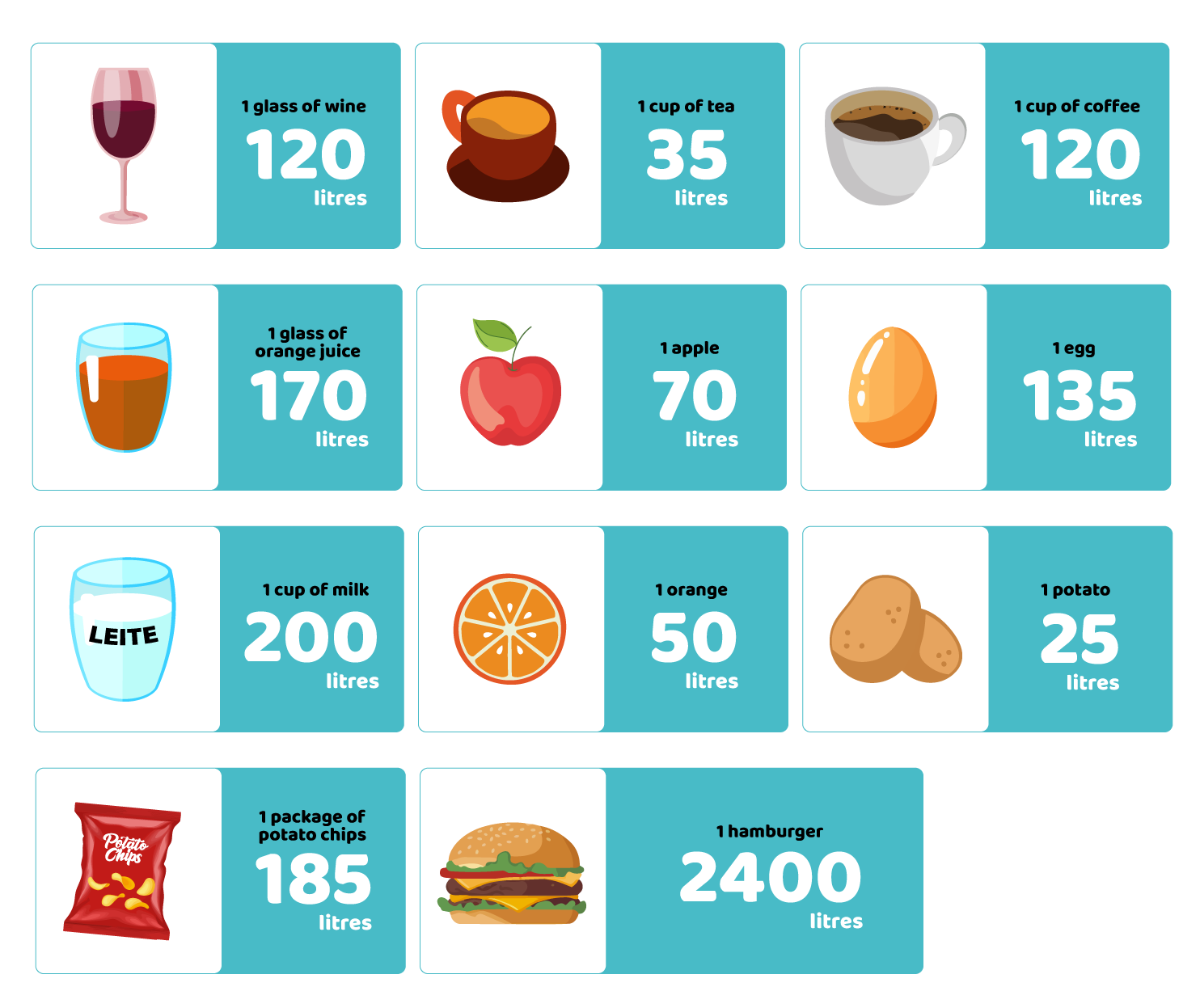
Agriculture accounts for around 70 per cent of the fresh water consumed worldwide. But not all foods use the same amount of water.
Current problems relating to the water cycle include the cultivation of very ‘thirsty’ crops, such as almonds or rice, in arid regions; the use of intensive irrigation, which leads to the drying up of rivers and aquifers; and food waste, which also represents a waste of all the water used in the production of that food. How can we help?
- choose seasonal fruit and vegetables
- to choose locally produced food
- reduce waste
- promote crops with a smaller water footprint
- include more pulses (which are very water-efficient)
Examples of water footprints (approximate):
Carbon circulates between the atmosphere, soil, plants and the oceans. However, this balance has been disrupted by:
- the burning of fossil fuels
- deforestation
- intensive farming
- extensive livestock farming
Agriculture accounts for around one-third of global emissions when production, transport and waste are taken into account.
Food has a direct impact on the carbon cycle. The consumption of ruminant meat is associated with high methane (CH₄) emissions, whilst crop production contributes to carbon sequestration through photosynthesis. Healthy soils store carbon over long periods, but the production of ultra-processed foods involves long supply chains and intensive energy use, thereby increasing emissions. To help balance this cycle, it is helpful to make choices such as including more plant-based meals, opting for locally produced food, supporting regenerative farming practices, reducing the consumption of ruminant meat and avoiding food waste – bearing in mind that every piece of food discarded also represents wasted carbon.
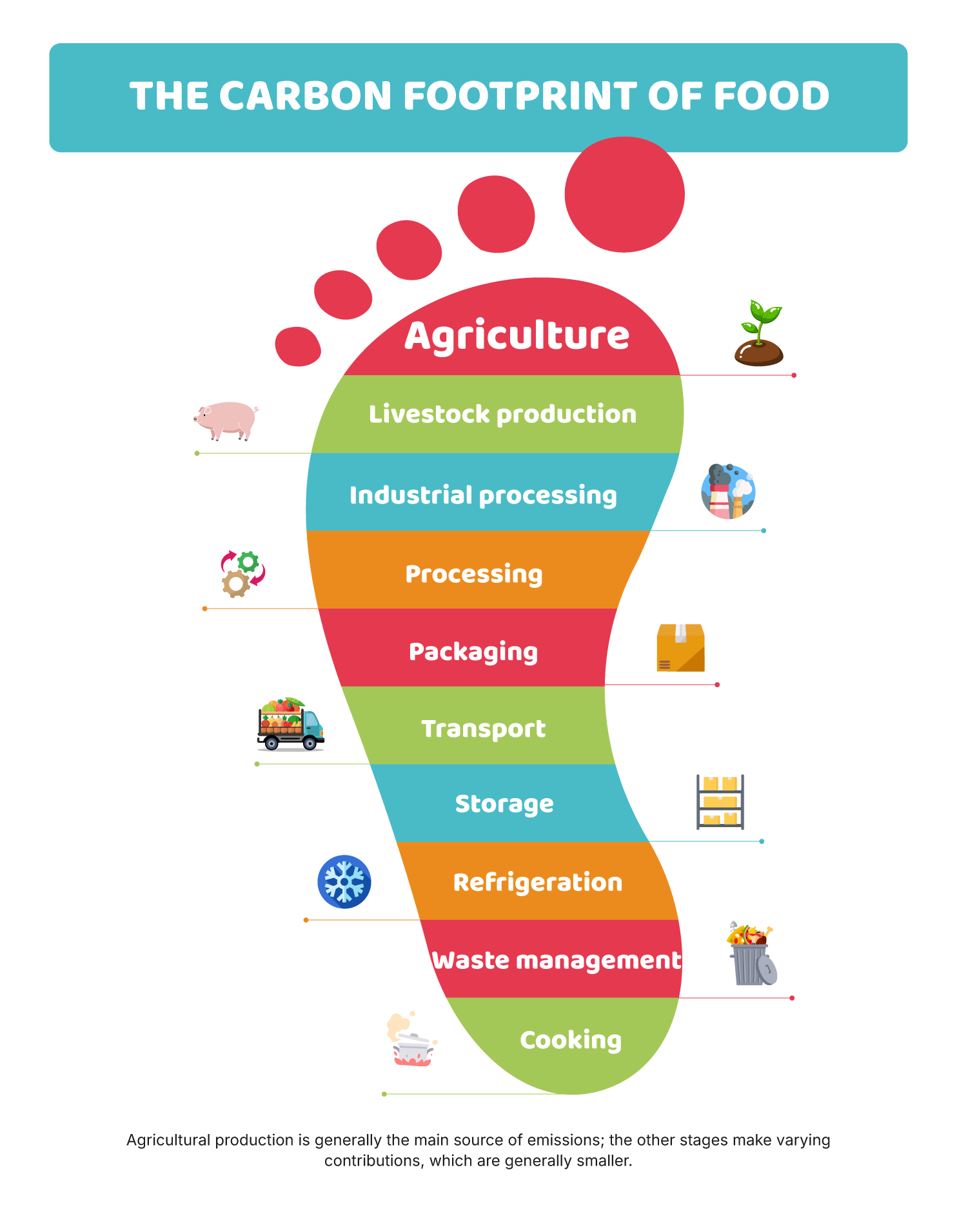
Carbon footprint
Carbon footprint = a measure of the amount of CO₂ released as a result of:
- to produce food
- to transport food
- food refrigeration and processing
Comparison of the impact by food type:
- Highest → meat, dairy products and eggs
- Lower → vegetables, fruit, pulses and cereals
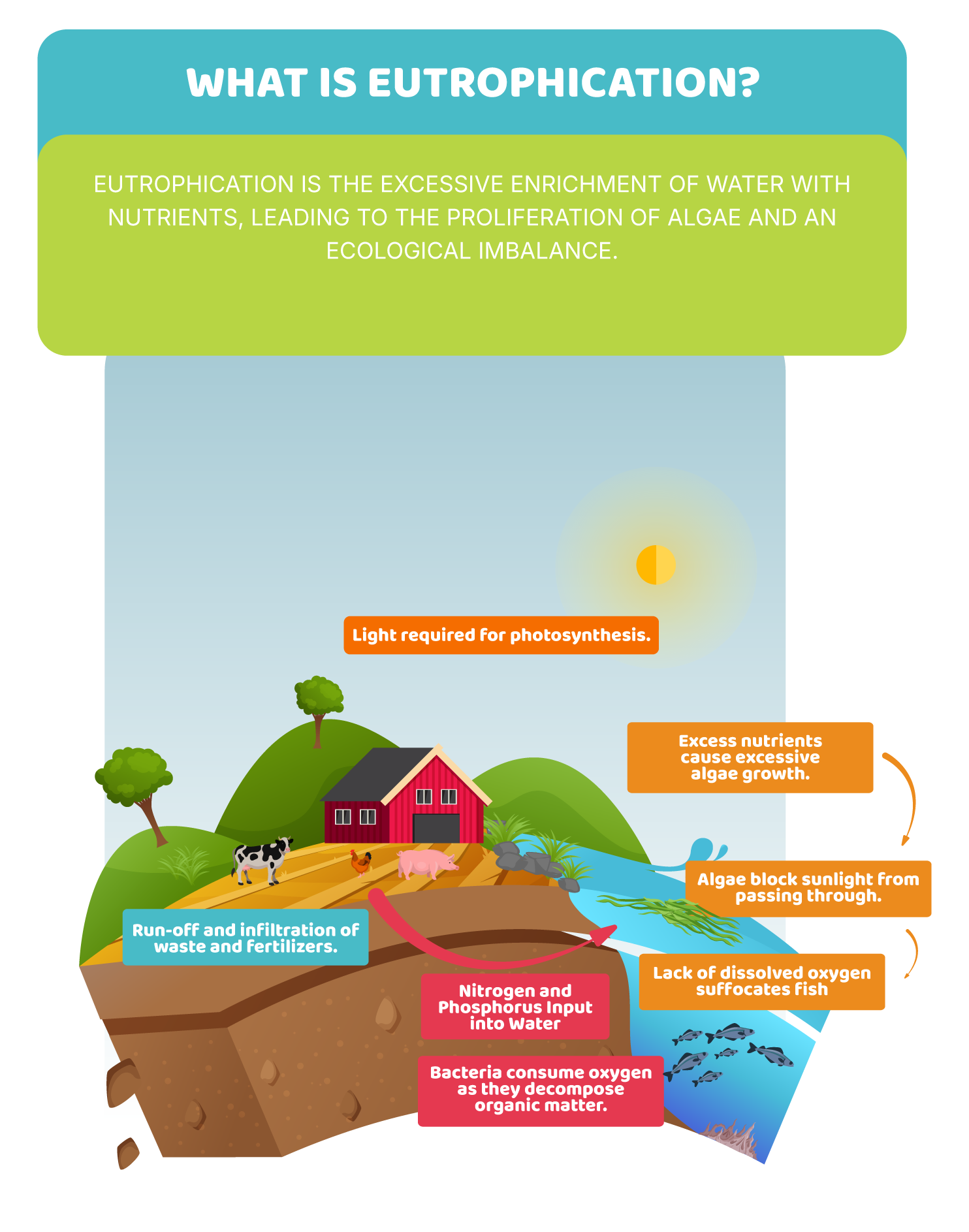
Nitrogen is essential for plants and proteins. However, only a small proportion of it is in a usable form, which is why agriculture relies on synthetic nitrogen. The problem is that excess nitrogen ends up in rivers and seas, causing eutrophication.
Consequences:
- algal bloom
- lack of oxygen → “dead zones”
- fish and shellfish deaths
- decline in local fishing
- impact on the economy and human nutrition
Link to dietary choices:
There is a direct link between dietary choices and the nitrogen cycle. Foods from intensive monocultures are associated with greater use of nitrogen fertilisers, whilst legumes such as beans, chickpeas and lentils are able to fix nitrogen naturally in the soil, reducing the need for external inputs. Similarly, regenerative farming practices significantly reduce the use of synthetic fertilisers, contributing to a more balanced nitrogen cycle.
What we can do:
- include more pulses
- prioritise sustainably produced food
- reduce ultra-processed foods that rely on monocultures (maize, soya)
The Phosphorus Cycle: a limited resource
Phosphorus is essential for life, but it cannot be created and is concentrated in just a few mines around the world.
Problems:
- the mines are running out
- agricultural surplus → pollutes rivers and seas
- is crucial for global agriculture
New solutions:
- nutrient recycling
- composting
- integrated soil management
- circular systems
In food:
- food waste = wasted phosphate
- a varied selection of crops = reduced need for phosphate fertilisers
How each cycle is linked to diet
| Cycle | Current issues | Impact on diet | What helps |
|---|---|---|---|
|
Water |
shortage, intensive irrigation |
lower output, higher prices |
eat seasonal produce, reduce waste |
|
Carbon |
emissions, deforestation |
climate instability |
more plant-based, less meat-intensive |
|
Nitrogen |
eutrophication |
loss of fish stocks, degraded soils |
pulses, regenerative agriculture |
|
Phosphorus |
future shortage |
risk to agriculture |
recycling, circular economy |
Every food you choose has a water, carbon, nitrogen and phosphate footprint; planning mindfully means balancing these four cycles so that the planet remains functional and habitable.
How to plan meals that are in tune with natural cycles
Practical strategies:
- Prioritising seasonal produce helps to respect the water and carbon cycles.
- Including legumes reduces the need for synthetic nitrogen.
- Eating more vegetables and locally sourced produce reduces emissions and phosphorus use.
- Avoiding waste saves water, carbon, nitrogen and phosphorus.
- Choosing food from short supply chains reduces environmental impacts.
- Supporting local farmers and regenerative farming practices helps to create more balanced cycles and healthier soils.
Your dish can either restore balance or exacerbate the imbalance.

When you’re planning your meals, ask yourself:
“If all young people chose this food every week, would this natural cycle become more balanced or more unbalanced?”
This simple question guides you towards truly sustainable choices.
FOODWISElab challenge

Understand how your food choices relate to the water, carbon, nitrogen and phosphorus cycles, raising awareness of the environmental impact of your meal and identifying realistic improvements.