
Sugars and sweeteners: origin, processing and effects on the body
Sugar consumption has risen dramatically over the last century, making it one of the most hotly debated topics in nutrition and health. But to make informed choices, it is important to understand where sugars come from, how they are processed, what types there are, and what their effects are on health – especially during adolescence, when sugary drinks and snacks are particularly common.
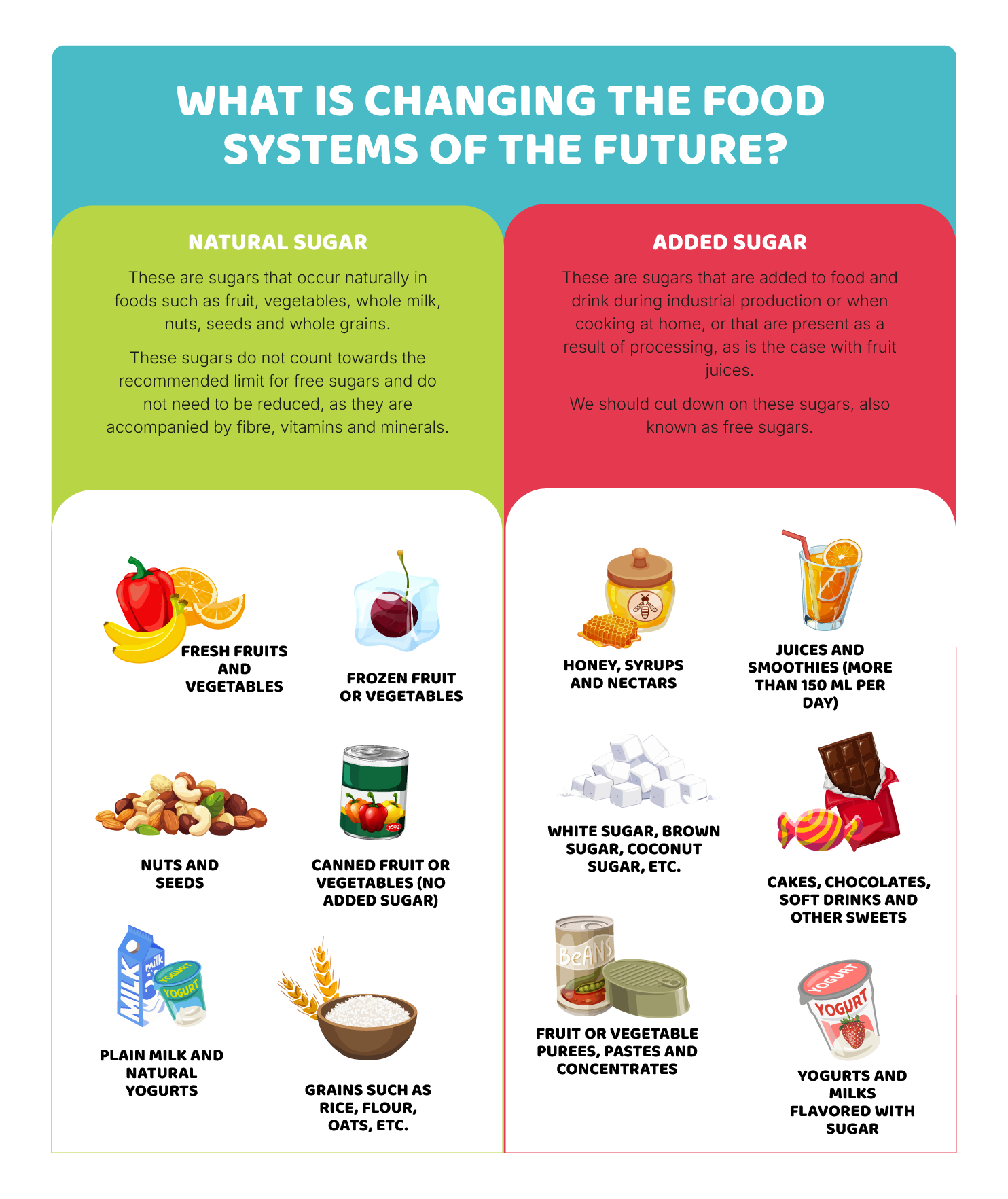
The sugars we consume can come from very different sources, and the body does not react to them all in the same way.
On the one hand, there are natural (intrinsic) sugars, which are found within the food itself, as is the case with fruit, vegetables and milk (lactose). In these cases, the sugar is accompanied by fibre, water, vitamins and other micronutrients, which means the body’s response is different: absorption is slower and the impact on metabolism is more balanced.
Then there are free sugars, which are added during industrial processing, in home cooking or at the point of consumption, such as when we put sugar in our coffee. These include honey, syrups (such as agave syrup or high-fructose maize syrup), and white, brown or coconut sugar. Although some have a more ‘natural’ image, from a metabolic point of view the body recognises them primarily as sugar.
Finally, there are the sugars used in ultra-processed foods, often in isolated forms and combined in industrial formulations. These sugars are usually found in products that are low in nutrients, highly palatable and not very filling, which encourage excessive consumption without providing any significant health benefits.
How is sugar produced?
The most common type of sugar comes from:
- sugar cane
- sugar beet
Processes include:
- extraction
- clarification
- crystallisation
- refining
Refining removes minerals and plant compounds, leaving virtually nothing but pure sucrose.
The environmental impact of sugar production varies considerably depending on its source and the method of cultivation. Production from sugar cane consumes large quantities of water and utilises vast areas of tropical land, often leading to a loss of biodiversity. Sugar derived from sugar beet, on the other hand, tends to involve greater use of fertilisers and higher energy consumption.
Furthermore, the entire process involves transport and intensive processing stages, which increase the final product’s ecological footprint. Added to this are packaging and global distribution, which further contribute to the environmental impact associated with sugar.
Sugar in the body: what actually happens?
When we consume free sugar, the body reacts quickly and strongly. Blood glucose levels rise immediately and the pancreas responds by releasing insulin to remove the sugar from the blood. Any sugar not used for energy ends up being stored as fat, contributing to a positive energy balance. These frequent blood glucose spikes are associated with increased chronic inflammation, can disrupt the gut microbiota and activate the brain’s reward centres, which makes us more likely to want to consume more.
In adolescence, excessive consumption of free sugars is linked to several specific consequences. These include an increased risk of tooth decay, increased acne and fatigue following consumption, due to fluctuations in blood glucose levels. Effects on performance are also observed, such as reduced cognitive function following spikes in blood sugar, and a higher future risk of pre-diabetes. Furthermore, regular consumption of very sweet and hyper-palatable foods can foster a dependent relationship with these types of products, making it more difficult to reduce their consumption over time.
The main source of sugar during adolescence: drinks
Soft drinks, energy drinks, iced teas, juices and nectars account for most of the added sugars consumed by young people.
Common examples:
- 1 can of fizzy drink: ~35 g sugar
- 1 energy drink: ~50 g
- 1 nectar: ~20–30 g
- 1 coffee with milk, sweetened with syrups: 30–40 g
The World Health Organisation recommends that <10 per cent of daily energy intake should come from free sugars (ideally <5 per cent).
Sweeteners: are they a safe alternative?
Sweeteners (aspartame, purified stevia, sucralose, acesulfame K, erythritol) replace sugar without providing any energy.
Benefits (where appropriate):
- reduce calorie intake
- help to control blood sugar levels
- useful for people with diabetes
- protect teeth
Risks or limitations:
- may continue to prefer very sweet flavours
- some may alter the microbiota (emerging evidence)
- risk of excessive consumption of ‘zero’ energy drinks
- can replace healthy eating habits
Evidence-based conclusion:
- Insurance in moderate quantities.
- Useful when cutting down on sugar.
- They are not a solution to an unbalanced diet.
Sugars in the Mediterranean Diet
The Mediterranean diet relies primarily on fresh fruit as its main source of natural sweetness in everyday life. It uses honey in small quantities, reserves traditional desserts for special occasions and includes virtually no sugary drinks. The diet is based on minimally processed foods, which contain no added sugars.
For all these reasons, this is a naturally low-sugar diet that is balanced and in line with long-term health.
How can we make informed choices in our day-to-day lives?
- read the labels: total and added sugars
- Avoid sugary drinks: make water your priority
- prefers whole fruit to juice
- Cuts down on snacks: biscuits, sugary cereals, pastries
- use sweeteners only as part of a gradual reduction
- Choose naturally sweet snacks: fruit, yoghurt, nuts
- eats desserts in moderation; saves them for special occasions
- Replace the sugar in your coffee with cinnamon, pure cocoa or nothing at all (you’ll get used to it in no time!)

If you usually drink fizzy drinks or energy drinks, make the change gradually:
Week 1: half fizzy drink + half water
Week 2: one fizzy drink per week
Week 3: no soft drinks at all
Your energy levels, mood and concentration will thank you for it.
FOODWISELab challenge

Learn how to spot hidden sugar in everyday foods, interpret food labels and try out smart swaps to reduce your intake of added sugars, without compromising on enjoyment or food quality.