Cereals
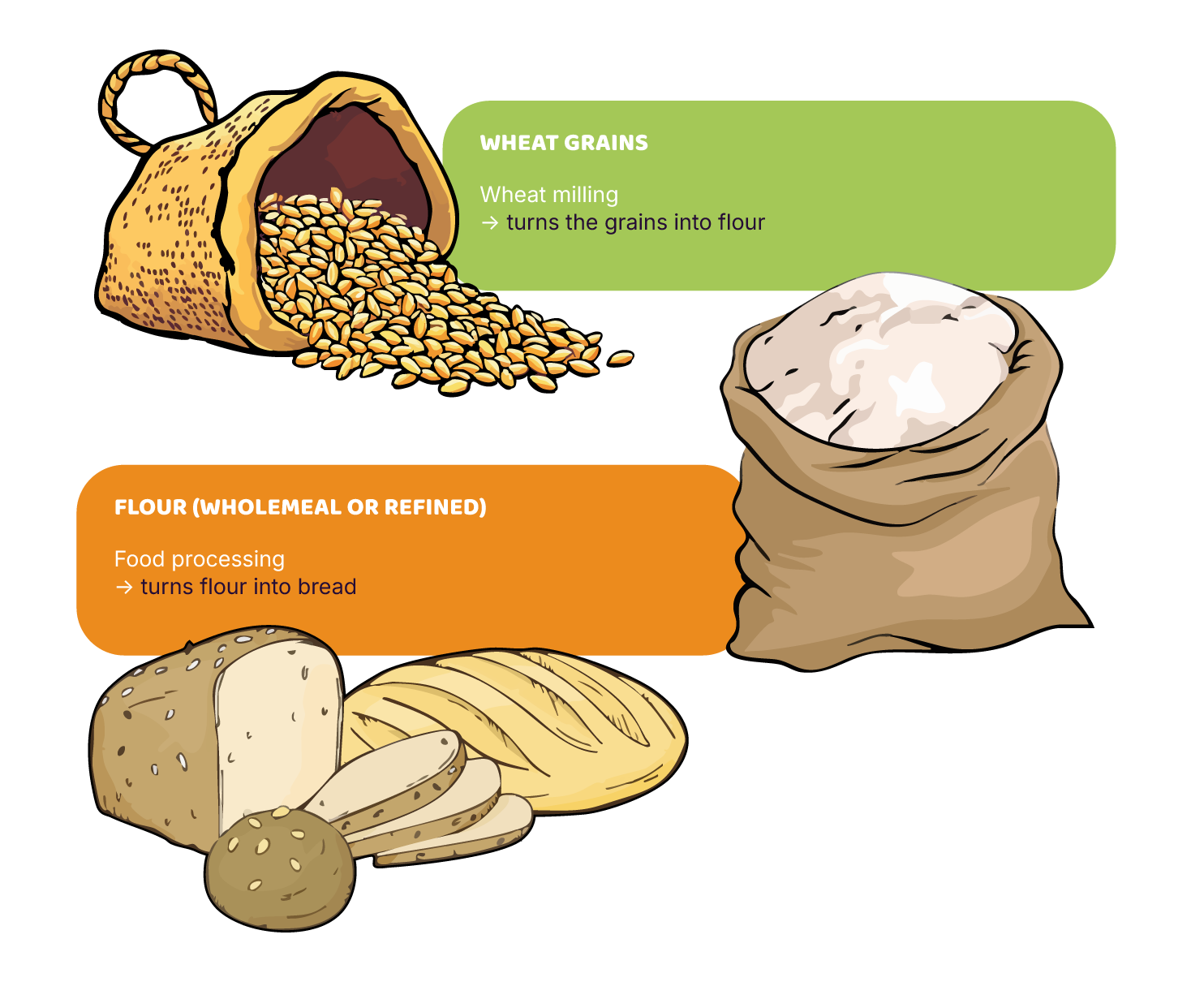
Cereals such as wheat, maize, rice and oats form the basis of many of the foods we eat every day. Before they reach our tables, the grains undergo processing that makes them tastier, easier to store and ready to eat.
From harvest to cleaned grain
Once harvested, the grains are cleaned and dried to remove impurities such as stones, straw and dust. This is an essential step in ensuring food safety and the quality of the products that follow
The oldest and most common process is milling.
The grains are milled to separate the different parts of the cereal:
- bran, which is rich in fibre;
- the germ, which contains vitamins and healthy fats;
- and the endosperm, which contains the starch from which flour is made.
In addition to the extraction rate, the protein content of the wheat grain can result in different types of flour. Some common types of flour used in food and baking are shown in the table:
| Tipo | Descrição | Utilização |
|---|---|---|
| Farinha branca (farinha simples) | Contém amido e 8% de proteína | Molhos, bases de pizzas, bolos |
| Farinha com fermento | Contém 12% de proteína e fermento químico (bicarbonato + ácido) | Bolos esponja, panquecas, scones |
| Farinha forte | Até 17% de proteína; pode ser branca ou integral | Pão, massa folhada e outros produtos de pastelaria |
| Farinha de pão de trigo | Farinha branca com pelo menos 10% de gérmen adicionado | Fabrico de pão |
| Farinha “brown” | Similar à integral mas com algum farelo e gérmen removidos | Pão, pastelaria e bolachas |
| Farinha moída em pedra | Farinha integral moída entre duas pedras | Pão, pastelaria e bolachas |
| Farinha integral | Contém a maior parte da fibra alimentar do grão | Pães, bolos e bolachas |

SECONDARY PROCESSING OF BREAD FLOUR
| Stage | Process | Purpose |
|---|---|---|
| Sift and check | The flour arrives from the factory and is stored in silos. | Check for contaminants. |
| Mixing and kneading | All the ingredients are mixed at high speed for about 5 minutes. | Knead the gluten to achieve the right texture. |
| Division | The dough is divided into individual portions. | All units must have the same weight. |
| Primary fermentation | The dough moves along a conveyor belt and the yeast becomes active. | During fermentation, the yeast produces gas (carbon dioxide), causing the dough to rise. |
| Roll out the dough | The dough is kneaded for 2 minutes to remove any air. Individual pieces are then cut and shaped before being placed in bread tins. | This stage ensures that the gas is distributed throughout the mixture, forming small bubbles. |
| Leavening | The moulds pass through a tunnel heated to around 45°C for 50 minutes. | The dough triples in size. The dough develops texture. |
| Cooking | The loaves bake slowly in an oven for about 20 minutes. They are usually baked at around 200ºC. | The bread increases in size even further (due to the production of carbon dioxide). The dough becomes firm and brown. |
| Cooling | The bread is cooled mechanically to remove the heat. | Slow cooling prevents condensation from forming. |
| Court | The bread is sliced by machine and packaged. | The labels show the weight and the use-by date. |
SECONDARY PROCESSING OF FLOUR INTO DOUGH
Pasta is a mixture of water and durum wheat semolina.
Durum wheat is rich in gluten and ideal for pasta.
The flour is milled using the ‘zero’ extraction method.
Pasta flour can be classified as 00 (very fine).
Eggs are often used in fresh, homemade pasta; they are not usually used in industrially produced dried pasta.
Vegetable or herb juices may be added for colour and flavour.
DOUGH-MAKING PROCESS
| Stage | Description |
|---|---|
| Mixing and kneading | The semolina is stored in silos, fed into a rotary mixer and warm water is added. The dough is kneaded. |
| Flavouring and colouring | You can add purées, tomatoes, spinach, herbs, etc. |
| Rolling | The dough is passed through rollers until it reaches the desired thickness. |
| Pasteurisation | The dough is passed through hot steam to kill bacteria. |
| Court | The final shape is cut (e.g. spaghetti, penne). |
| Drying | Controlled drying to remove moisture without altering the texture. |
| Packaging | The pasta is packaged in a controlled atmosphere or pre-cooked and chilled. |
PROCESSING FOR CONSUMPTION AND PRESERVATION
When it comes to breakfast cereals, the processing goes even further.
The flour or whole grains are cooked, pressed and toasted in special machines. This process may include:
- Steam cooking – to soften the grains and release the starch.
- Drying and shaping – to shape into flakes, rings or balls.
- Toasting – in hot-air ovens, which make the cereals crispy and tasty.
- Addition of vitamins and minerals – to enhance the nutritional value.
Examples:
- The maize is turned into maize flakes.
- Wheat is used to make wheat flakes or wholegrain cereals.
This type of processing allows food to be preserved for a long time without losing its flavour.
NEW FORMS AND PRODUCTS
Cereals are also used to produce pasta, biscuits, tortillas, wholemeal cereals and instant porridge.
With the help of technology, innovative products are emerging, such as wholemeal bread enriched with seeds, cereal bars or extruded snacks, made by heating and pressing cereal flours until they take shape.
Currently, manufacturers are seeking to make products healthier and more sustainable, by reducing sugar, salt and saturated fats, and increasing fibre and whole grains.
SUSTAINABILITY AND INNOVATION
The production of cereal-based foods is becoming more environmentally friendly:
renewable energy and water-efficient systems are used;
by-products (such as bran) are used for animal feed or fertilisers;
and investment is made in recyclable and biodegradable packaging.
The latest research is also focusing on new techniques, such as 3D printing of cereal-based foods, which makes it possible to create personalised products whilst minimising waste.

A tip for planning your meals
Opt for wholemeal cereals and less processed options, such as oat flakes, brown rice or mixed-grain bread. These products retain more nutrients and fibre, which help regulate your digestion and provide a balanced source of energy. Avoid cereals high in sugar and opt for those with fewer ingredients and more real cereal – it’s good for your health and for the planet!
FOODWISELAB challenge
 Understand how cereals are processed, from the grain to the food you eat, distinguishing between simple processes and more intensive processes, and reflecting on the impact of these processes on health.
From grain to plate: How are cereals processed?