
Processing of fish, molluscs and crustaceans
Fish and shellfish are highly nutritious foods, rich in high-quality protein, omega-3, vitamins and minerals. However, they are highly perishable products, which spoil quickly if they are not preserved or processed immediately after being caught.
For this reason, the food industry uses various methods of processing and preservation to maintain the safety, flavour and nutritional value of these foods for longer.
Preparation and cleaning
After being caught, the fish and shellfish undergo an initial process of cleaning and preparation:
- The fish are scaled, gutted, washed and cut (into fillets, steaks or loins);
- Molluscs and crustaceans, such as clams, mussels, prawns and crabs, are washed and purified, often by soaking them in clean water for 18–24 hours, to remove impurities and sand.
This treatment is essential to ensure food quality and safety before moving on to the next stages.
Fish, molluscs and crustaceans

There are various methods for processing and preserving fish and shellfish, chosen according to the type of product and the desired storage time.
a) Freezing and refrigeration
Cold storage is the most commonly used method for preserving fresh fish.
- Refrigeration keeps the fish at a temperature of between 0 and 4 °C, delaying spoilage for a limited period, depending on the species and handling conditions.
- Rapid freezing is carried out at around -30 °C; storage normally takes place at temperatures of -18 °C or below. Frozen products must be packaged in a protective atmosphere to prevent freezer burn and the oxidation of fats.
b) Salting, drying and smoking
These are traditional methods that have been known for thousands of years.
- Salting draws water out of the fish and creates an environment that inhibits the growth of most bacteria.
- Drying can be carried out in the sun or in hot-air greenhouses.
- Smoking involves exposing the fish to wood smoke, and may be preceded by salting.
These methods are widely used in Portugal for traditional products such as dried and salted cod.
Fish processing methods
| Method | Description |
|---|---|
| Salting | Salted and dried fish to remove excess water → may need soaking before cooking |
| Smoking | Fish that has been smoked to add flavour (e.g. smoked herring) |
| Marinated or preserved | Fish placed in vinegar or brine → softens and adds flavour |
| Freezing | The most commonly used method, whether on land or at sea → keeps the fish fresh |
| Refrigeration | Keeps the fish ready to cook and eat |
| Canning | E.g.: sardines, tuna, mackerel → preserved in oil, water or tomato sauce |
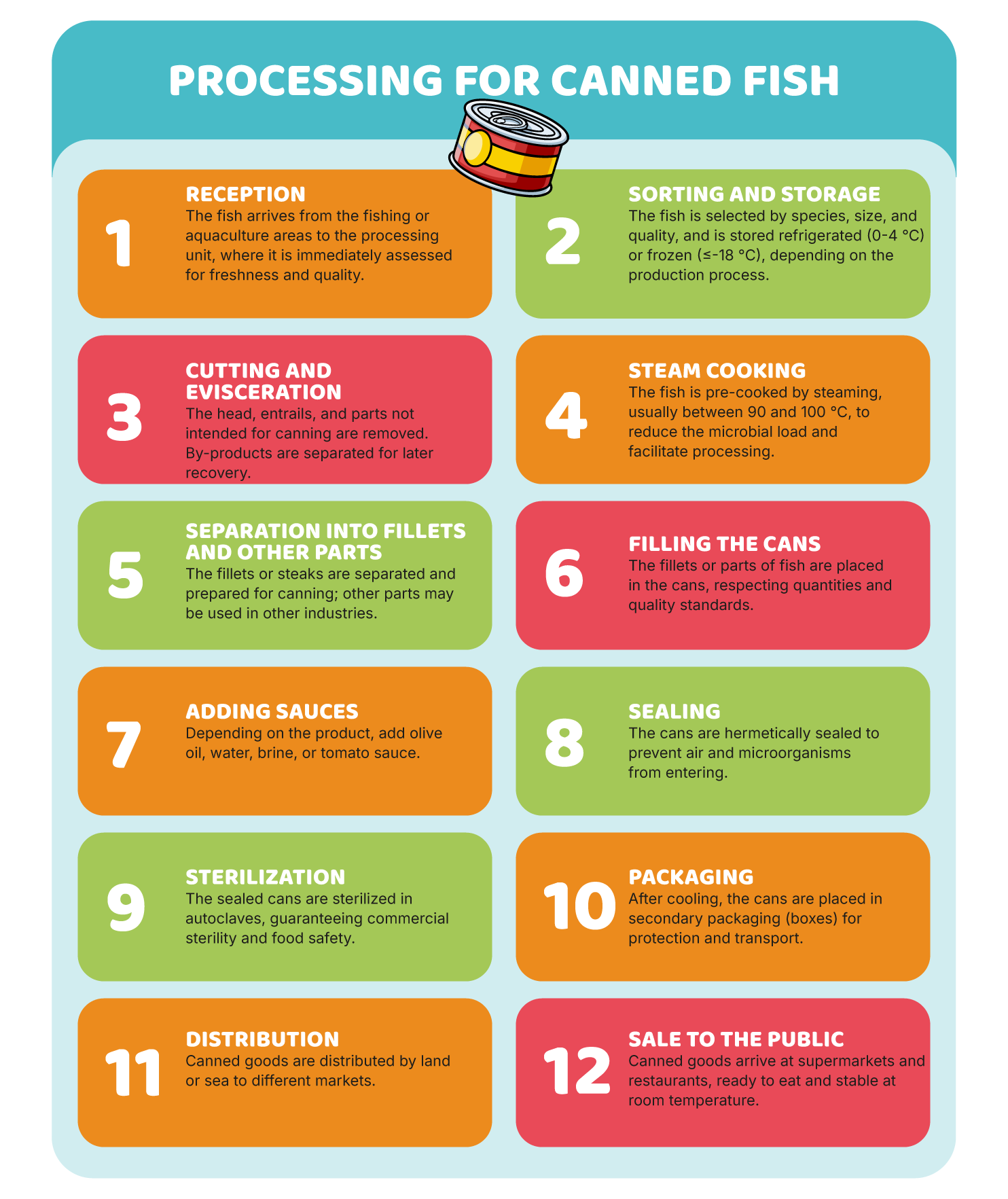
Canning is a modern and safe way of preserving fish for years. The fish (such as sardines, tuna or mackerel) are pre-cooked in steam or brine, placed in tins with oil, tomato sauce or water, and then sterilised at temperatures above 110 °C.
This process ensures the product is commercially sterile, making it safe and stable at room temperature.
PRODUCTION OF SURIMI AND RECONSTITUTED PRODUCTS
Surimi is a white paste made from minced, lean fish that has been washed and mixed with cryoprotectants and, in some products, with starch and other ingredients, used to make products such as ‘seafood delicacies’ sticks.
This process makes it possible to make use of species of low commercial value and create foods with a long shelf life and low fat content.
FERMENTATION
In some cultures, fish and shellfish are naturally fermented with salt, creating products such as fish paste or fish sauce.
Fermentation develops intense flavours and helps to preserve the product, potentially reducing the need for refrigeration before opening.
UTILISATION OF BY-PRODUCTS
During the processing of fish and shellfish, parts such as heads, skins, bones, spines and guts are left over.
Nowadays, almost nothing goes to waste; these by-products are turned into:
- Fish meal and fish oil, used in animal feed and omega-3 supplements;
- Gelatine and fish collagen, used in cosmetics and food;
- Chitosan, extracted from the shells of prawns and crabs, is used in bioplastics, medicines and cosmetics.
These uses form part of the circular economy, which transforms waste into valuable resources.
SUSTAINABILITY AND THE ENVIRONMENT
The fish processing industry faces significant environmental challenges: high water and energy consumption, effluent discharges and large volumes of organic waste.
To reduce this impact, processing plants are investing in:
- Reuse of wash water;
- Energy from renewable sources;
- Full utilisation of by-products;
- Recyclable and biodegradable packaging.
Sustainable fish processing helps to protect the oceans and marine ecosystems, contributing to more responsible eating habits.

A tip for planning your meals
Include fish or seafood 2 to 3 times a week.
Choose fresh or frozen locally sourced produce, and also try canned fish in brine or in olive oil, which retain their nutrients and flavour.
Avoid fried or highly processed products and make the most of less well-known species, helping to balance the exploitation of marine resources.
FOODWISELAB challenge

Understand how fish can be processed from its fresh state into the various products you consume, distinguishing between simple processes and more intensive processes, and reflecting on the impact of these processes on health.
From the sea to the plate: How is the fish prepared?