
Milk and dairy products
What is
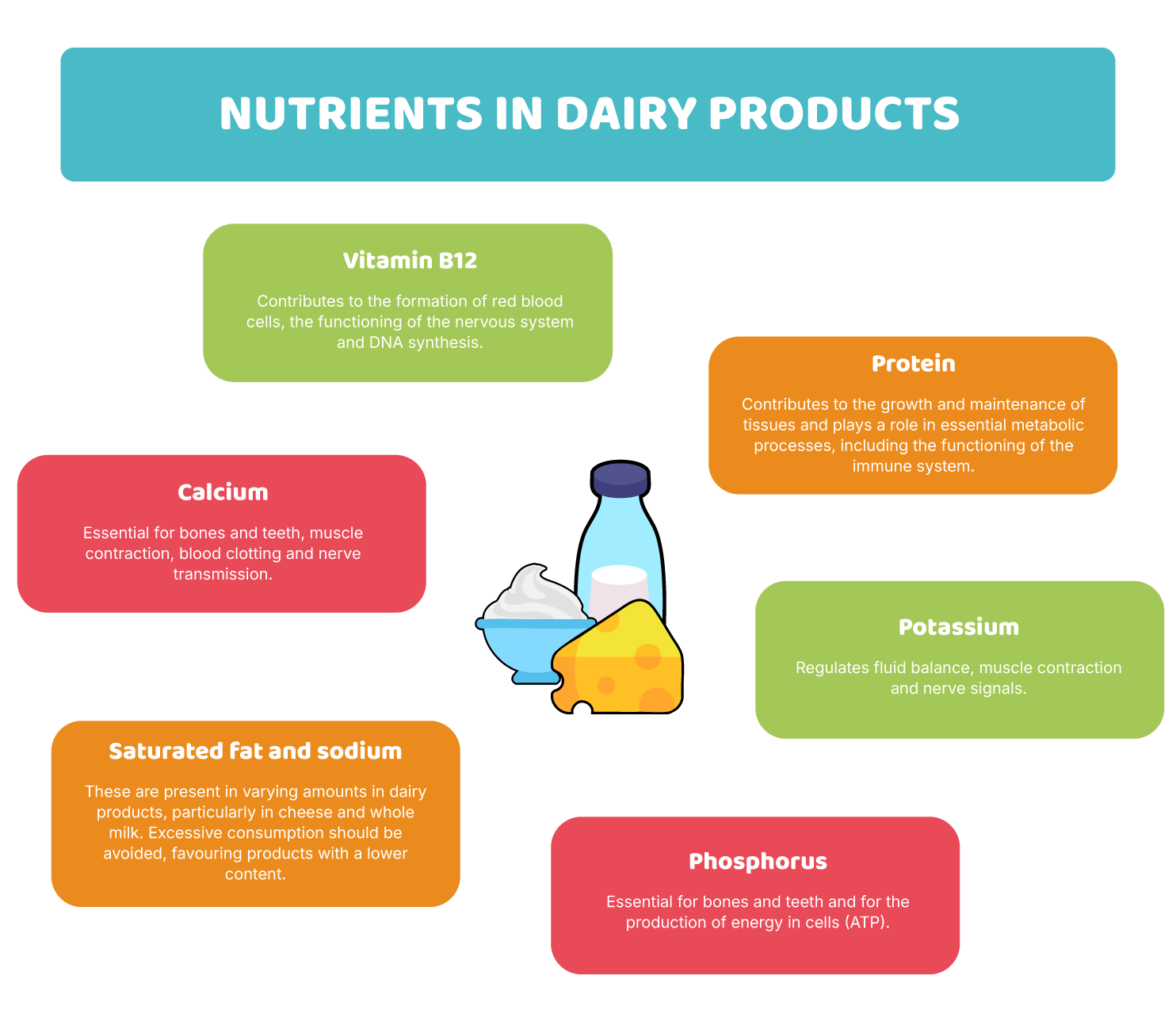
Milk, yoghurt, cheese, quark and kefir are nutrient-dense foods: they provide high-quality protein and contribute to the intake of calcium, phosphorus, iodine and vitamins B2 and B12. In the Mediterranean diet, they are consumed in moderation, mainly in the form of yoghurt and cheese, with a preference for lower-fat options.
- Milk and dairy products are produced from milk using various processes, such as fermentation, coagulation, concentration or maturation.
- Its basic composition includes water, proteins (caseins and whey proteins), lactose, lipids and minerals. The type and quantity vary depending on the species and management practices.
- As well as cow’s milk, goat’s and sheep’s milk are also commonly consumed, particularly in traditional Portuguese and Mediterranean cheeses.
HOW TO PLAN
- Breakfast:
- Plain yoghurt with seasonal fruit and oat flakes;
- Mixed-grain bread + cream cheese + tomato + oregano + a drizzle of olive oil.
- Snack:
- Plain yoghurt with seasonal fruit and oat flakes;
- Mixed-grain bread + cream cheese + tomato + oregano + a drizzle of olive oil.
- Lunch/dinner (as an accompaniment to the main course):
- Salad with fresh cheese, vegetables and pulses;
- Vegetable and tuna “massada”, finished with a spoonful of natural yoghurt in the bowl.
- Zero waste:
- Use yoghurt with aromatic herbs to make a quick sauce;
- Turn vegetable scraps into a “tortilla” and serve with cream cheese;
- Freeze milk in ice cube trays to use in baby food or soups.
Why include
Dairy products are an important source of calcium, phosphorus and vitamins B2 and B12, nutrients that are essential for growth and bone health.
Yoghurts and fermented cheeses contain live cultures and are therefore generally better tolerated by people who are lactose-intolerant.
In the Mediterranean diet, consumption is moderate, spread evenly throughout the day, and prioritises simple, minimally processed products.
Safety and conservation
- Keep milk and yoghurt at 0–5 °C; once opened, consume within 2–3 days.
- Cool dishes containing dairy products quickly and store them in the fridge; reheat them thoroughly before eating them the following day.
- Early cooling (≈4 °C in the first few hours) preserves quality and is the preferred method of preservation throughout the supply chain.
Reference amounts (12–14 years)
Include 2 to 3 portions a day, spread throughout the day.
Examples of 1 portion:
- 1 glass (200–250 mL) of milk,
- 1 yoghurt (120–150 g),
- 25–30 g of matured or semi-matured cheese,
- ~40 g of fresh cheese.
Plant-based alternatives: if you are lactose intolerant or follow a vegetarian diet, calcium- and B12-fortified soya drinks and fortified soya yoghurts can be used as a substitute for milk. Cream and butter do not count as portions, as they are low in calcium.

- Milk and dairy products contribute to the intake of calcium, magnesium, selenium, riboflavin and vitamin B12.
- Yoghurt and fermented cheeses are easier to digest because they contain less lactose.
- Milk production is a stable sector in Europe; in 2023, around 160.8 million tonnes of raw milk were produced.
Planning tip
Buy natural yoghurt and fresh cheese to last 3–4 days, and plan 1–2 meals featuring mature cheese. Spread these over 2–3 portions a day, without exceeding the moderate intake recommended by the Mediterranean diet.
FOODWISELAB Challenge

To explore the principles of the Mediterranean diet, promoting simple, balanced and inclusive choices, with plant-based and flexible options.
MEDITERRANEAN IN ACTION: FROM SNACKS TO MEALS