
5 Servings that count
5 Portions a Day is the name of health campaigns in countries such as the United States, the United Kingdom, France and Germany. The aim is to encourage people to eat at least five portions of fruit and vegetables every day, around 80 g per portion, totalling at least 400 g. This recommendation comes from the World Health Organisation, which explains that this amount helps prevent disease and keeps you healthy for longer. In 2017, researchers analysed numerous studies on the subject and discovered something interesting: eating even more – around 800 g, or ten portions a day – offers even greater protection against disease and helps you live longer. In some countries, such as Australia, it is already recommended to aim for seven portions or more a day.
The concept of 5 Portions a Day is easy to remember: more variety, more colours, more nutrients. And it fits naturally into the Mediterranean diet, which places fruit and vegetables at its heart, alongside whole grains, olive oil, pulses and fish.
When planning your meals, thinking about the ‘5 Portions a Day’ target can be a simple and effective starting point. If you organise your plate so that it includes fruit and vegetables at every main meal and snack, it will be easier to reach – or even exceed – your daily target. For example, you could start the day with fresh fruit for breakfast, add a salad or cooked vegetables to your lunch and dinner, and choose fruit or raw vegetables as a snack. This strategy not only helps you meet the recommendation but also ensures a variety of flavours and textures throughout the day, aligning perfectly with the balance and richness of the Mediterranean diet.
What counts towards the 5 portions a day?
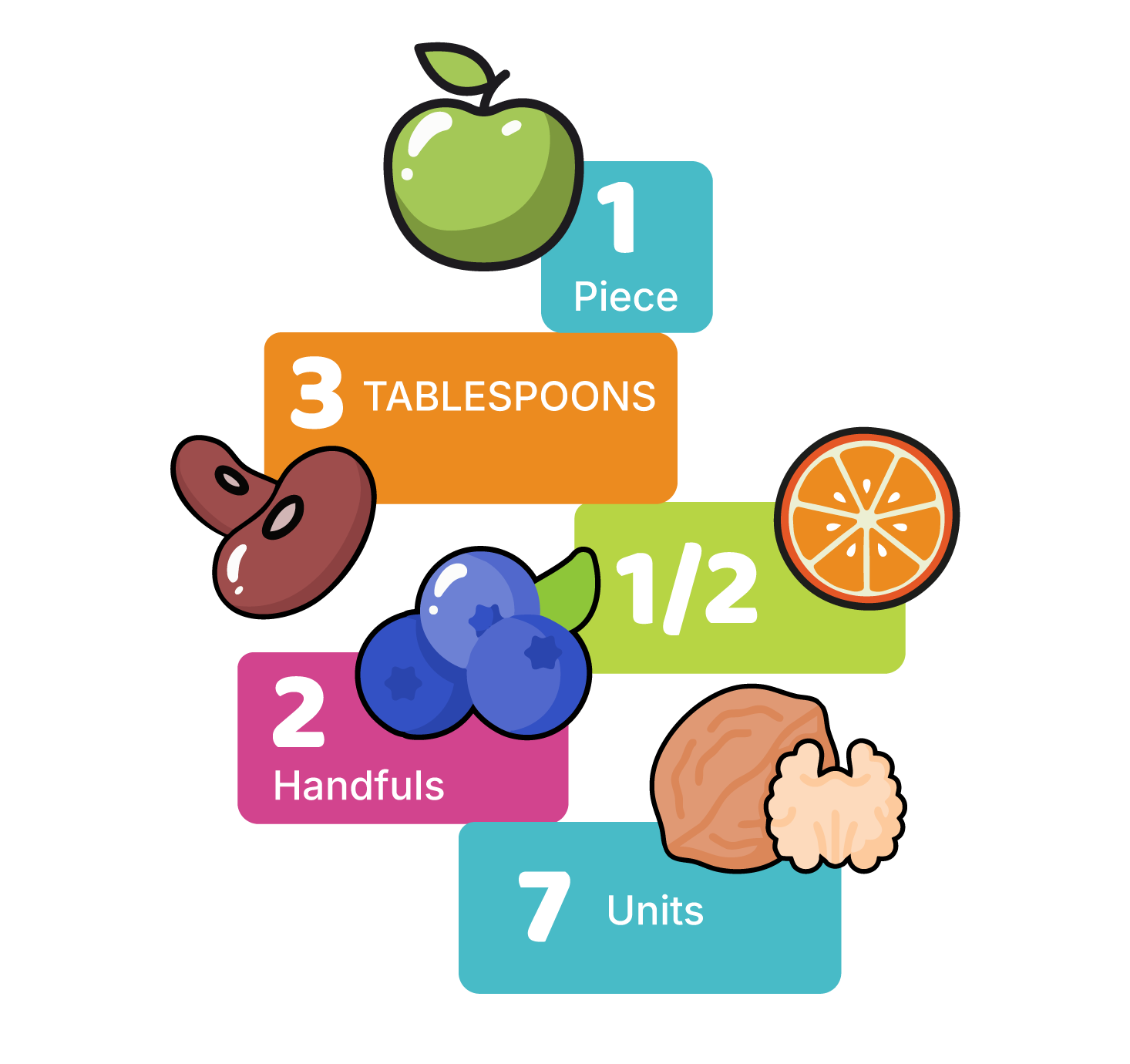
In his day-to-day work, he aims to:
- 3 portions of fruit
- 2 portions of vegetables
How to measure out a portion:
- Fruit: 1 medium piece (such as an apple or a pear), 2 small pieces (such as plums or kiwis) or 1 cup of chopped fruit.
- Raw vegetables: 1 heaped cup.
- Cooked vegetables: ½ cup.
- Dried fruit: about 30 g (roughly a small handful).
- 100% fruit/vegetable juice or smoothie: up to 150 ml a day, counting as just 1 portion, even if you drink more.
- Pulses: count as just 1 daily portion, regardless of the quantity.
For children and teenagers, one portion is roughly what fits in the palm of your hand.
Any combination is fine, as long as you have 5 a day.
Whole fruit should always be your first choice, but a small glass of 100% fruit juice can help you reach your 5 portions a day, especially if you find it difficult to eat enough fruit.
It’s not just ‘sugared water’; it contains vitamin C, carotenoids and polyphenols, which help keep you healthy.
Studies show that drinking juice in moderation is not linked to weight gain in children and adolescents aged 7 to 18, and may even improve the overall quality of their diet.
For teenagers, fruit on its own often does not provide enough vitamin C, so a small amount of 100% fruit juice can help make up for this shortfall.
Remember: 100% fruit juice is not the same as sugary drinks such as fizzy drinks, which do not offer these benefits.
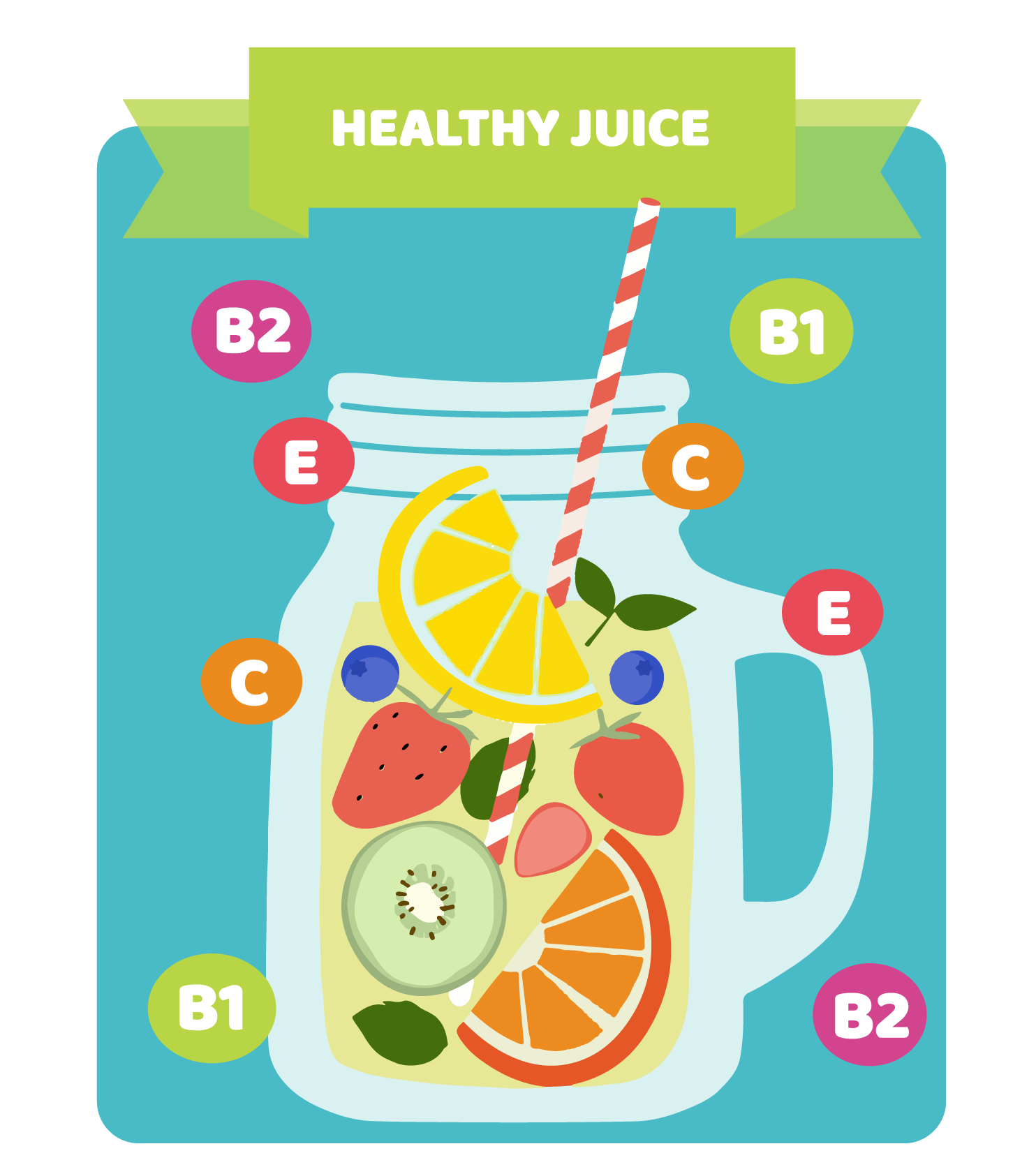

Both the ‘5-a-day’ guideline and the Mediterranean diet emphasise eating plenty of fruit and vegetables. Eating more of these foods is linked to a lower risk of stroke and a longer, healthier life.
The Mediterranean diet, which typically includes well over five portions a day, is strongly supported by scientific evidence in the prevention and management of heart disease, and may also help with diabetes and metabolic syndrome.
Combining the two is a great strategy for lifelong health: the 5 portions give you a clear daily target, and the Mediterranean diet adds other healthy foods and good fats, such as olive oil, nuts and fish.
A variety of fruit and vegetables provide vitamins, minerals and plant compounds with protective properties.
A colourful dish (green spinach, orange carrots, red tomatoes, purple grapes) provides a wider variety of nutrients that support heart health, eyesight, immunity and digestion.

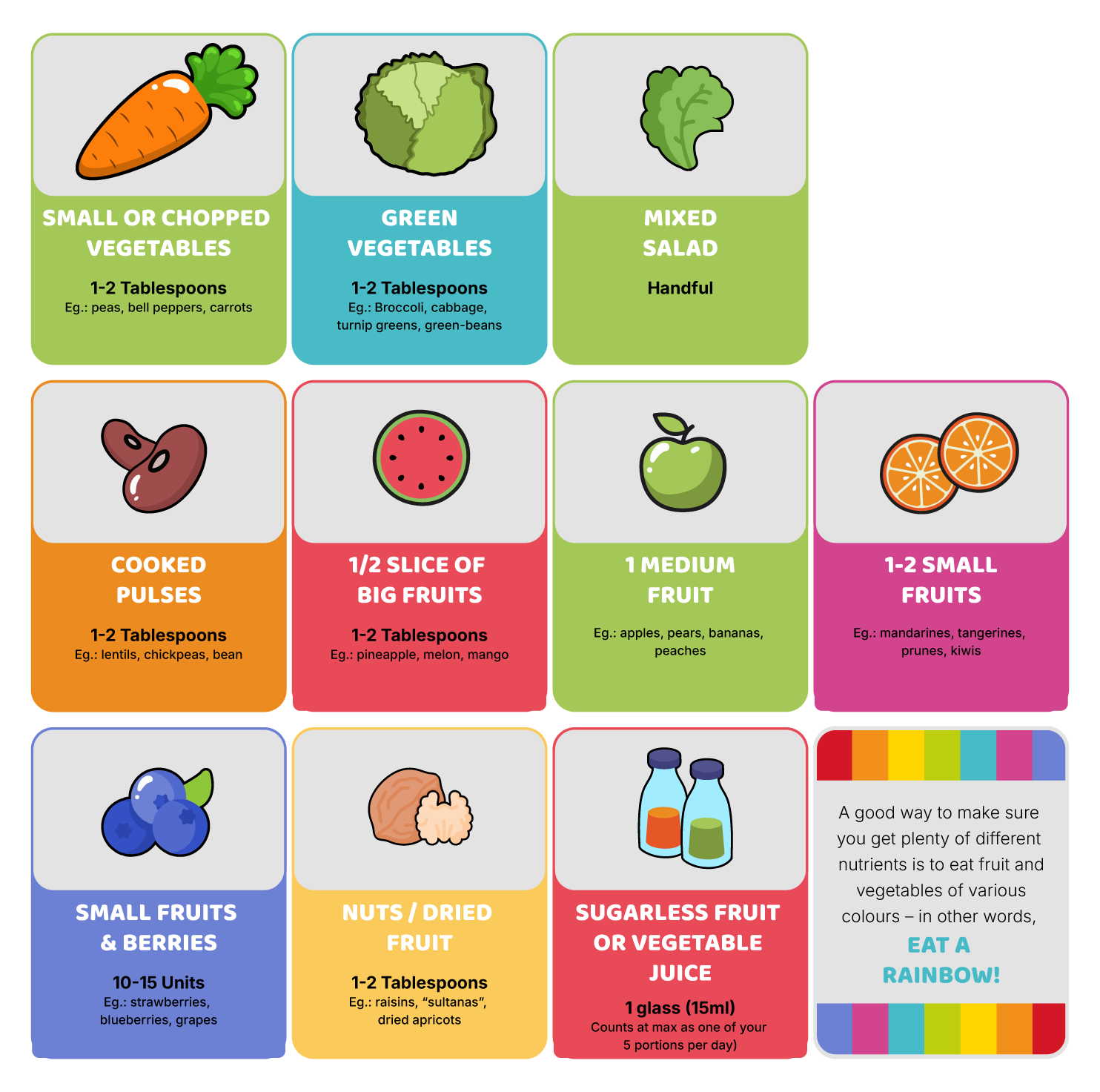
One portion is roughly the amount that fits in your hand.
Eating different types of fruit and vegetables provides a variety of vitamins and minerals, which help your body to function properly and keep you feeling energetic and in good spirits. A good way to ensure variety is to choose foods of different colours – eat a rainbow! This poster shows you, in a simple way, what counts as a portion for school-age children, including examples of fruit, vegetables, pulses, nuts, fresh juices and salads.

3 portions of fruit + 2 portions of vegetables a day
Choose a variety of colours and types to get the maximum benefit.
Include fresh, frozen, tinned (in water or natural juice), dried fruit and vegetables, and 100% fruit juice – but stick to the recommended portions.
Use fruit juice as an occasional treat, not as a substitute for whole fruit.
Remember: a Mediterranean-style dish almost always meets this objective.
FOODWISELab CHALLENGE

To encourage the daily consumption of fruit and vegetables, increasing dietary variety and ensuring the minimum recommended intake of 5 portions a day.