
Where do the eggs come from?
Eggs are highly nutritious and versatile foods, rich in high-quality protein, vitamins and minerals. As well as being sold fresh, they can also be processed to extend their shelf life, make them easier to transport and enable their use in a variety of food products, such as cakes, pasta, mayonnaise and desserts.
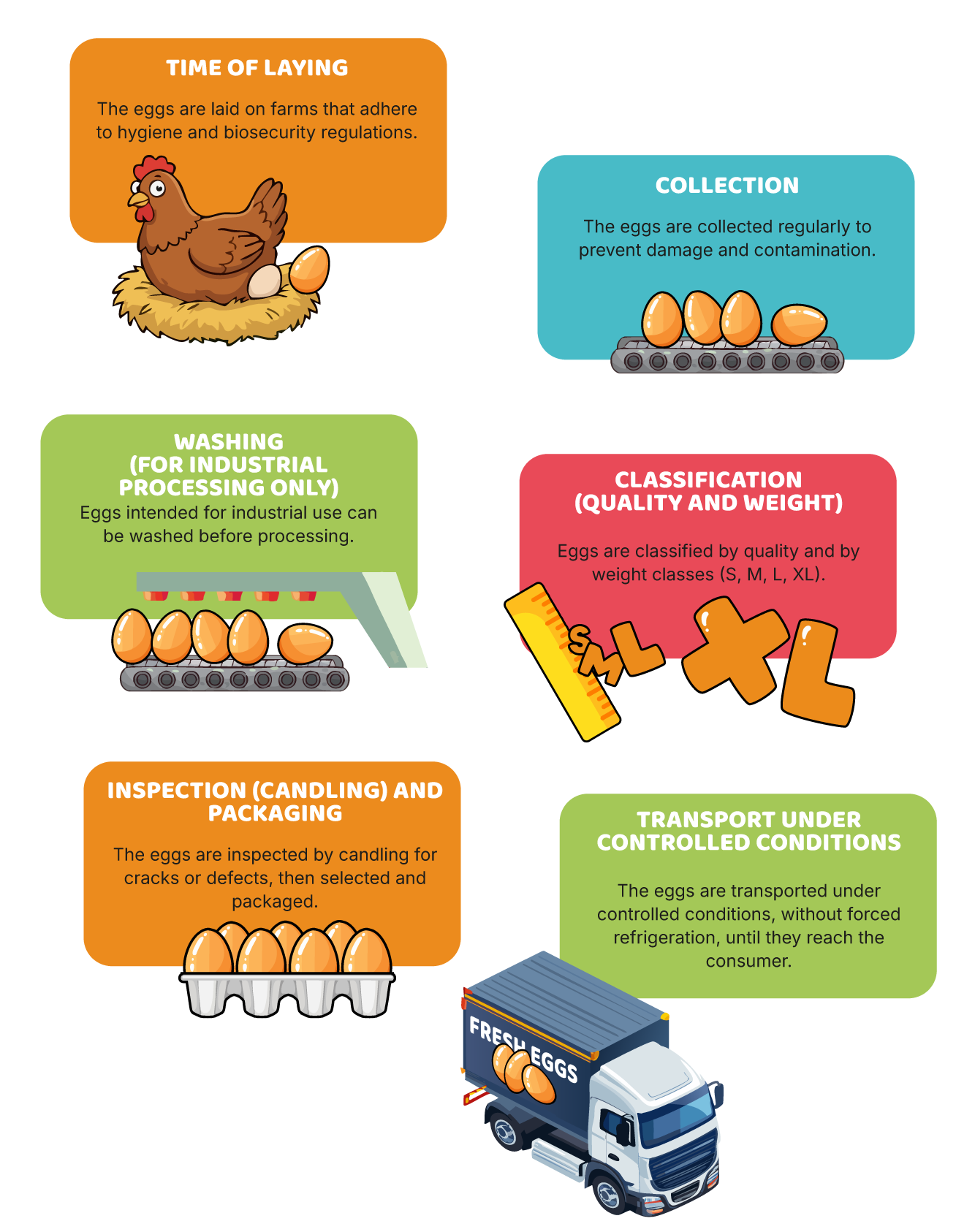
Selection and grading
Before being processed, the eggs undergo a rigorous inspection and grading process:
- Its size, weight and shape are checked;
- They are examined using candling (a bright light that allows the inside to be seen) to detect cracks, stains or defects.
Eggs intended for industrial processing may be washed and disinfected; eggs for fresh consumption are not washed, in accordance with European legislation. Some are destined for fresh consumption and others are sent to the processing industry, in accordance with commercial and technological criteria.
Cracking and separation
In factories, eggs are cracked mechanically by high-precision machines.
The contents are collected in containers and separated into egg white (albumin), yolk and liquid whole egg, depending on their intended use.
The shells can be sterilised, ground up and used in animal feed, fertilisers or emerging applications such as bioplastics – a way of making use of all waste and reducing the environmental impact.
Eggs
To eliminate pathogenic microorganisms, such as Salmonella, the liquid egg is pasteurised, heated and then rapidly cooled.
Prices vary depending on the type of product:
- Liquid whole egg: around 60 °C for a few minutes, depending on the industrial process;
- Albumin: between 56 and 58 °C;
- Egg yolk: between 61 and 63 °C.
This process ensures food safety, with minimal changes to the nutritional and functional properties.
In some cases, pasteurisation is combined with ultra-high temperature (UHT) treatment, which can extend the product’s shelf life by several weeks or months.
Processing into products
After pasteurisation, the egg may undergo various processing steps:
- Chilled liquid eggs: sold ready for use in bakeries or catering establishments;
- Frozen eggs: the liquid is rapidly cooled to -30 °C and can be stored for up to 6 months;
- Dehydrated eggs (powder): produced mainly by spray drying or freeze-drying, which allows them to be stored without refrigeration.
Before drying, the glucose is often removed to prevent darkening and extend the shelf life of the powder.
PACKAGING AND STORAGE Liquid, frozen or powdered eggs are packaged in a sanitised environment, with labels indicating their origin, the type of product and the use-by date.
Chilled products must be stored at between 0 and 4 °C, whilst frozen products are kept at -18 °C.
Egg powder can be stored for several months in a cool, dry place.
SUSTAINABILITY AND INNOVATION
The egg industries are adopting more sustainable technologies, such as:
- Reuse of the peel and membrane for fertilisers and calcium supplements;
- Treatment and reuse of water used to wash eggs;
- Biodegradable and recyclable packaging.
Investment is also being made in enriched pasteurised eggs, containing omega-3, selenium and vitamin D, with the aim of promoting a healthier diet.

Eggs are an excellent source of protein and can be prepared in many ways: boiled, scrambled, poached or used in recipes.
Opt for pasteurised or locally produced eggs, and remember that egg powder or liquid egg are safe and practical alternatives for cooking, reducing waste and the risk of contamination.
Eating eggs in moderation can form part of a healthy diet, and the amount should be adjusted to suit individual needs.
FOODWISELAB challenge

To understand how eggs are transformed through different methods of preparation and processing, distinguishing between simple transformations and more intensive ones, and to reflect on the impact of these choices on health.
From egg to plate: How are eggs transformed?