
Making the most of everything and cooking sustainably
Every day, enough food is produced to feed the world, but almost a third of it ends up in the bin. Much of this waste occurs at home, often due to a lack of planning, poor storage or because we don’t know how to make the most of our food.
Learning to make the most of everything is a simple way to look after the planet, save your family money and honour the tradition of the Mediterranean diet, where “nothing is wasted, everything is transformed”.
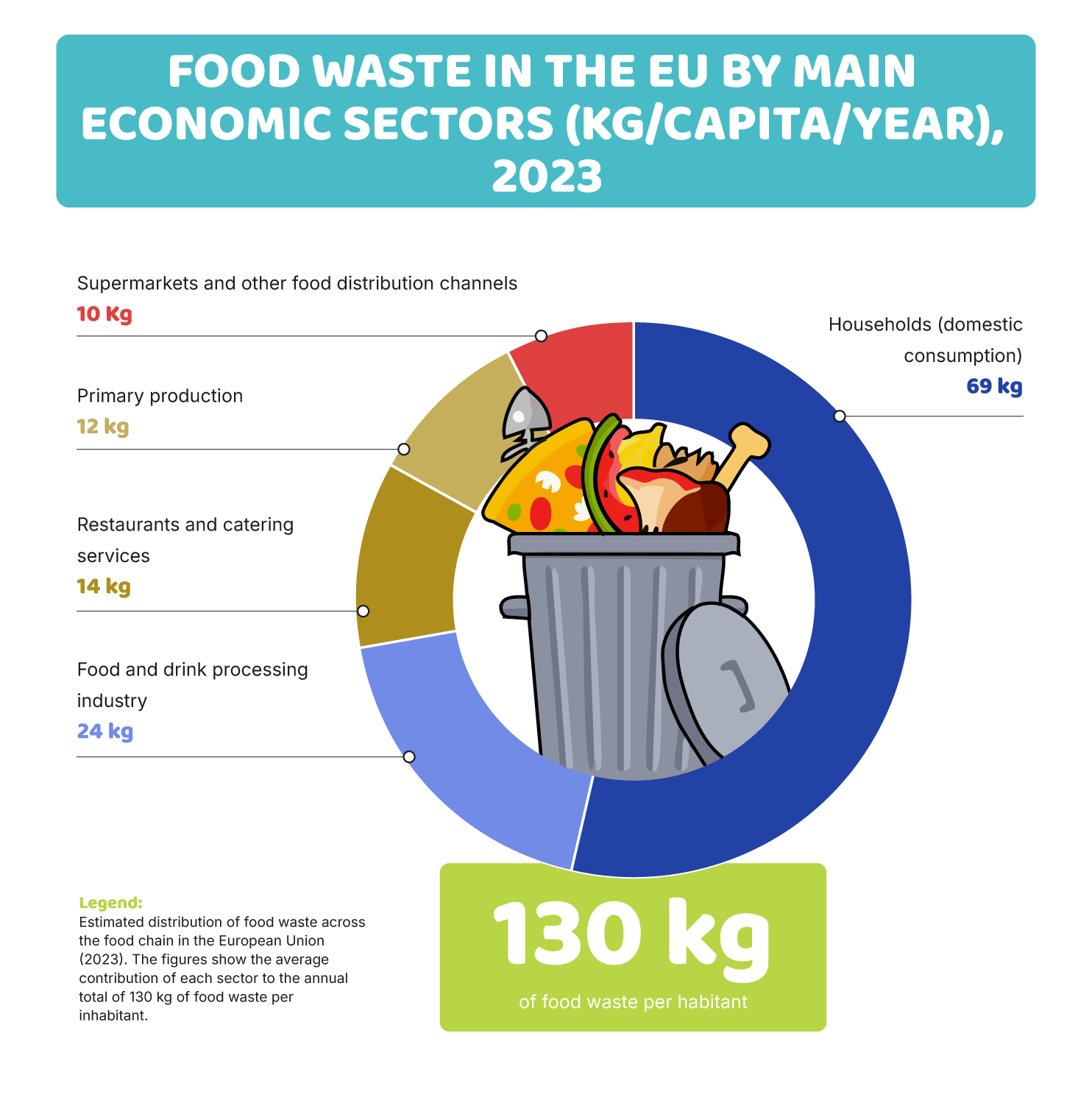
Food waste occurs when we throw away food that was still fit for consumption. This isn’t just ‘another item in the bin’: it also means wasting the water, energy, transport, time and labour used to produce that food.
Globally, food waste contributes significantly to greenhouse gas emissions. At the same time, there are people who do not have access to enough food, so making good use of food is also a matter of justice and respect.
Even if you’re aged 12–14, you can already play an active role at home:
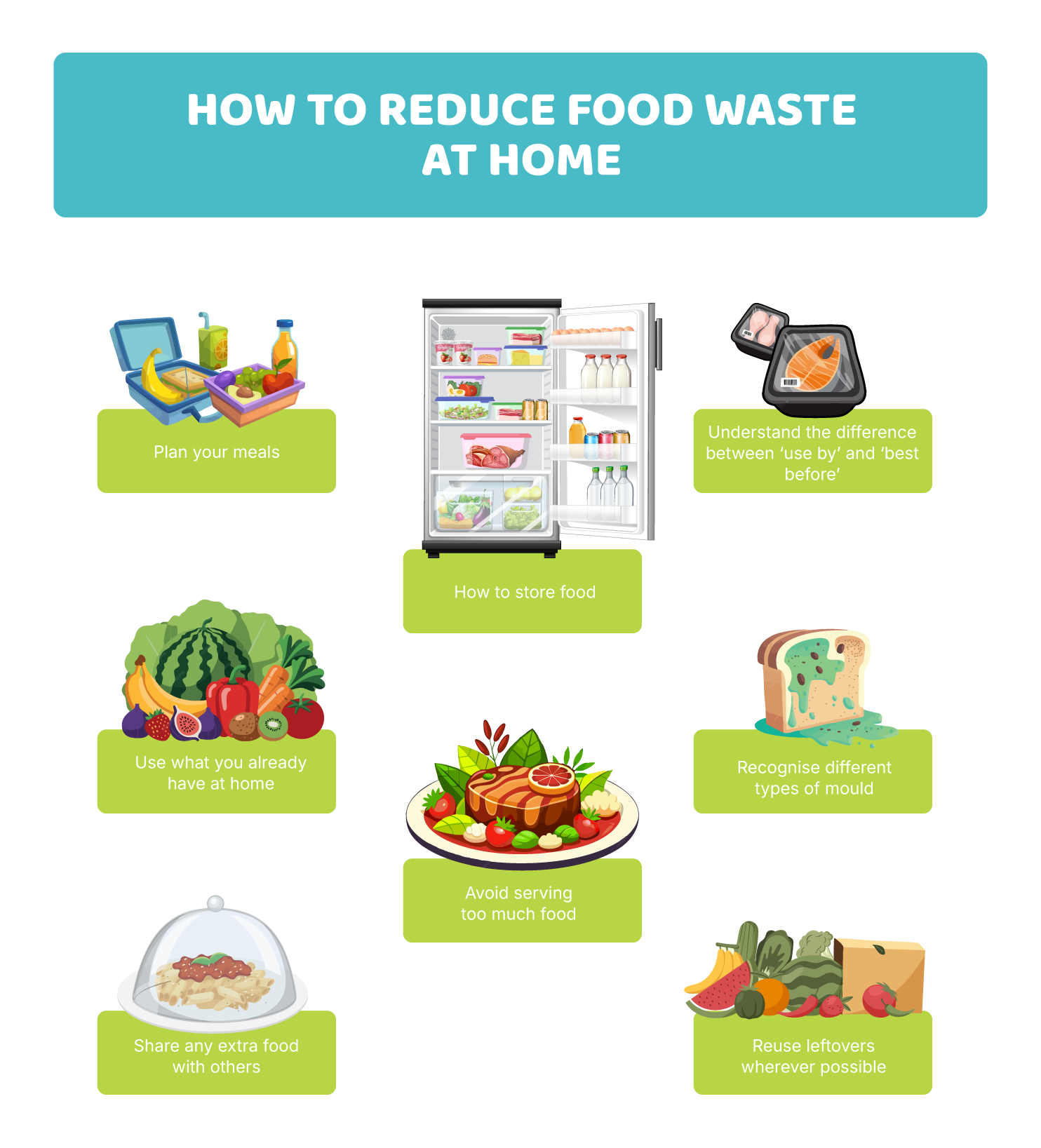
- Helping to plan meals: discussing with the family what they’re going to eat during the week.
- Draw up a shopping list before you go to the supermarket, to avoid buying extra things ‘just because’.
- Check what you already have at home (fridge, freezer, cupboard) before buying any more.
An important rule is “first in, first out”: food that was already there should be used first; the most recent items come last.
Store food properly to prevent it from going off
Storing food correctly is half the battle when it comes to reducing waste:
- In the fridge, store fruit and vegetables in the designated drawer, and meat and fish in the coldest sections.
- In the pantry, potatoes and onions should be kept in a cool, dark place.
- In the freezer, it is essential to use suitable containers or bags, remove as much air as possible before sealing them, and write the date on them.
Simple examples:
- Very ripe bananas can be frozen for use in cakes or milkshakes
- Leftover vegetables can be frozen in a container designed for leftovers, so you can use them later to make soup or baked rice.
BREATHING NEW LIFE INTO FOOD
Every leftover can be the start of a new dish. Instead of seeing them as ‘leftovers’, start thinking of them as partly prepared ingredients:
- Stale bread can be turned into toast, breadcrumbs, açorda or migas
- Cooked vegetables can be used in a soup, a pie or a rice bake
- Leftover cooked fish can be used in fish fritters, cold salads or omelettes
- Very ripe fruit is perfect for smoothies, jams, cakes or homemade ‘ice cream’.
When you use leftovers creatively, you’re cooking smart: less waste, lower costs and more flavour.
FREEZING TO PRESERVE FOOD
The freezer is a great ally in the fight against food waste. You can freeze:
- leftovers (properly stored)
- sliced bread, to be taken out bit by bit
- pre-cut vegetables
- ripe fruit, chopped, for smoothies.
To make sure it turns out well:
- divide into portions before freezing
- write the date and what’s inside
- avoid freezing and defrosting the same food several times, for reasons of food safety and quality.
LEARNING FROM MEDITERRANEAN WISDOM
In the Mediterranean diet, making the most of everything has always been part of the culture:
- stems, peel and leaves were used in broths and soups
- olive oil and cooking water were kept for use in other recipes
- food was dried, preserved and fermented so that it would last longer.
When you ask your grandparents, ‘How did you manage not to throw anything away?’, you’re rediscovering ancient wisdom that we now call sustainability.

Sustainable cooking: energy, water and utensils
Cooking also has an environmental impact. But it is possible to reduce this impact without compromising on flavour.
Using less energy
More efficient techniques:
- cooking with the lid on
- vapour
- to sauté
- pressure cooker
- microwave for small portions
Techniques that use up more resources:
- forno
- electric grill
- deep-frying
How to save energy when cooking
- using a lid reduces the time by up to 30%
- cook several meals in the oven at the same time
- cut food into smaller pieces so that it cooks more quickly
- avoid opening the oven too often (you can lose up to 20% of the energy)
- turn off the hob 2–3 minutes early: using a lid reduces cooking time and energy consumption
Saving water
- wash vegetables in a bowl
- use the cooking water for soups or rice dishes
- soak pulses to reduce cooking time
- use the cooking water for soups or rice, where appropriate
- avoid defrosting food under running water
Sustainable choices for kitchenware
More durable:
- stainless steel
- cast iron
- reusable glass
Use in moderation:
- aluminium foil
- cling film
- disposable
Alternatives:
- glass jars
- reusable boxes
- vegetable wax cloths
- silicone mats

Before you throw it away, ask yourself: can I use it? Can I freeze it? Can I repurpose it?
Often, the answer is ‘yes’.
FOODWISELAB challenge
To identify instances of food waste in everyday life and develop simple strategies for making the most of food, thereby reducing waste and promoting more sustainable eating habits.
Three ingredients saved from the bin