
Where do the eggs come from?
Eggs are one of the most complete and nutritious foods there are. They provide high-quality protein, vitamins and essential minerals for the growth and maintenance of the human body. But do you know how the eggs that end up on your table are produced?
Laying hens
Most of the eggs we eat come from laying hens, birds bred specifically to produce eggs. These hens belong to Portuguese laying breeds, such as the Amarela, the Branca, the Pedrês Portuguesa and the Preta Lusitânica.
The hens live in henhouses with plenty of space, food and water. They are fed cereal mixes, such as maize, wheat and soya, and are also given vitamins and minerals to keep them healthy and ensure they produce good-quality eggs. On farms that follow organic or free-range methods, the hens can roam outdoors and scratch around, which contributes to their welfare.
Eggs
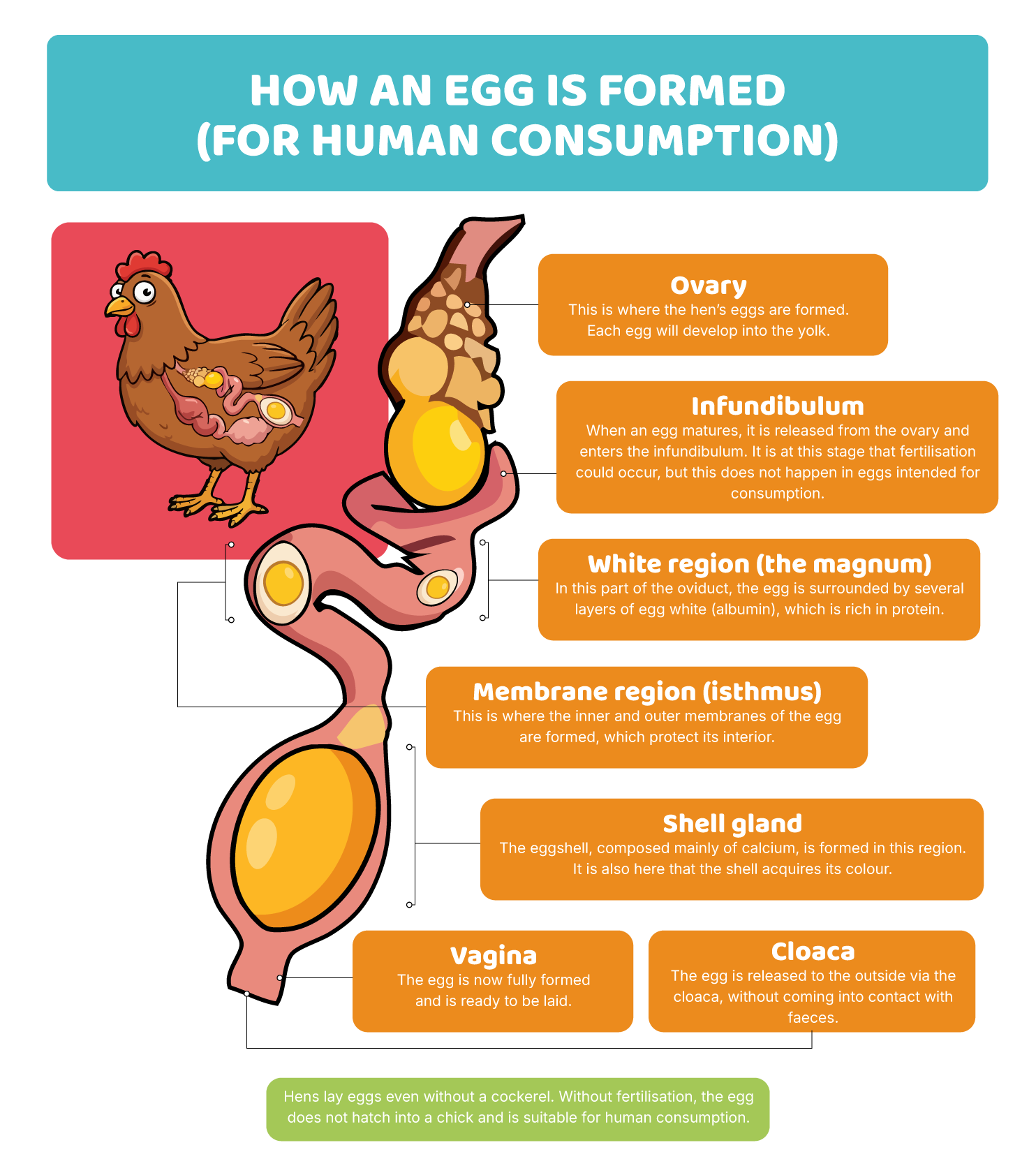
A hen begins to lay eggs when she reaches sexual maturity, usually between 4 and 6 months of age. The process of forming an egg takes around 24 to 26 hours.
- The egg (ovum) is formed in the hen’s ovary.
- The foetus then descends through the oviduct, where it is covered by layers of egg white (albumin) and then by protective membranes.
- Finally, the shell forms, consisting mainly of calcium.
Most hens lay one egg a day, usually in the morning. After a laying cycle, the hen takes a short break before starting to lay again.
Composition and nutritional value
A whole egg contains around 12–13 per cent protein and is regarded as the global benchmark for protein quality; its amino acid profile serves as a model for assessing other sources of protein.
The yolk is rich in vitamins A, D, E and B12, iron, phosphorus and zinc, and contains healthy fats, such as oleic acid and omega -3 (in enriched eggs). The egg white consists mainly of water and pure protein, with no fat.
The colour of the yolk can vary from pale yellow to dark orange, depending on the hen’s diet; this has no effect on its nutritional value.
Sustainability and animal welfare

Egg production is increasingly regulated to ensure ethical and sustainable conditions. Free-range and organic farms respect the birds’ natural behaviour, provide more space and reduce the use of antibiotics.
Furthermore, scientific research has helped to develop more sustainable feed, made from local cereals and plant proteins, thereby reducing the environmental impact.
Choosing eggs with code 0 (organic) or 1 (from free-range hens) helps to promote animal welfare and more responsible farming practices.

A tip for planning your meals
Include eggs in your diet in a balanced way; they’re great for breakfast, in omelettes, salads or traditional dishes. Whenever possible, choose locally produced, sustainably farmed eggs. Avoid waste by using the whites or yolks in different recipes. And remember: eating eggs mindfully contributes to your health and to a fairer, more balanced planet.
FOODWISELAB challenge

Understand the origin of the eggs, the production conditions and the journey they take before reaching the consumer, thereby promoting more informed and conscious choices.