
Basic techniques for cooking with confidence
Turning what you’ve chosen and planned into balanced, safe and tasty meals
Once you’ve tidied up the kitchen and made sure it’s clean, it’s time for the most fun part: turning ingredients into proper meals. Cooking isn’t just about ‘heating things up’; it’s about understanding how food changes when heated, how to use kitchen utensils safely, and how to follow a recipe without getting stressed. At this age, the aim is to build your confidence with simple, safe techniques that follow the principles of the Mediterranean diet.

Most recipes need reasonably accurate measurements to turn out well. In a cake, for example, too much butter or too little flour can ruin the texture; whereas with a Bolognese sauce, you can adjust the quantities slightly (more onion, less tomato) without any major problems.
To help you, here are:
- Kitchen scales (preferably digital) for weighing dry ingredients.
- Measuring jugs for measuring liquids (in ml or fluid ounces).
- Measuring spoons for small quantities (1 teaspoon = 5 ml, 1 tablespoon = 15 ml).
When you apply heat, food changes:
- Proteins in food are denatured by heat; in eggs, this causes coagulation, whilst in meat and fish it leads to a loss of structure and firmness.
- The starch in rice, pasta or potatoes gelatinises, making the food softer and easier to chew.
- The vegetables soften and release their flavours.
- In some cases, toasty and crunchy flavours develop on the surface.
If cooked for too long, they can lose their colour, texture and some of their vitamins – particularly water-soluble vitamins such as vitamin C and some of the B vitamins. Cooking food properly means striking a balance between flavour, texture, safety and nutrition.
Cooking methods: your "basic kit”
At this stage, the important thing is to be familiar with the main methods and to know when to use them.
- Boil in water
- Steaming
- Sauté
- Bake in the oven
- Grill
- Exempts
Learning these methods helps you adapt recipes and understand why the same food can turn out so differently depending on how it is cooked.
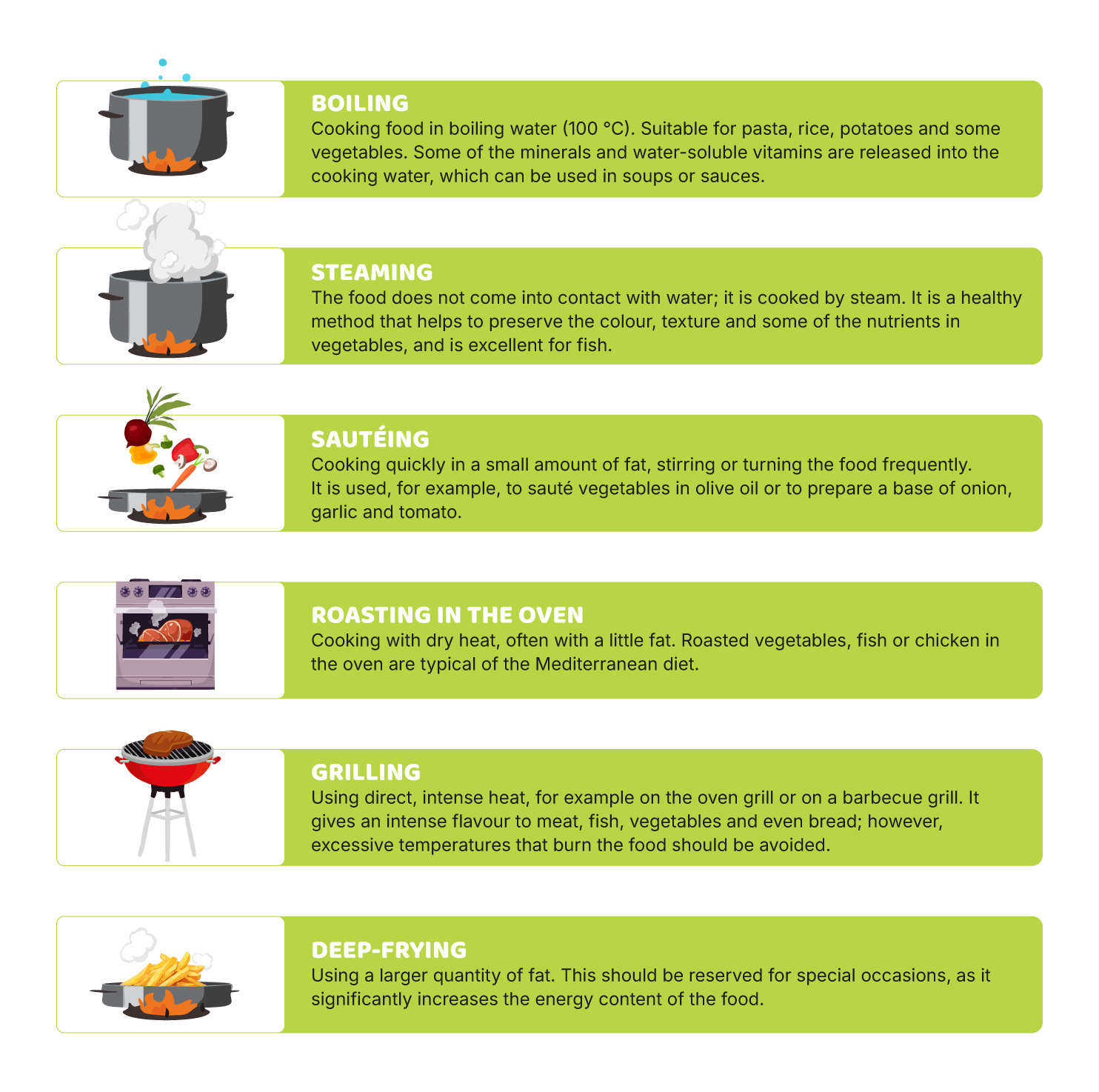
When using the hob, it is important to adjust the burner setting: high heat for boiling or stir-frying, low heat for slow cooking. Pans should be the right size for the burner and their handles should face inwards to prevent accidents.
When using the oven, it is essential to preheat it, use suitable baking trays, place the food on the correct shelf and follow the approximate cooking times given in the recipes. Some dishes, such as quiches or tarts, require the pastry base to be ‘blind-baked’ before adding the filling, so that it remains firm and does not become soggy.
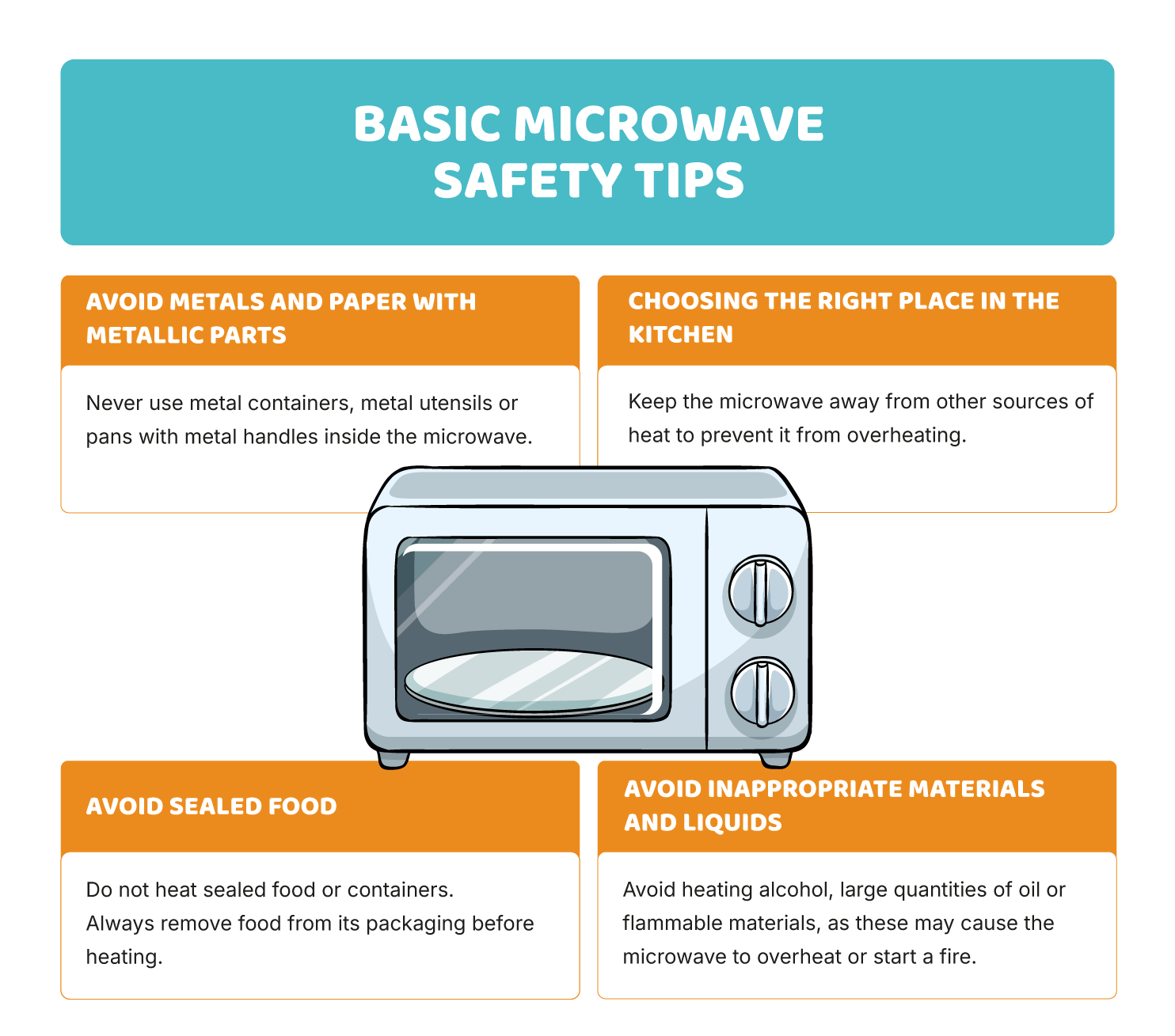
The microwave is useful for heating, cooking certain foods and defrosting. You should:
- use suitable containers (glass, ceramic or suitable plastic)
- stir or turn the food halfway through heating to avoid ‘cold spots’
- take care when opening packaging due to the steam
- never use metal or put eggs in their shells.
It’s not enough just to look at the clock; it’s important to learn how to check whether it’s cooked:
- Fish: it is no longer translucent and starts to ‘flake’ easily.
- Chicken/burgers: using a food thermometer ou complete absence of pink areas, sobretudo em carne picada.
- Pasta: it should be al dente – firm but not undercooked.
- Rice: it should be cooked evenly, with no hard grains.
- Cakes: a skewer comes out clean and the cake springs back into shape when you press it lightly with your finger; it tends to be golden in colour.
Over time, you’ll come to rely more on your senses – sight, touch, smell and taste.

Flavour, texture and presentation
As you cook, you’ll learn to taste and adjust:
- If it lacks flavour, you can use herbs, spices, garlic, onion, lemon or vinegar, rather than just adding more salt straight away.
- If you want a crunchy texture, you can use breadcrumbs as a topping or lightly toast some nuts.
- If you want a more tender dish, you can leave the meat to rest after cooking, or cook the vegetables until they are tender but not mushy.
The way you plate up matters too: using the centre of the plate, avoiding piling the food up, combining 2–3 colours and adding a simple garnish (chopped herbs, sliced tomato, lemon zest) makes the dish more appetising.
Cook with confidence, step by step
At this stage, cooking thoroughly means:
- read the recipe before you start
- prepare ingredients and utensils (mise en place)
- choose the appropriate cooking method
- to ensure food safety
- use your senses to adjust the flavour, texture and appearance.
Every dish is a practice run: the more you practise, the more independent, confident and creative you become.
FOODWISElab challenge

To develop confidence in the kitchen by learning and applying basic cooking techniques, which are essential for preparing simple, safe and balanced meals.
Basic techniques for confident cooking