Food sustainability
Small choices make a big difference
Being sustainable isn’t about doing everything perfectly; it’s about starting with small, conscious decisions. Every time you take your reusable bag with you, choose recyclable packaging or avoid waste, you’re contributing to a fairer and more balanced food system.
Food sustainability is built on everyday actions: protecting the environment, reducing resource consumption and ensuring there is enough food for everyone.
Os sacos de plástico descartáveis estão entre os principais poluentes dos oceanos e da paisagem urbana. Cada europeu utiliza, em média, mais de 80 sacos de plástico por ano, e apenas uma pequena parte é reciclada. Levar um saco de pano ou reutilizável é um gesto simples que, ao longo da vida, pode evitar centenas de plásticos.
Dica: Mantém um saco dobrado na mochila, na mala ou no carro. Assim, nunca precisas de recorrer ao plástico por esquecimento.
Escolhe embalagens recicláveis ou a granel
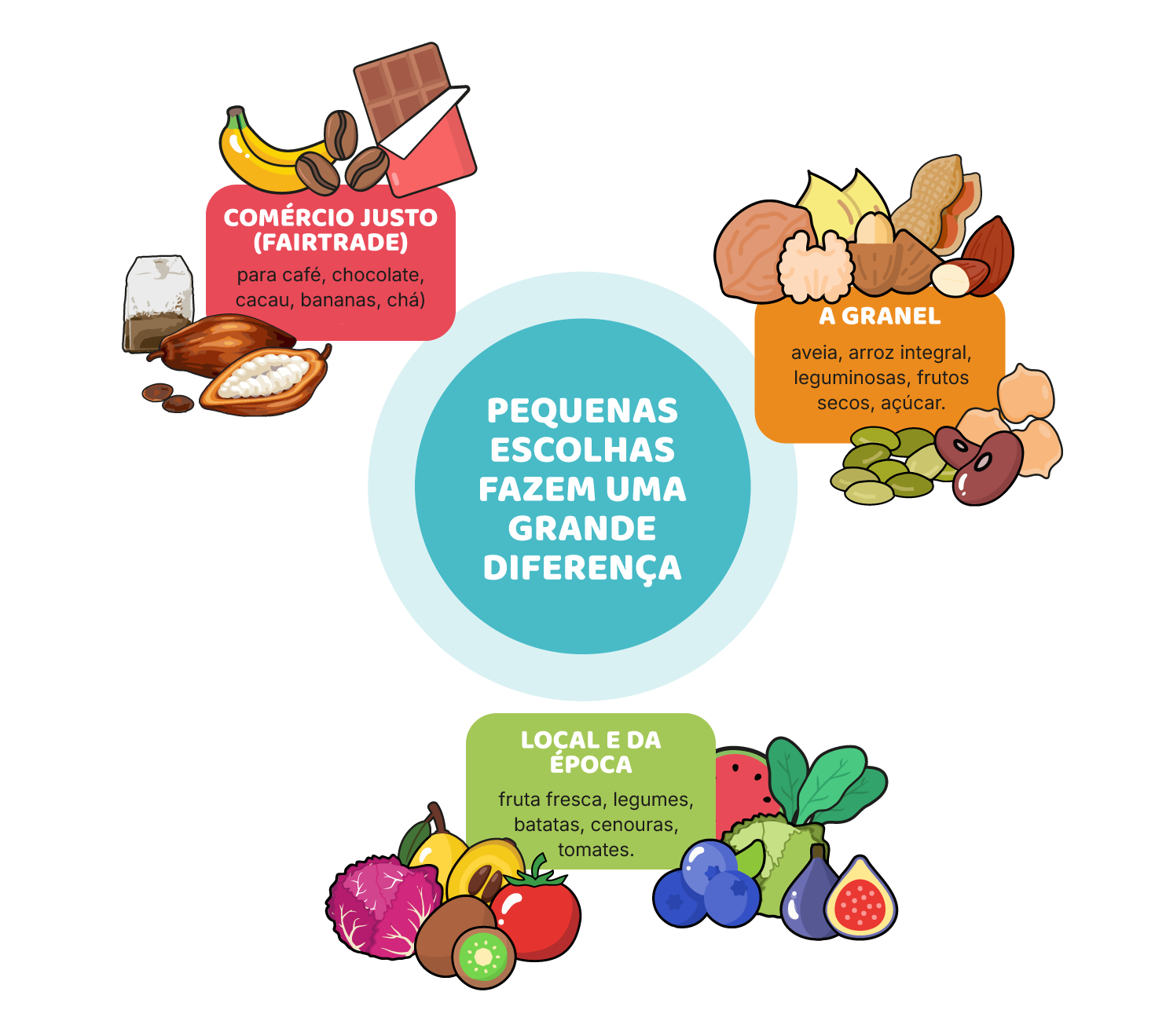
As embalagens representam cerca de 40% dos resíduos urbanos na Europa. Sempre que possível, prefere embalagens recicláveis, reutilizáveis ou compostáveis, e apoia sistemas de retoma ou enchimento a granel, que reduzem drasticamente o desperdício de materiais. Comprar a granel permite escolher a quantidade certa, evitar o desperdício e reduzir a pegada ambiental do transporte e da embalagem.
Dica verde: Evita embalagens misturadas (por exemplo, plástico com alumínio), porque são mais difíceis de reciclar.
Prefere materiais simples, como vidro, papel ou cartão.
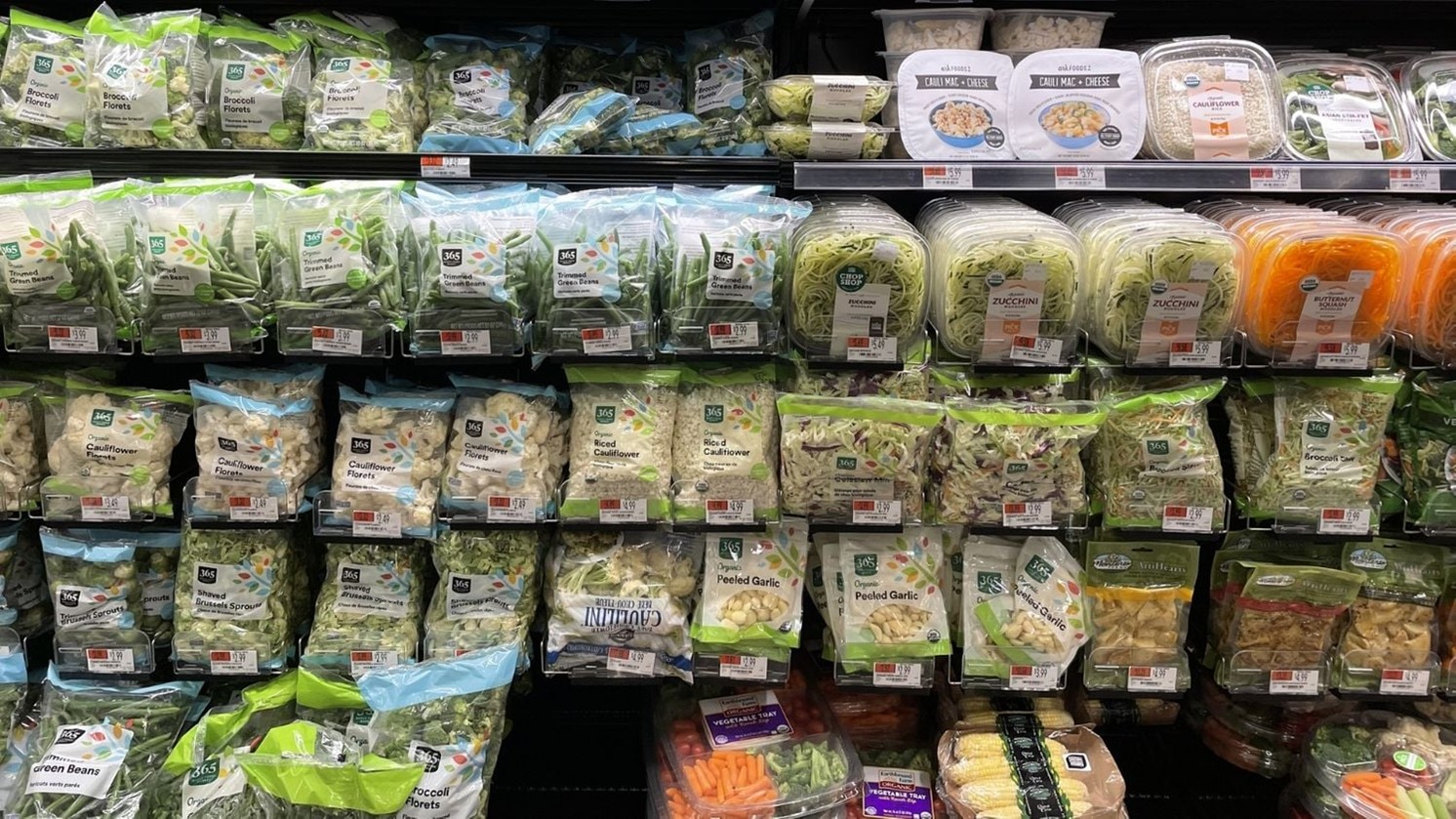
Plastic does not disappear; it breaks down into microplastics that end up in the soil, rivers and oceans, and can enter the food chain. Some estimates suggest that each person ingests up to 5 grams of microplastics per week, the equivalent of a credit card.
Choosing products with less plastic or with alternative packaging (such as glass or recycled metal) helps to reduce pollution and encourages companies to change their production practices.
Practical tip: Local and seasonal products usually have fewer layers of packaging and involve less transport, so they’re good for you and the planet.
MAKE THE MOST OF LEFTOVERS AND PLAN AHEAD TO AVOID WASTE
It is estimated that around 20% of the food produced in the European Union ends up in the bin, often due to poor storage or planning practices. Planning meals and making use of leftovers is one of the most effective ways of reducing food waste and greenhouse gas emissions.
Sustainability depends not only on innovative technologies, but also on new cultural attitudes: relearning how to appreciate food, cook creatively and consume responsibly.
Practical example: Turn leftover vegetables into a soup or a stew; use stale bread to make croutons or migas.
COMPARE THE PRICE PER KILO OR PER LITRE
Sustainability also involves economic awareness. Comparing the price per kilo or per litre helps you understand the true cost of products and avoids choices based solely on appearance or the size of the packaging. Often, the most economical options are also the most sustainable, such as simple, minimally processed foods.
Transparency in labelling and pricing is essential for consumers to understand the environmental and social impact of their choices, thereby promoting a circular and responsible economy.
Tip: Look for the unit price on the supermarket shelves – it’s the best indicator of a fair and informed purchase.
SUSTAINABILITY IS ALSO ABOUT WELL-BEING
Sustainability is not limited to the environment; it is linked to quality of life and balance. Shopping mindfully, avoiding waste and prioritising the essentials are ways of living with more purpose and less excess, following the principle of “luxurious simplicity”: living better with less, whilst respecting the land and the people who cultivate it.
Reflection: Being sustainable means realising that every choice is a seed — small actions, repeated by many, bring about global change.
5 SUSTAINABLE SWAPS
| Smart swap | Environmental benefit | Personal benefit |
|---|---|---|
| A glass bottle instead of a plastic one | Reduces microplastics | It doesn't alter the flavour |
| A cloth bag instead of a disposable one | Reduces urban waste | More robust and durable |
| Yoghurt in reusable jars | Reduces single-use packaging | Makes it easier to reuse at home |
| Fruit sold loose rather than pre-packaged | Less plastic and transport | Cheaper and fresher |
| Local and seasonal produce | Supports farmers and reduces emissions | Tastier food |
FOODWISElab Challenge

To develop meal-planning skills, promoting balanced, sustainable and culturally inclusive choices, based on an everyday shopping list.