
Living Soils and Earth Systems
Planning our food supply to protect our soils and secure our food future
When we think of healthy meals, we usually think of the food itself: fruit, vegetables, cereals, pulses, fish, meat…
But there is something that comes before all of this: the soil. It is in the soil that the nutritional and environmental quality – and even the flavour – of what we put on our plates begins. Planning meals wisely isn’t just about choosing foods: it’s about understanding where they come from. Soil health influences the nutrients, flavour, safety, price and sustainability of our food. When we look after the soil, we look after our food and we look after ourselves.
A region’s geological features and soils shape its agriculture and the food available locally. Fertility, texture, depth, pH and mineral content determine which crops thrive best and have the highest nutritional value. Over time, certain varieties adapt to local conditions and become part of the region’s culinary identity.
Plant productivity depends primarily on water and temperature in terrestrial environments, in conjunction with evapotranspiration, and on light and nutrients in aquatic environments. These factors help to explain seasonality.
When soils become depleted of nutrients, suffer from erosion or become contaminated, they lose their productivity and their ability to support healthy plants. The result is a reduced food supply, lower nutritional quality and, often, higher prices.
When you plan meals using local and seasonal produce, you also reduce the need for transport and cold-chain logistics, thereby easing the pressure on the land and on natural resources.
Soils
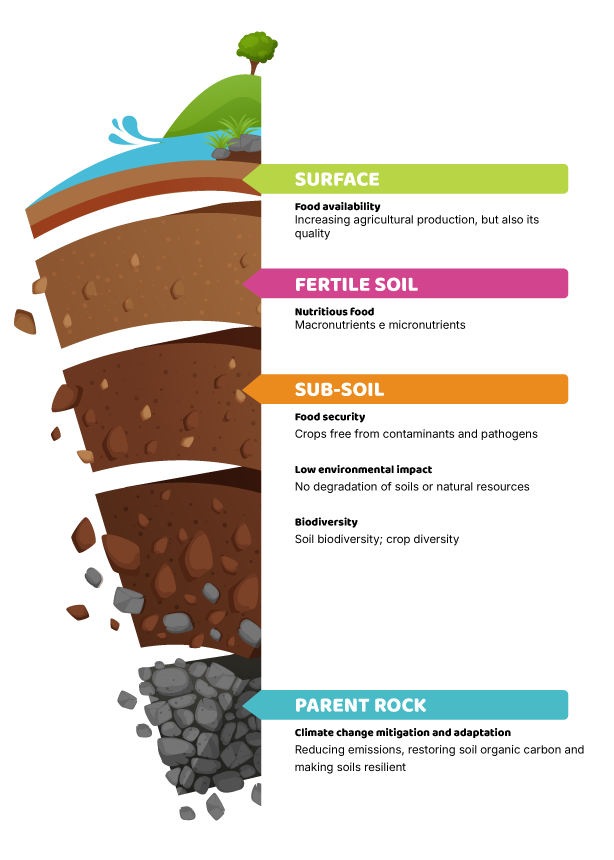
The Earth is habitable because the atmosphere, hydrosphere, geosphere and biosphere work together. In the soil, these connections become visible: the layers function as a system that supports roots, filters water and provides nutrients.
- The topsoil, rich in organic matter and soil life, underpins agricultural productivity and food quality.
- Fertile soil provides the macro- and micronutrients essential for plant growth.
- Subsoil stores water, allows roots to grow deeper and aids filtration, thereby limiting contaminants and pathogens.
- Bedrock provides structural stability and serves as the foundation for soil development.
- Rhizosphere and microorganisms: mycorrhizae form a symbiotic relationship between roots and fungi, supplying phosphorus and water to plants, particularly in poor soils; the living soil works with the plants to maintain fertility.
By looking after these layers, we protect biodiversity, reduce our environmental impact and strengthen our ability to adapt to climate change.
Did you know that not all soils are the same?
- Sandy soils: allow water to drain away very quickly and warm up rapidly, but retain few nutrients.
- Clay soils: they retain water and nutrients, but drain slowly and can become waterlogged and compacted.
- Loam soils (a mixture of sand, silt and clay): these provide a balance of water, air and nutrients, and are therefore the most suitable for most crops.
- Organic matter (decomposing plant matter, compost, well-cured manure): improves any soil, increasing its fertility, water retention and soil life.
- Detritus and decomposers: in many terrestrial ecosystems, 80 to 90 per cent of plant matter is processed by detritivores and decomposers — fungi, bacteria and invertebrates — which recycle nutrients for new crops.
Essential plant elements
These tables bring together information on the essential elements of plants, organised into macronutrients and micronutrients.
The type of soil determines which crops can be grown. The loss of the topsoil through erosion or inappropriate practices exposes poorer soil layers, with less life and fewer nutrients. Grasslands tend to lose little soil, whilst highly intensive farming systems can lose large quantities of fertile soil each year. Every year, billions of tonnes of soil are lost worldwide through erosion, at a rate far faster than its natural formation. With soil loss, fertility and water-holding capacity are lost, reducing the potential to produce nutritious food. Furthermore, degraded soils release carbon into the atmosphere. The removal of vegetation cover increases nitrate leaching and can cause algal blooms in rivers and reservoirs – yet another reason to protect the soil and vegetation.
Did you know that…?
In the Douro, the vineyards grow on terraces built into the hillsides. The stone walls help to prevent soil erosion and make it possible to cultivate the vines on very steep slopes. Without the terraces, the rain would wash away the fertile soil and the vines would struggle to thrive.
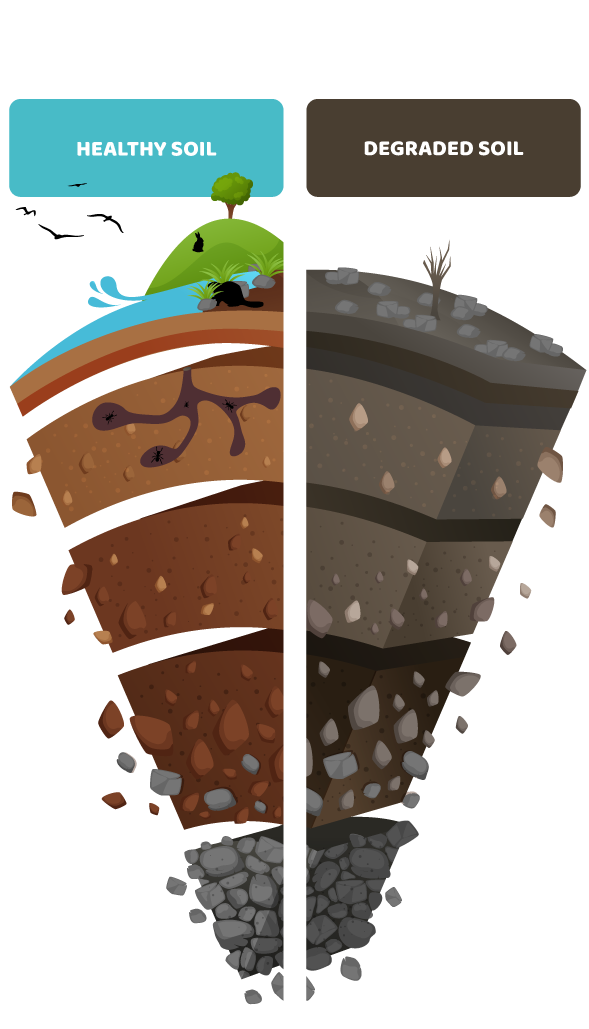
- Increasing organic matter with compost and charcoal improves soil structure and fertility.
- Avoiding excessive tillage, practising crop rotation and using cover crops prevents erosion and protects the topsoil.
- Manage nutrients in a balanced way and apply appropriate and precise fertilisation.
- Integrating trees and shrubs into agricultural areas, through agroforestry, protects the soil and increases biodiversity.
- To promote local knowledge and traditional techniques adapted to the local area.
- Manage phosphorus carefully; plants and mycorrhizae solubilise phosphates, and mineral sources are finite; applying only what is necessary prevents losses and eutrophication.
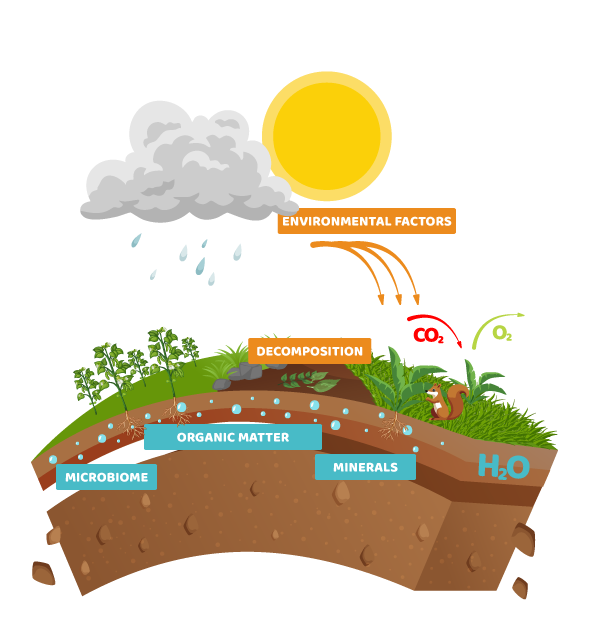
Soil is a living system in which environmental factors, microorganisms, minerals, water and organic matter work together. This balance ensures decomposition, the recycling of nutrients and the growth of plants that produce oxygen and food.
Planning is a way of looking after your health and the planet.
- By choosing a variety of seasonal, locally produced foods, you are supporting farming practices that protect the topsoil and reduce the environmental impact of transport and the cold chain.
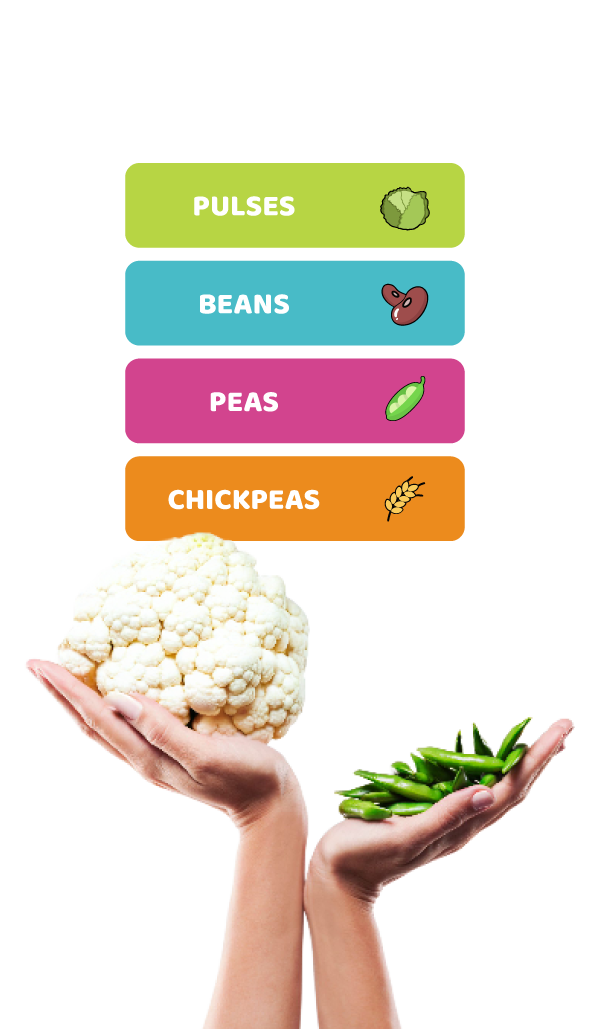
- These include pulses, beans, chickpeas and peas, as well as lupins, three times a week; as well as being nutritious, they support crop rotations that fix nitrogen in symbiosis with rhizobia and reduce the need for synthetic fertilisers.
- Variety on your plate, just like crop rotation, improves your health and helps maintain soil fertility.
By varying your meals with seasonal vegetables and pulses, you close carbon and nitrogen cycles and support living soils that retain water and nutrients.
Worksheet: Link your choices to soil health
This factsheet helps you understand how water, soil type, biodiversity and farming practices influence food production. By keeping track of and planning your meals, you’ll learn to prioritise seasonal, local and sustainably produced food. In this way, you’ll look after your health, preserve the soil and contribute to a more balanced and environmentally friendly food system.
THE SOIL MICROBIOME IN TWO IDEAS
Soil is a living ecosystem containing billions of microorganisms per gram. Plant-growth-promoting bacteria and mycorrhizal fungi increase the uptake of nutrients and water, produce compounds that protect plants, and help form soil aggregates, thereby improving water infiltration and retention. Healthy soil therefore acts as a carbon sink and reduces greenhouse gas emissions.
Practices such as crop rotation, composting, minimum tillage and agroforestry help to preserve these communities.
Did you know that the symbiosis between legumes and rhizobia can fix very large amounts of nitrogen, which is why legumes are key to sustainable crop rotations?

Vary your choices just as farmers vary their crops.
Just as crop rotation keeps the soil fertile, varying the foods on your plate helps you get a range of nutrients and supports farmers who protect the soil.
FOODWISELAB CHALLENGE

To understand the importance of choosing seasonal produce and pulses as part of a sustainable diet, recognising the positive impact of these choices on soil health and the planet.
COURSE SYLLABUS: 3 DAYS OF SOIL CARE