
Olive oil
What is
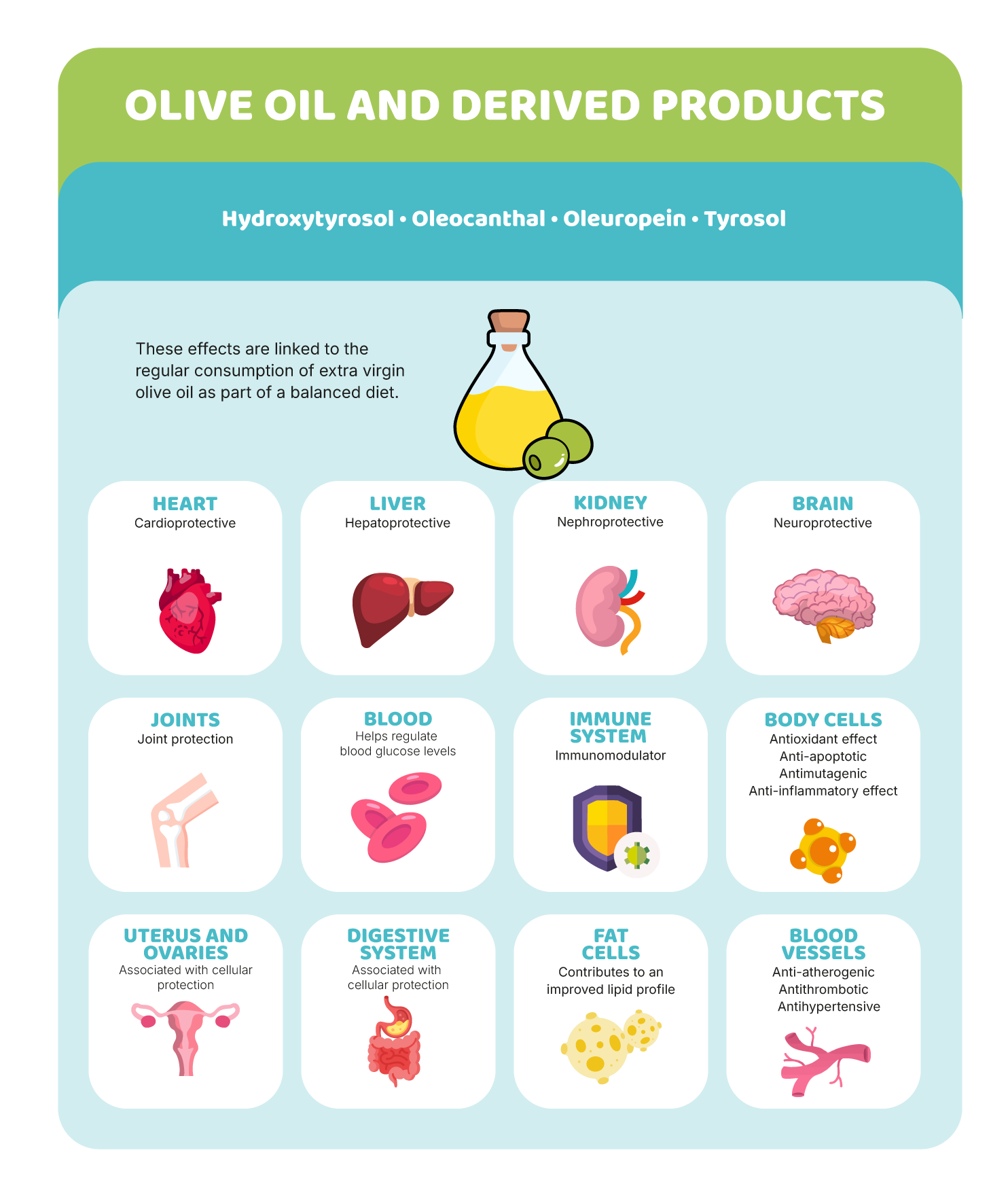
Olive oil is the fat of choice in the Mediterranean diet. It is obtained from olives using mechanical processes and contains mainly monounsaturated fats (oleic acid) and bioactive compounds such as polyphenols, including hydroxytyrosol and oleocanthal, which have antioxidant and anti-inflammatory properties.
As well as being healthy, olive oil is a cultural and gastronomic symbol, used to bind ingredients together and bring out flavours in virtually every meal.
Why include
Olive oil contributes to cardiovascular and metabolic health when used as the main source of fat in a balanced diet. Its polyphenols help protect cells against oxidative stress, whilst its monounsaturated fat improves the blood lipid profile. In the Mediterranean diet, olive oil is used daily, both for cooking and as a dressing, replacing less healthy fats such as butter or refined oils.
HOW TO PLAN
- Breakfast: mixed-grain bread with tomato and a drizzle of olive oil; natural yoghurt with fruit; or baked fruit with a drizzle of olive oil and cinnamon.
- Snack: wholemeal toast with hummus (pulses + olive oil) and cucumber.
- Lunch/dinner:
- Sauté vegetables in olive oil and add pulses or grains (e.g. chickpeas with sautéed spinach).
- Fish baked in the oven with potatoes and vegetables, all drizzled with olive oil.
- Scrambled eggs with kale and mixed-grain bread.
- Weekly meal plan: Allow 1 tablespoon of olive oil per person for dressing and another for cooking. Adjust according to your appetite and level of physical activity.
- Zero waste: make a vinaigrette (3 parts olive oil + 1 part vinegar or lemon juice), keep it in the fridge and use it throughout the week for salads or cold pasta dishes.
Recommended amounts (12–14 years)
On average, 1 to 2 tablespoons a day, spread across meals.
Incorporate olive oil into dishes containing vegetables, pulses and whole grains – this is the quintessential Mediterranean combination.
Safety and conservation
- Store in dark, tightly sealed bottles, away from light and heat.
- Cook over a medium heat and avoid letting the olive oil ‘smoke’, as overheating breaks down the beneficial compounds.

That ‘tingling’ sensation in the throat is a sign that the olive oil is rich in polyphenols.
Its heat stability makes it suitable for sautéing and roasting, but repeated use for deep-frying should be avoided. Olive oil aids the absorption of fat-soluble vitamins (A, D, E and K) found in vegetables.
It is the common thread running through the Mediterranean diet: it brings the flavours together and protects your health.
FOODWISELAB CHALLENGE

To promote olive oil as the main source of fat in the Mediterranean diet, encouraging its mindful, sensory-based and balanced use in everyday meals.
OLIVE OIL AT THE CENTRE OF THE PLATE