CEREALS AND RICE
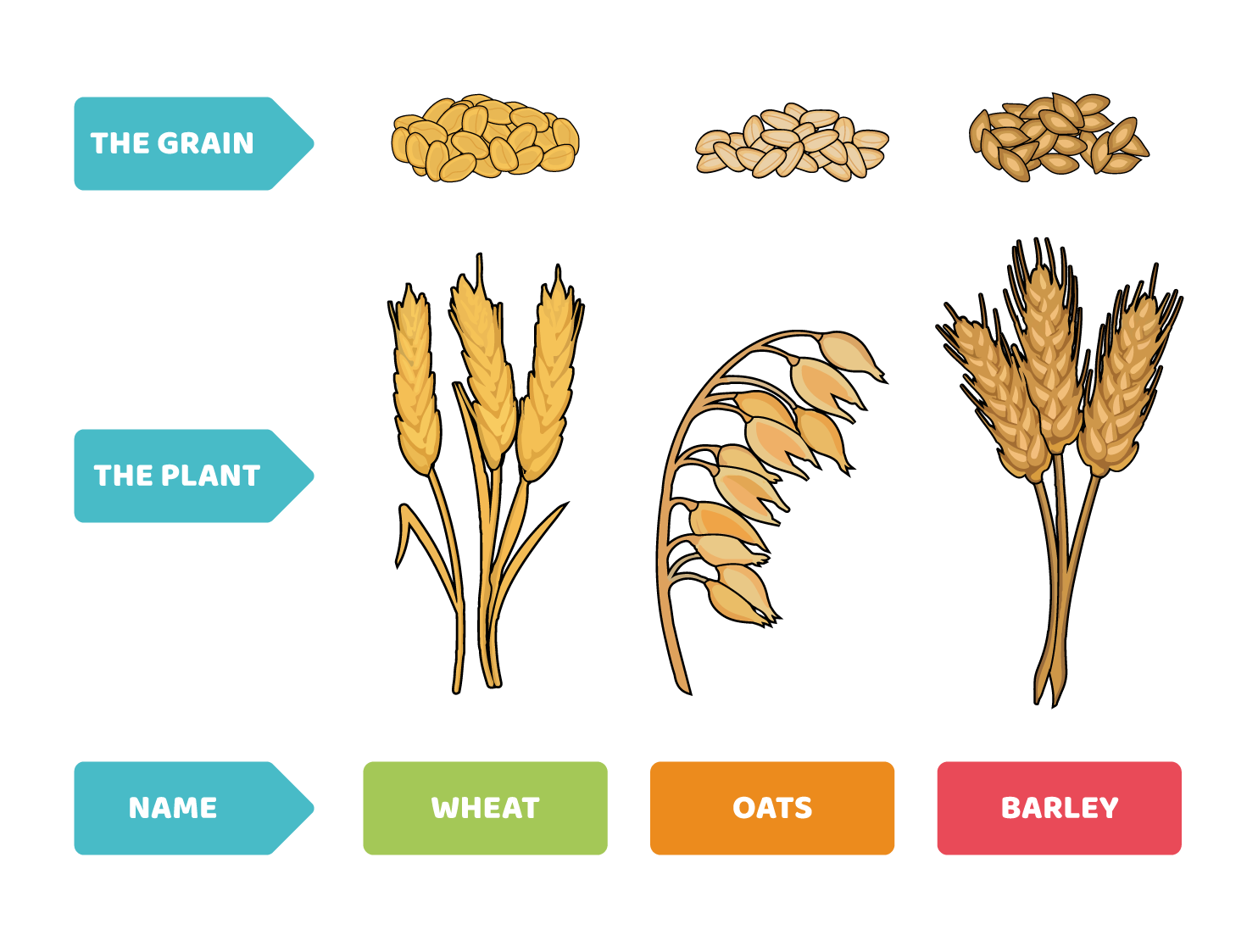
Cereals such as wheat, rice, oats, barley, rye and maize provide a daily source of energy. When used in simple combinations with vegetables, pulses, fish, eggs or poultry, and with olive oil as the main source of fat, they form part of the Mediterranean diet and help to create balanced meals.
Cereals are the edible seeds of plants in the grass family. They have three main parts: the endosperm (starch, the ‘energy of the grain’), the germ (vitamins and lipids) and the outer layers (bran and aleurone, which contain most of the fibre, vitamins and minerals).
Even when ground or processed, a cereal is considered wholegrain if the three parts of the grain – bran, germ and endosperm – are retained in the same proportions as in the whole grain. This definition applies to cereals (wheat, maize, barley, rice, etc.) and also to some pseudocereals (which are not true cereals but are used in a similar way), such as amaranth, buckwheat and quinoa.
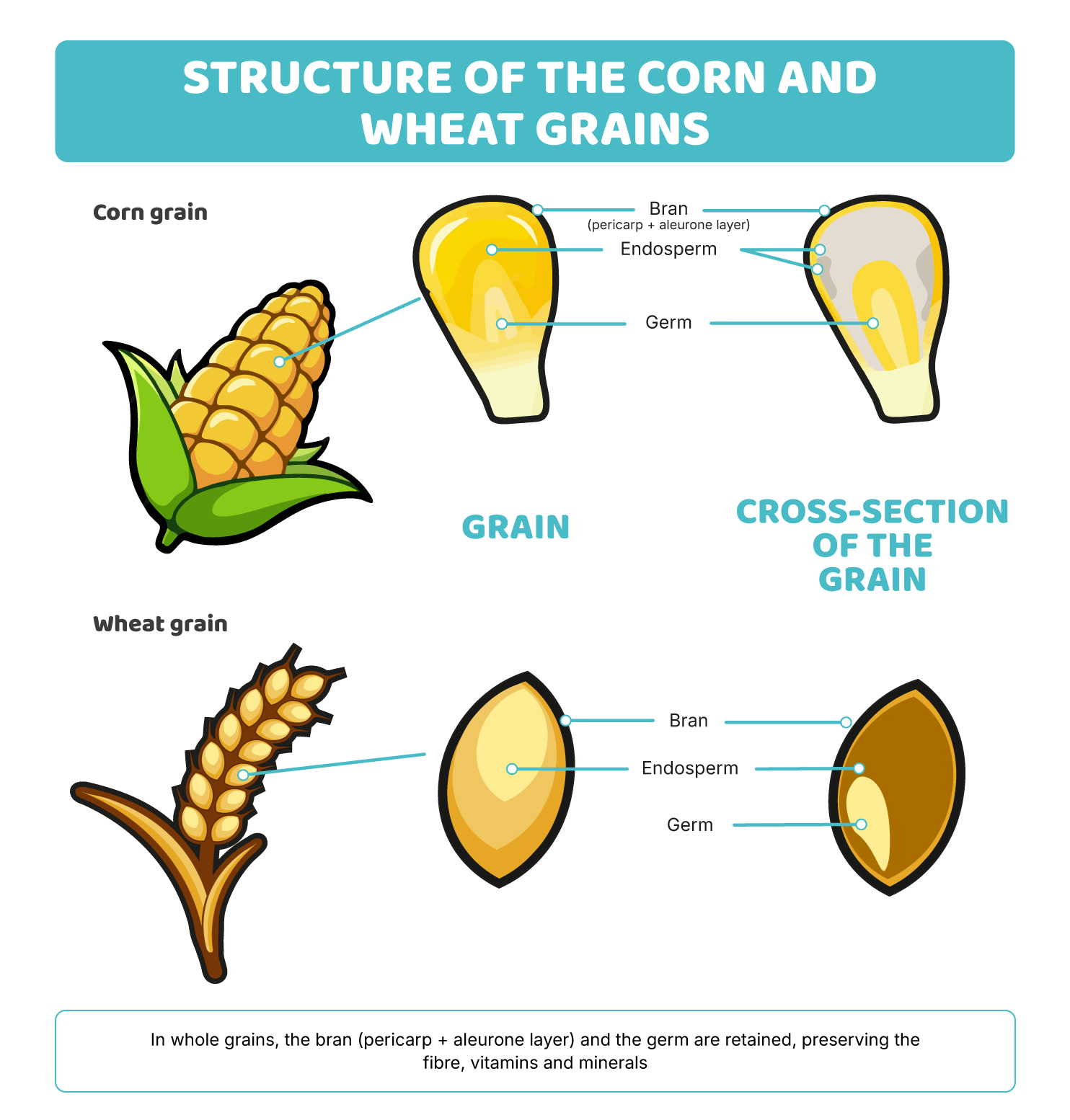
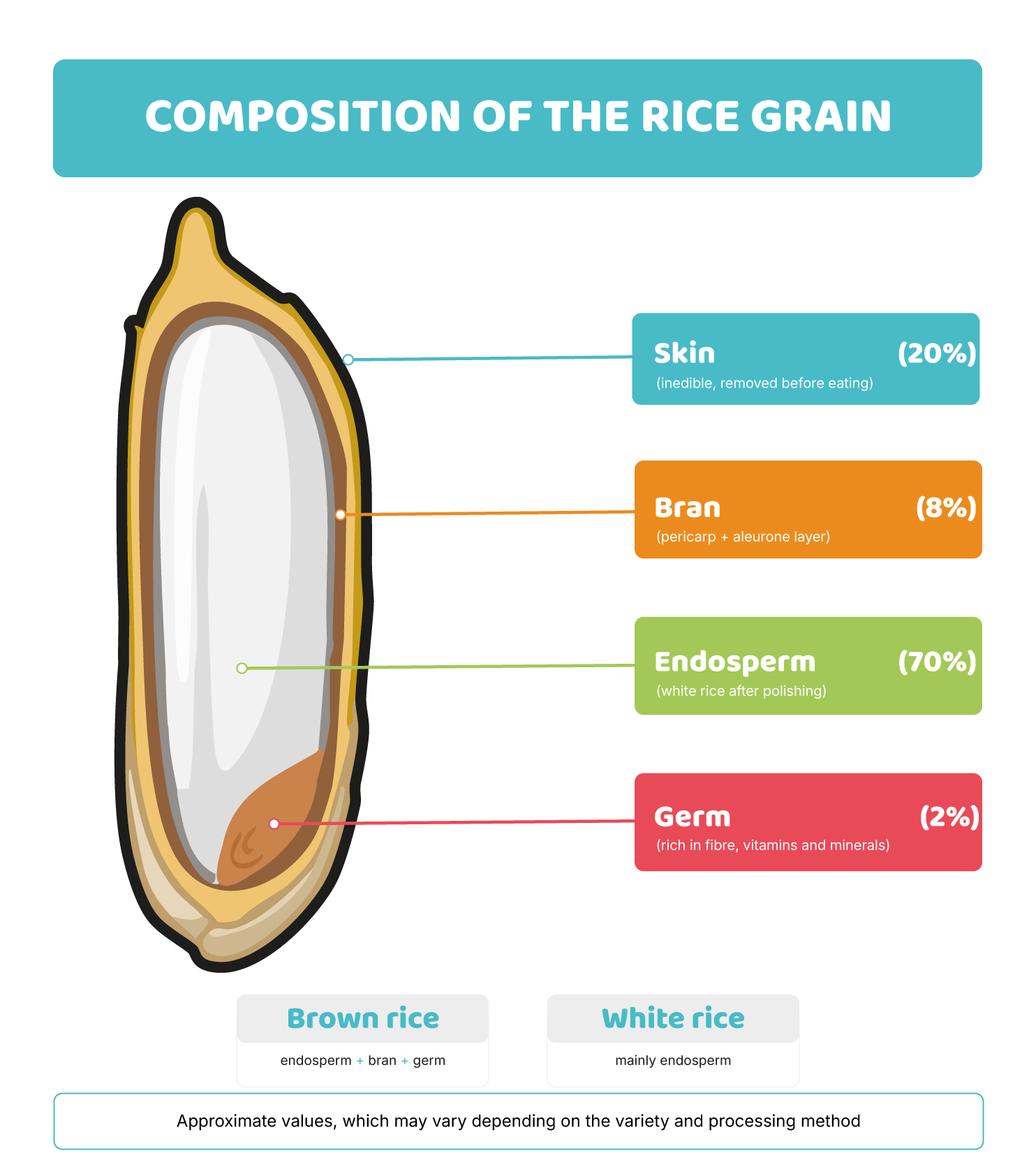
Rice is the grain of a plant of the genus Oryza. It can be wholegrain (retaining the bran and germ), white/polished (more refined) or parboiled (pre-treated with steam before being polished). These forms affect the flavour, texture and nutrient content.
Inside the grain:
- Peel: the outer layer that is removed before eating.
- Pericarp/‘skin’ and aleurone layer: these contain fibre, protein and minerals.
- Endosperm: the largest part of the grain, rich in starch.
- Germ/embryo: the living part of the seed.
In rice, some of the vitamins and minerals found in the outer layers may migrate into the interior when the grain is steamed.
WHY INCLUDE
Cereals and rice are staple foods in a balanced diet. They provide energy in the form of complex carbohydrates and, when chosen in their wholegrain forms, are a good source of fibre, B vitamins and essential minerals. In the Mediterranean diet, they feature in every meal, balanced with vegetables, pulses, olive oil and lean proteins.

Practical examples for planning
- Breakfast: plain porridge with seasonal fruit and natural yoghurt; or mixed-grain bread with fresh cheese, tomato and a drizzle of olive oil.
- Snack: wholemeal bread sandwiches with chickpea spread and grated carrot; or natural yoghurt with oat flakes.
- Lunch/dinner: brown rice with beans and sautéed vegetables; wholemeal pasta with vegetables and tuna; boiled barley in a salad with vegetables.
- Zero waste: cook enough rice to last two days. The next day, use it in a cold salad with pulses and vegetables, in oven-baked rice balls, or to add some extra flavour to soup.
Reference amounts (12–14 years)
At every main meal, include 1 to 2 portions of cereals. As a simple guide, count 1 slice of bread or 3 tablespoons of cooked rice or pasta per portion. Adjust this according to your physical activity and appetite.
Safety and conservation
Store rice, pasta and flour in sealed jars in a cool, dry place. Once cooked, cool quickly and store in the fridge. It is safe to eat until the following day, provided it is reheated thoroughly.

Oats and barley are rich in specific soluble fibres (such as β-glucans), which contribute to daily fibre intake when included as part of a balanced diet.
Red and black rice get their colour from natural compounds found mainly in the outer layers. Varying the colours is a simple way to add variety to your diet.
Rice bran is the fraction removed during polishing and is where the fibre, proteins and some of the grain’s lipids are concentrated.
Plain popcorn (with no added sugar or fat) is a wholegrain cereal and can be an occasional snack containing fibre.
FOODWISELAB CHALLENGE

To develop skills in planning, organisation and making the most of food, showing how preparing a base dish can save time and energy and reduce food waste.