
Processing of chicken and other poultry
Chicken and other poultry, such as turkey and duck, are among the world’s main sources of animal protein. It is rich in high-quality protein, B vitamins and minerals such as iron and zinc, in moderate amounts, and is considered a white meat as it has a lower fat content than most red meats, particularly when eaten skinless. To ensure it reaches the consumer in good condition, chicken undergoes several stages of processing, which guarantee hygiene, food safety and product quality.
From the poultry farm to the processing plant
Processing begins on poultry farms, where the birds are fed, cared for and kept under controlled conditions of temperature, light and hygiene. Before transport, feed is withdrawn several hours before slaughter (usually between 8 and 12 hours) to reduce the risk of contamination during processing, but water is kept available until the time of collection.
The birds are transported in ventilated crates to the processing plants, in accordance with animal welfare standards.
Stunning and slaughter
At the plant, the birds are stunned using regulated methods, such as electricity or gas, to minimise animal suffering, and are then slaughtered quickly and hygienically. The blood is drained, which improves the meat’s shelf life and reduces the risk of contamination. This process is supervised by vets who ensure compliance with food safety and animal welfare standards.
Scalding and plucking
After slaughter, the birds are passed through hot water tanks (usually between 50 and 60 °C) in a process known as scalding, which makes it easier to remove the feathers. They are then passed through plucking machines, which use rubber rollers to remove the feathers without damaging the skin.
Chicken and other poultry
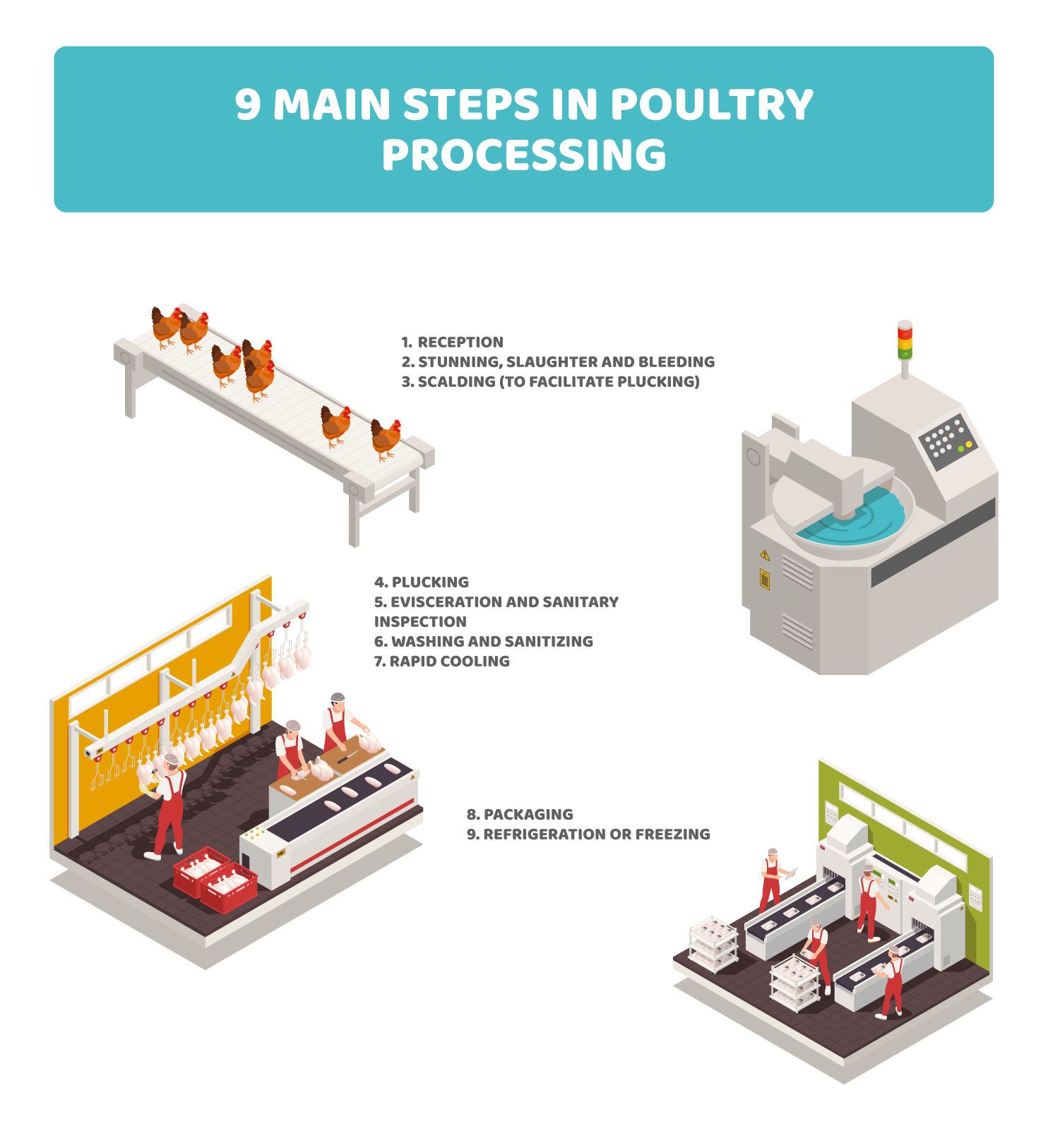
At this stage, the bird’s body is opened and the internal organs are removed. The edible offal, such as the liver, heart and gizzard, are separated and cleaned for sale. The inedible organs are sent for processing into animal feed, organic fertilisers or specific technical or pharmaceutical products.
Each carcass is visually inspected to ensure there are no signs of disease or contamination.
Washing and cooling
After evisceration, the poultry is washed with cold water and immersed in cooling tanks containing ice-cold water, at around 0°C, to rapidly lower the temperature and halt bacterial growth. Some plants also use cold-air chilling, which better preserves the texture of the meat.
Cutting and packaging
Chicken can be sold whole, in halves, in pieces (breast, legs, wings) or boneless. The cuts are made mechanically, and the meat is vacuum-packed or packed in a modified atmosphere, which extends its shelf life.
Some meat is used to make processed products, such as burgers, sausages, meatballs and nuggets, which are cooked, breaded or flash-frozen.
Storage and distribution
Chilled chicken is stored at between 0 and 4 °C and frozen chicken at –18 °C, allowing it to be stored for varying periods, ranging from days to several months, depending on the method used. Throughout transport, the cold chain is maintained to prevent microbiological changes and ensure food safety.
BY-PRODUCTS AND SUSTAINABILITY
The modern poultry industry seeks to make the most of everything:
- Feathers can be processed into feather meal, which is used as a high-protein feed;
- The blood and offal are turned into organic fertilisers;
- Chicken fat is used in the production of biodiesel;
- Process water is treated and reused.
These practices reduce waste and make processing more sustainable and efficient.
INNOVATION AND FOOD SAFETY
The factories use complementary technologies, such as specific physical treatments and advanced cooling systems, to improve the shelf life and safety of the meat. The entire process is monitored using the HACCP (Hazard Analysis and Critical Control Points) system, which identifies and controls risks at every stage of production.

A tip for planning your meals
Chicken is an excellent source of lean protein. Opt for boiled, grilled or roasted chicken, and avoid eating fried or breaded products too often.
Whenever possible, choose domestic chicken from certified, sustainable farms that respect animal welfare and the environment.
FOODWISELAB challenge

To understand how chicken and other poultry (turkey, duck) are processed, from production through to the various ways in which they are consumed, distinguishing between simple processes and more intensive processes, and reflecting on the impact of these choices on health.
From the poultry farm to the plate: Processing chicken and other poultry