
Sugar
In the Mediterranean diet, sweets and sugary drinks are consumed only occasionally. The daily diet is based on fruit, vegetables, pulses, whole grains, olive oil, fish and plain dairy products, with little added sugar.
Types of sugar:
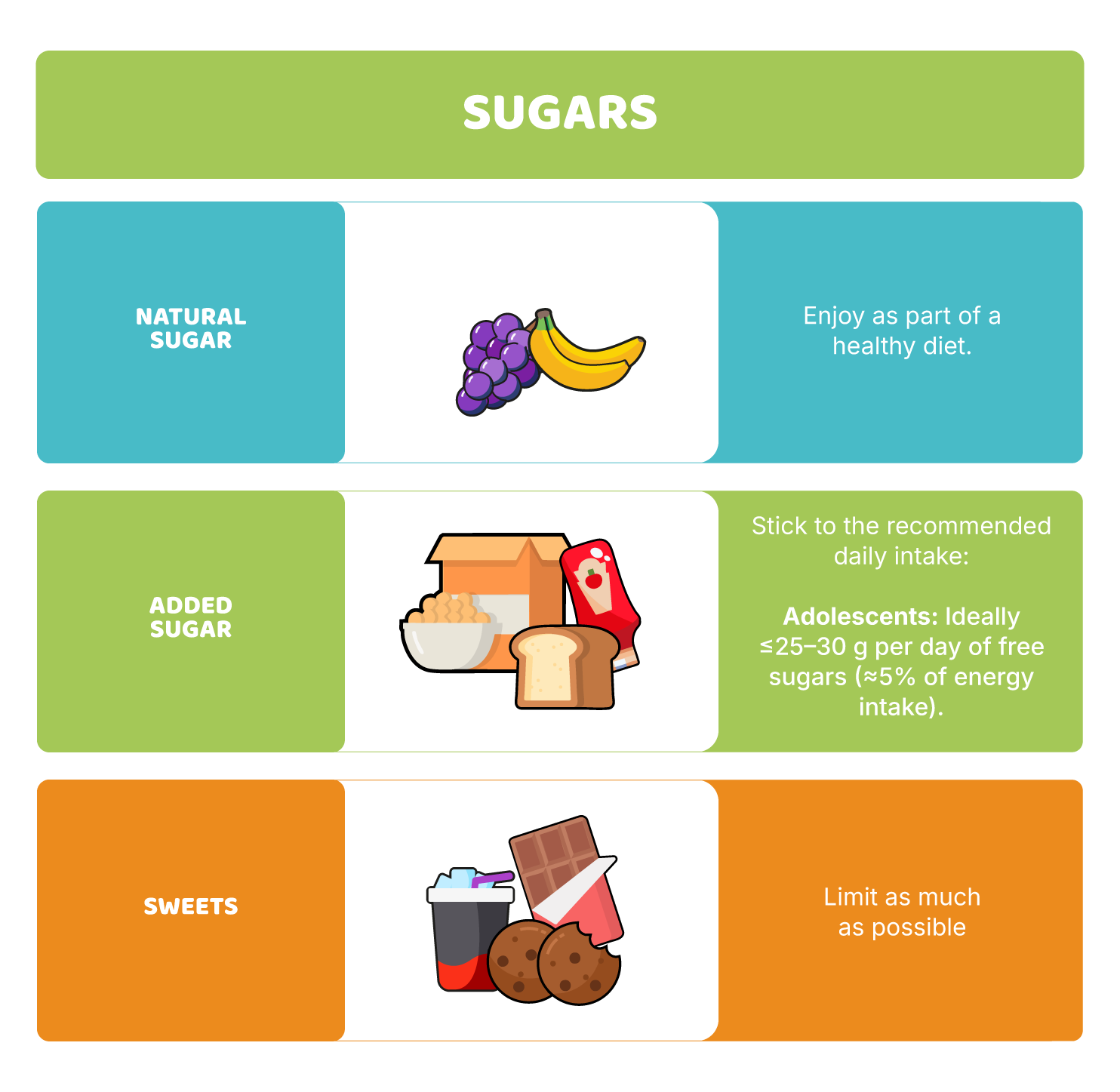
- Natural: those that are already present in food, such as in fruit or milk. In these cases, the sugar is part of a food matrix rich in fibre, protein or fat, which moderates its absorption.
- Free: all sugars added to food and drink, plus those naturally present in honey, syrups, jams and juices (even 100% fruit).
Examples of names: sucrose, fructose, glucose
Examples of ingredients: honey, corn syrup, concentrated fruit juice
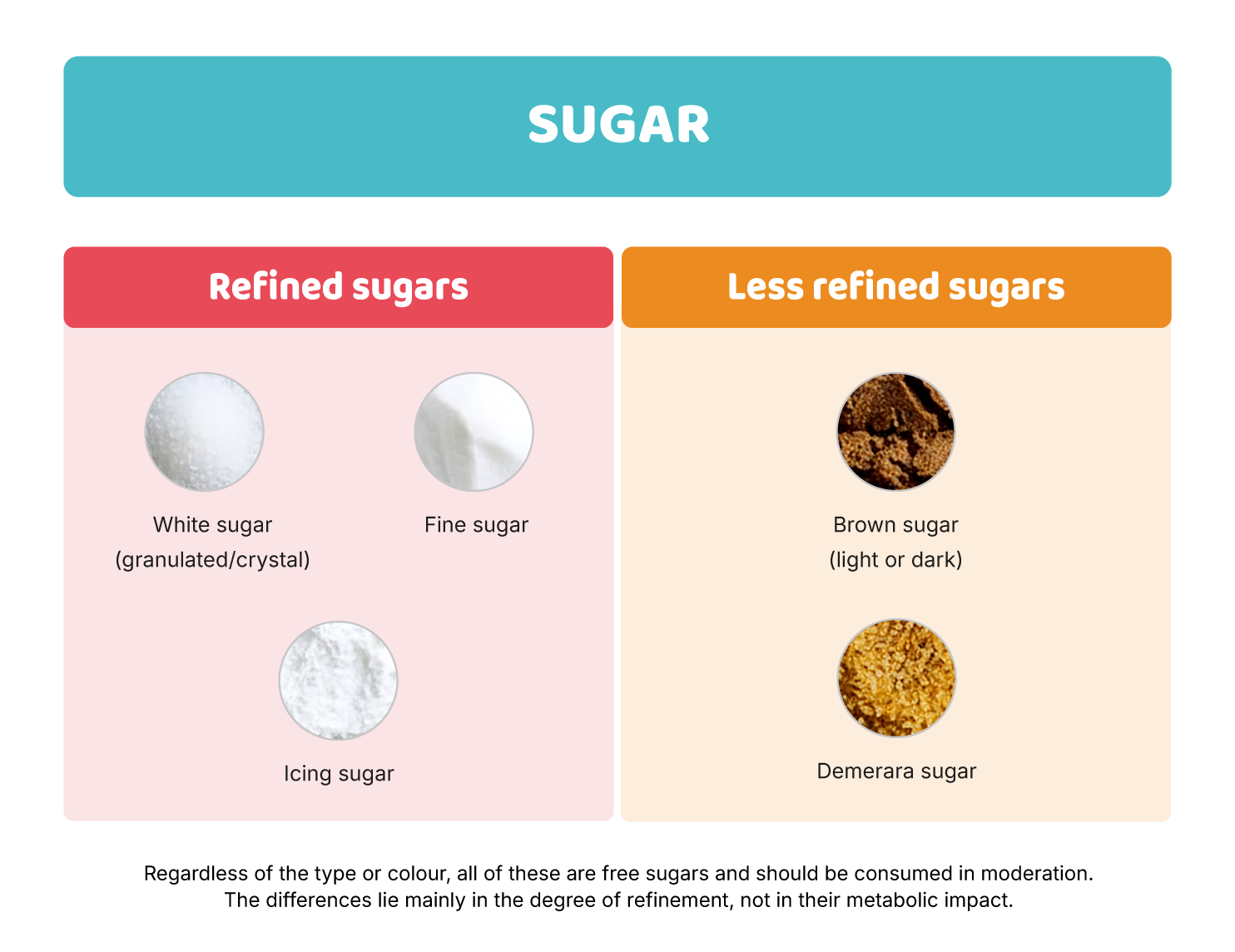
The body needs some glucose, but too much free sugar increases the risk of tooth decay, weight gain and metabolic diseases. The key is to prioritise the natural sugars found in whole foods, such as fruit and milk, and to limit added sugars.
Daily reference intake (12–14 years):
Up to 5% of daily energy intake, approximately 30 g of free sugars (~7 sugar cubes).
Drinks and sweets
Opt for plain water and milk, saving fizzy drinks and fruit nectars for special occasions.
Whole fruit counts as 1 portion; juices and smoothies (even without added sugar) count as free sugars, so limit these to 150 mL per day.
Balanced sweet snacks: natural yoghurt with fruit; mixed-grain bread with 100% peanut butter and banana; porridge with cinnamon.
Traditional sweets are part of Mediterranean culture, but they should be eaten in small portions and not every day.
How to read labels
- Verifica “Hidratos de carbono, dos quais açúcares”:
-
- Alto teor: >22,5 g/100 g
- Baixo teor: ≤5 g/100 g
- If sugar, honey or syrup appear near the top of the list of ingredients, the product is high in free sugars.
Cooking with less sugar
- Reduce the amount of sugar in home-made recipes by 10–20 per cent.
- Use cinnamon, vanilla or citrus zest to bring out the flavour.
What about honey, brown sugar or agave syrup?
They have the same effect on the body; they are free sugars and should be consumed in moderation.
Sweeteners
They can be useful as a transitional strategy, but the aim should be to accustom your palate to less sweetness.
Sweeteners
They can be useful as a transitional strategy, but the aim should be to get your taste buds used to less sweetness.
ORAL SAFETY
- Avoid ‘nibbling’ on sweets between meals.
- Brush your teeth twice a day with fluoride toothpaste.
Juices and smoothies, even without added sugar, should be consumed in moderation.
Simple foods (fruit, milk, natural yoghurt, wholegrain cereals) already provide the necessary sugar.
Planning your snacks helps you avoid processed foods that are high in hidden sugars.
FOODWISELAB CHALLENGE

To reduce the consumption of added sugars, by encouraging more informed choices, label reading and planning strategies in line with the Mediterranean diet. .