
Preparation starts with hygiene and organisation
How to turn what you’ve chosen and planned into balanced, safe and tasty meals
Once you’ve chosen your ingredients carefully and planned your meals for the week, it’s time to get cooking. Cooking is about transforming ingredients into real food, made by you and meant to be shared. It is at this stage that care, hygiene and creativity come together.
In the Mediterranean diet, cooking is an act of balance: making the most of what nature has to offer, respecting the food and using time wisely.
In this section, you’ll learn how to organise your workspace, follow good hygiene practices, use basic food preparation techniques and reduce waste, whilst cooking with enjoyment, safety and respect for the planet.
Preparing meals
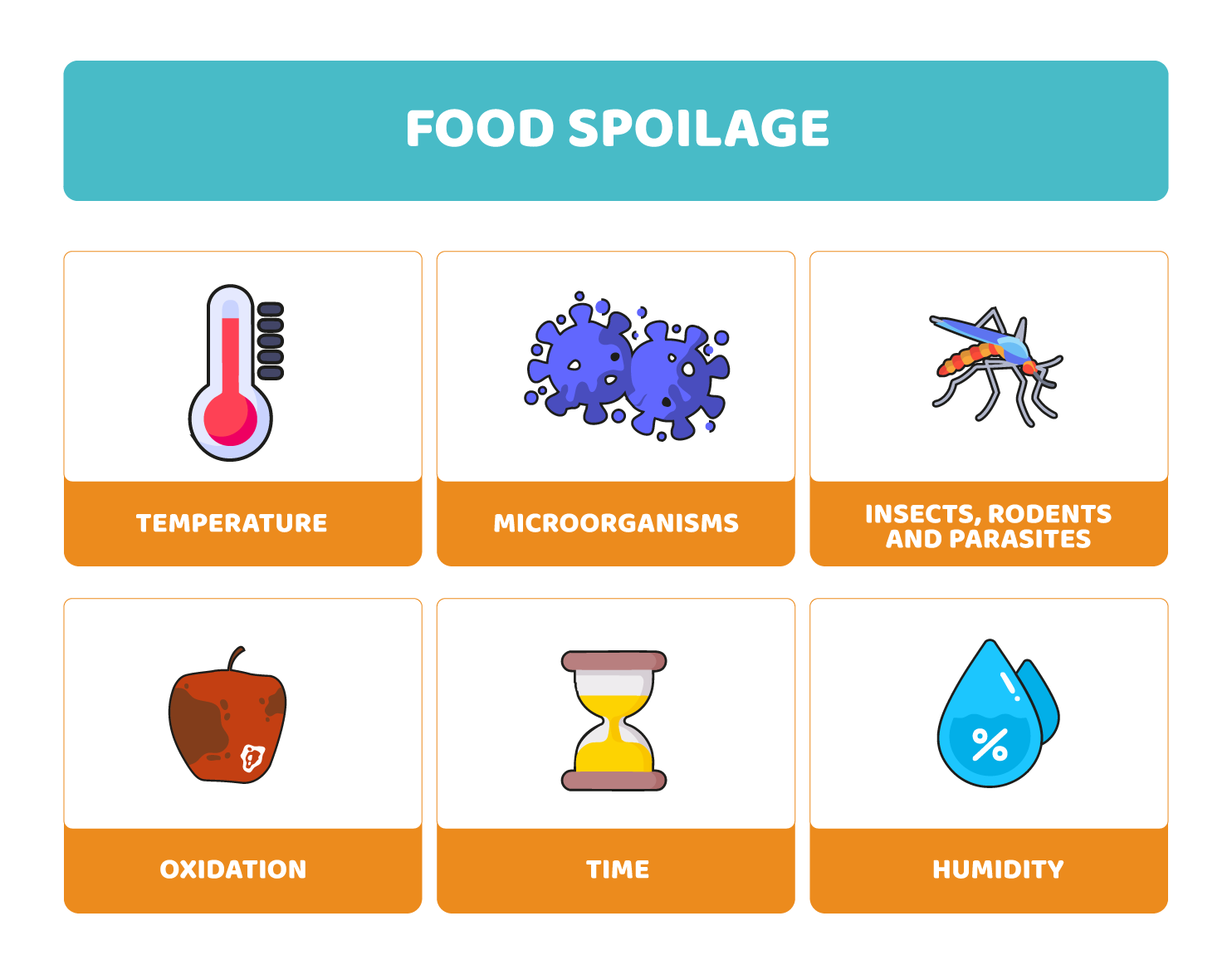
The tiny creatures that can spoil food
Food can spoil due to the action of yeasts, moulds or bacteria, making it unpalatable. However, some pathogenic microorganisms do not alter the appearance, smell or taste of food, and can cause illness even when the food looks normal.
This spoilage can occur at any time: during harvesting, storage, transport, preparation or even after serving. For example, overripe strawberries spoil quickly and develop mould. Food left out on a buffet can become contaminated when flies land on it.
These microorganisms are so small that they are only visible under a microscope, but they grow when they find food, moisture, the right temperature and time. The pH and the presence or absence of oxygen also influence their growth.
- Yeasts
Yeasts are single-celled fungi that reproduce by budding. They grow best in the presence of oxygen, but can also thrive without it. They thrive in moist environments and on foods rich in sugar; some species tolerate high concentrations of salt, and multiply most rapidly at temperatures between around 25 °C and 35 °C. They are destroyed by high temperatures, particularly above 55–60 °C, when applied for a sufficient length of time.
They can spoil juices, honey, fruit or yoghurts by producing carbon dioxide and alcohol, which alters the flavour and can cause the food to become ‘fizzy’.
- Moulds
Moulds are fungi that produce filaments called hyphae, which spread through food to extract nutrients. They can be various colours and grow on sweet, acidic and even relatively dry foods, such as hard cheese.
They grow best at temperatures between 20 °C and 30 °C and multiply more rapidly in high humidity. Storing food in a cool, dry place, keeping it in the fridge or using it in acidic preparations (such as pickles) helps to slow down its growth.
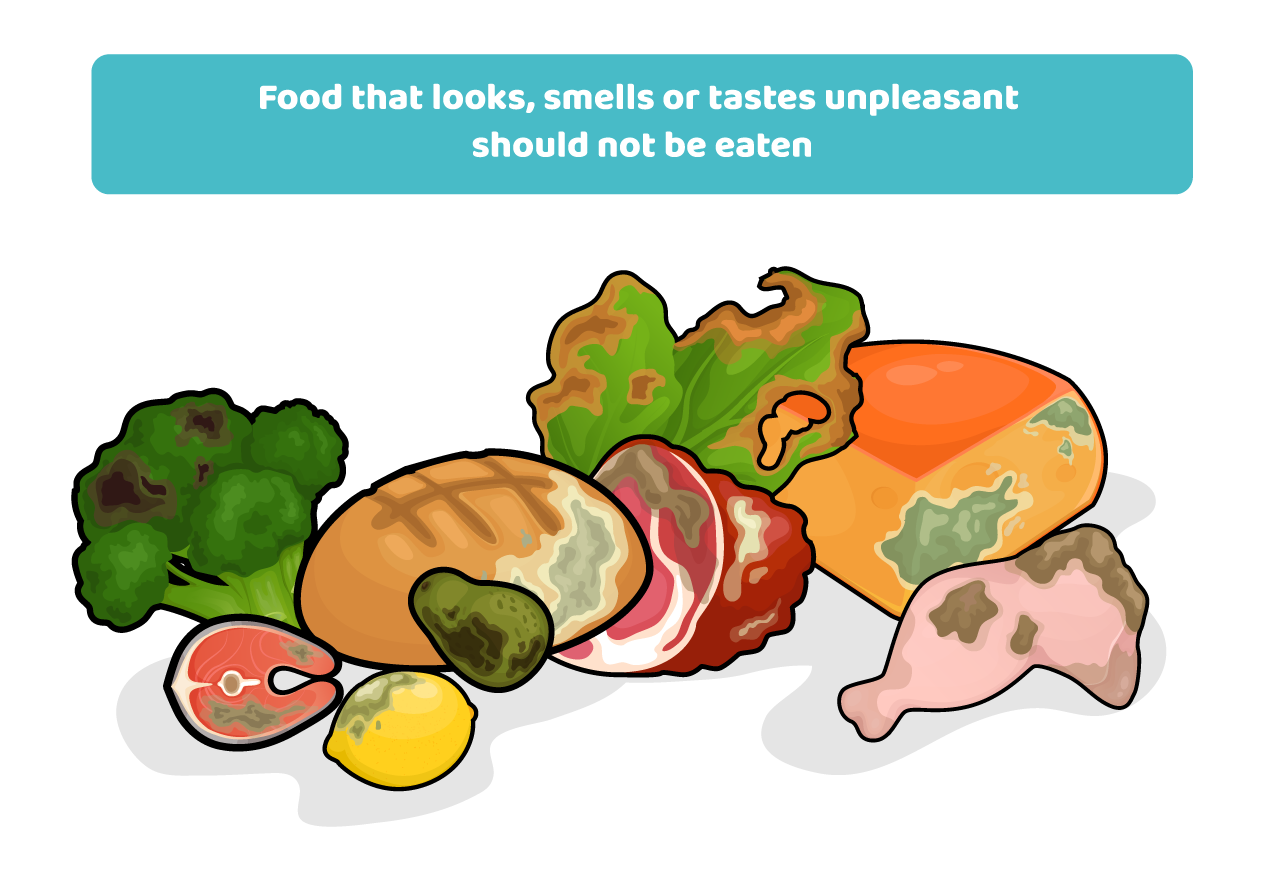
If food has mould on it, even if only in one area, it should not be eaten, as the mould may have spread to areas you cannot see.
- Bacteria
Bacteria are everywhere: on the skin, in the air, in the soil, in water and in food. Most are harmless, but some cause food poisoning or spoil food, altering its taste, smell or texture.
They grow very quickly between 5 °C and 63 °C, the so-called ‘danger zone’. Under ideal conditions, they double in number every 10–20 minutes; in just a few hours, a single bacterium can multiply into thousands. Some bacteria form spores when conditions are unfavourable; these remain dormant until they find a more suitable environment.
To prevent their growth, it is essential to keep perishable food in the fridge (0–5 °C), cool meals quickly before refrigerating them, and heat food to high temperatures (ideally above 74 °C) before eating.
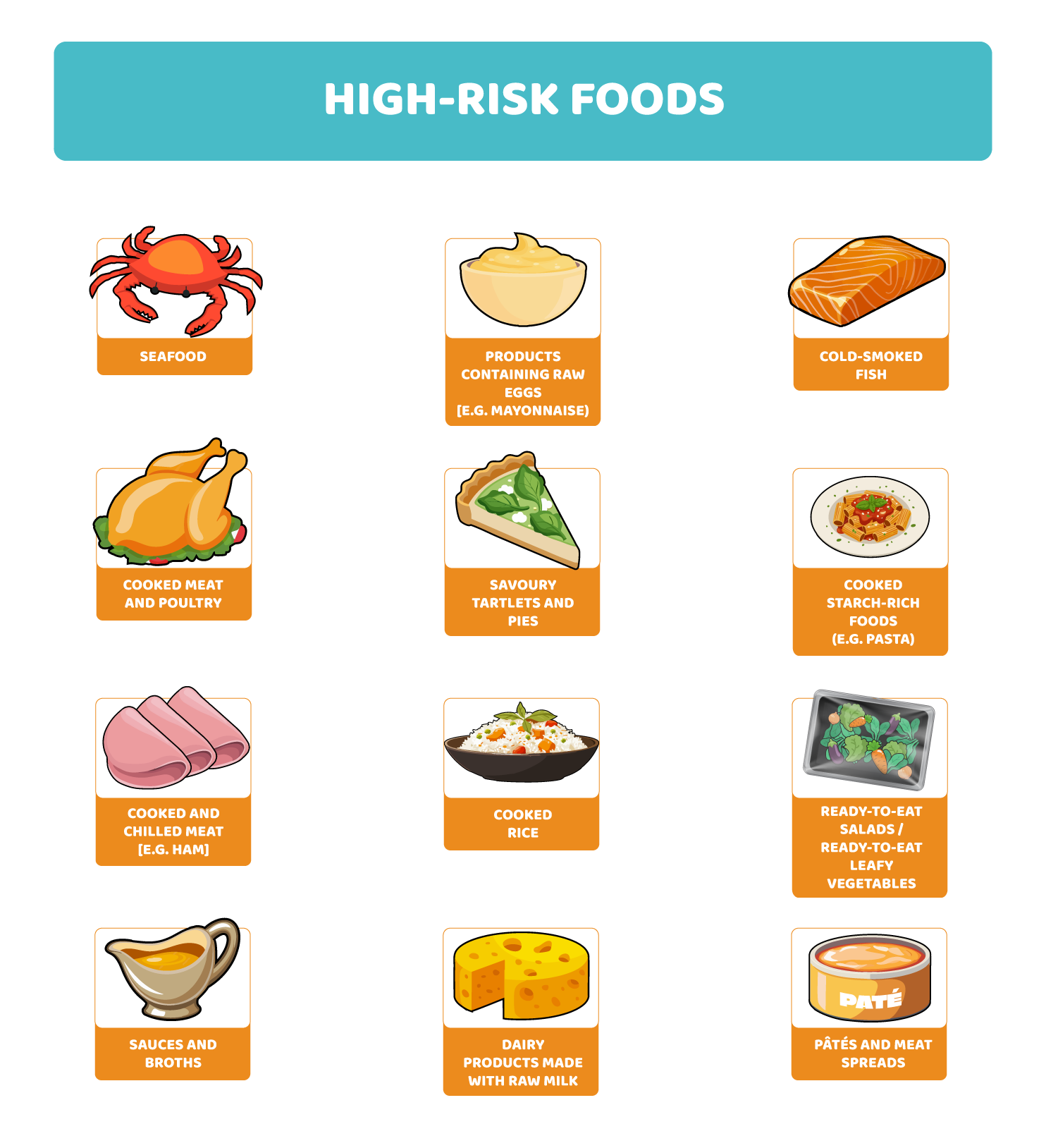
Foods rich in protein and moisture are ideal for bacterial growth and therefore require special care. Cooked meat, soups, stews, dishes containing milk or eggs, fish, seafood and cooked rice are examples of high-risk foods.
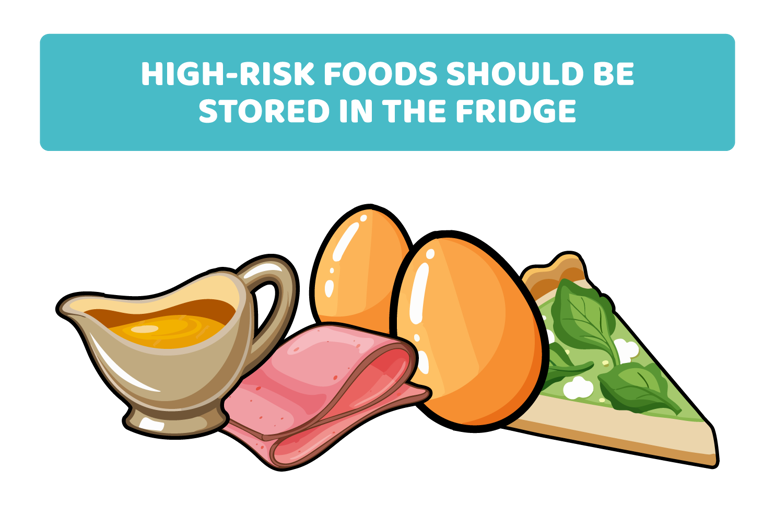
They should be kept in the fridge, handled hygienically and never left at room temperature for too long.
Examples of high-risk foods:
- cooked meat and meat products
- ready-made dishes, such as sauces, soups and stews
- milk and eggs (and products containing them, such as homemade mayonnaise)
- fish and shellfish
- ready-to-eat meals made using the examples above
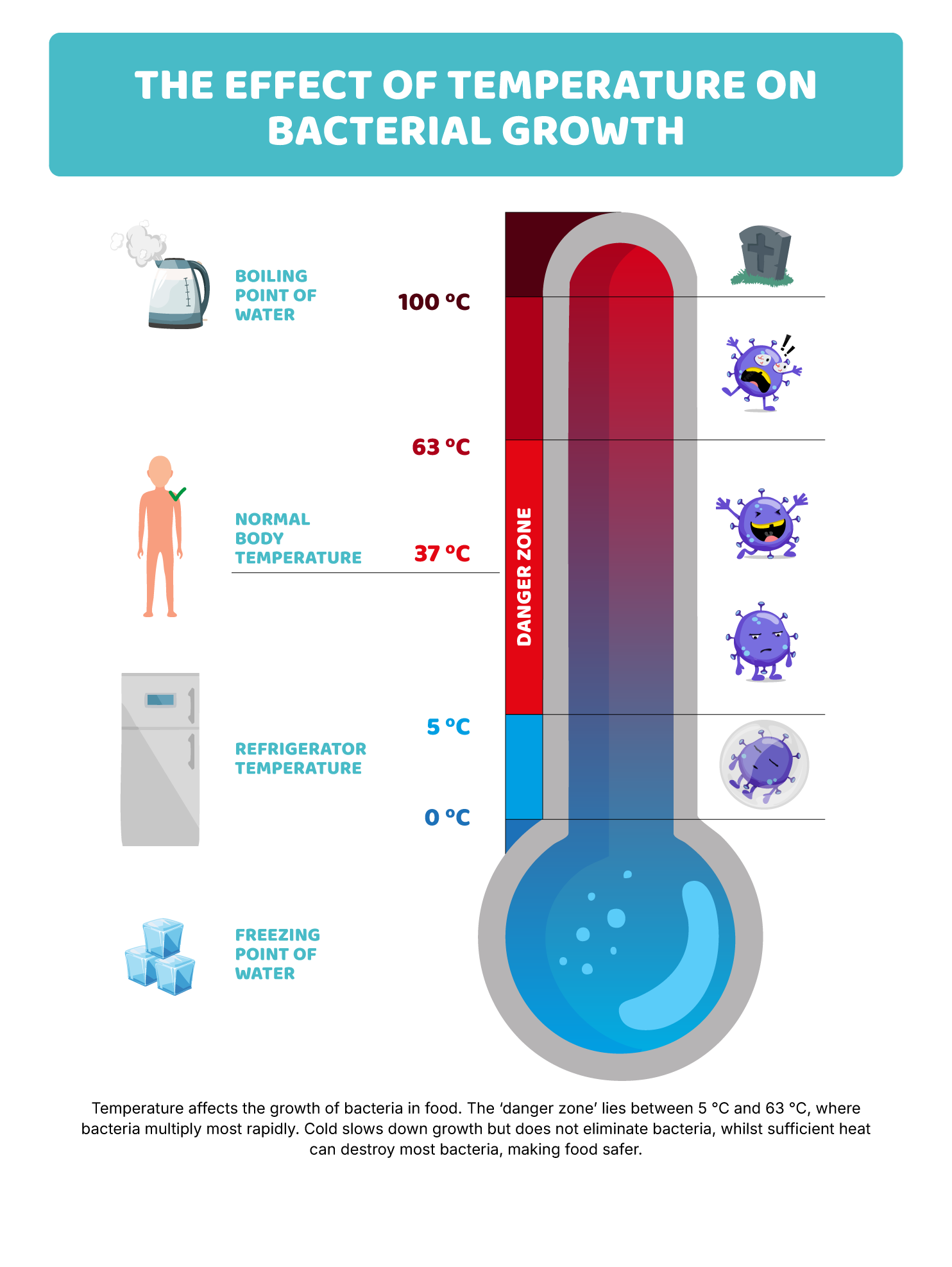
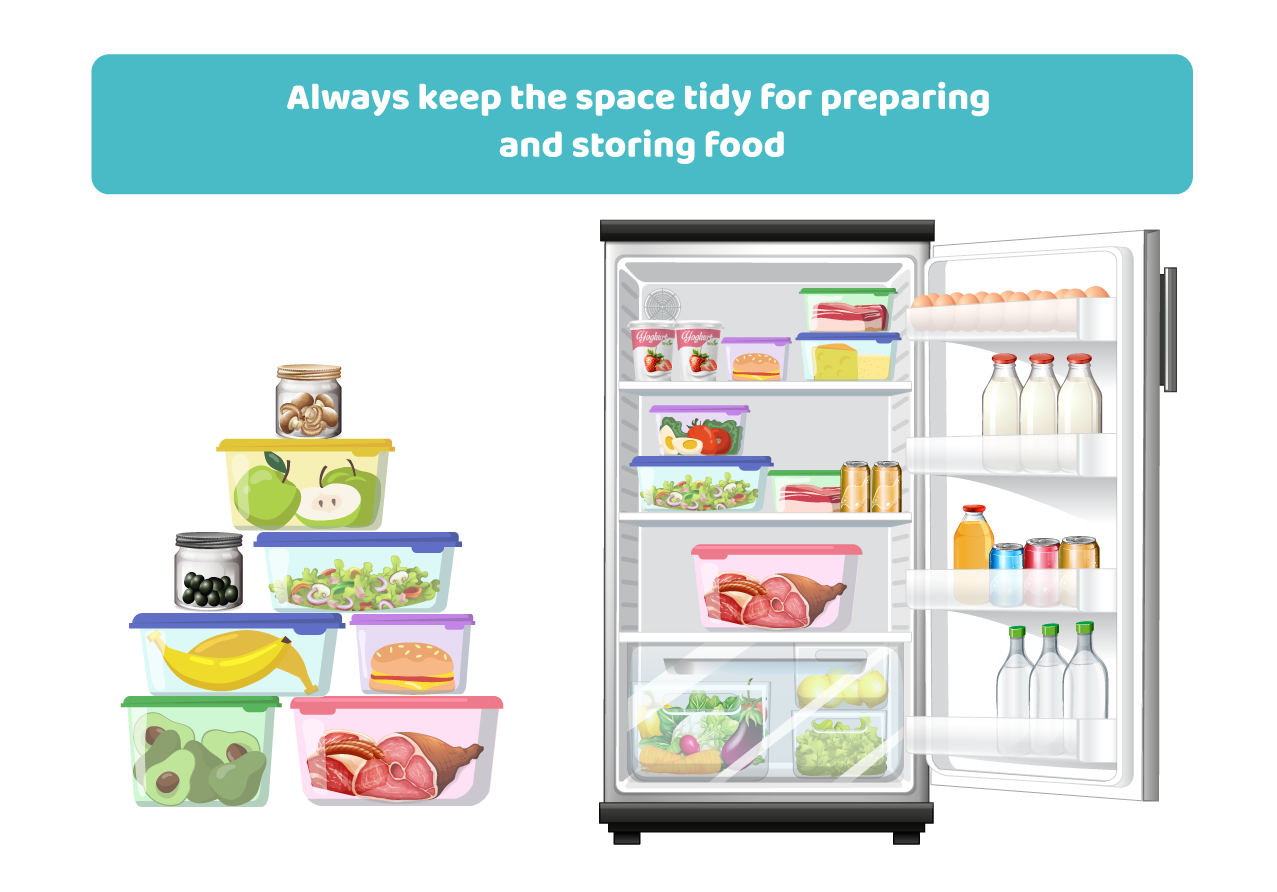
Bacteria multiply rapidly between 5 °C and 60 °C, so it is important to store fresh food in the fridge immediately after purchase and never leave meat, fish or milk out of the fridge for more than two hours (or one hour on very hot days). The fridge should be set to between 0 °C and 5 °C and the freezer to –18 °C.
Before cooking, make sure you defrost food in the fridge or in the microwave, never at room temperature.
These simple steps prevent food poisoning and help to preserve flavour and nutrients.
More than 200 diseases, including foodborne infections and food poisoning, can be transmitted through contaminated food, according to the World Health Organisation. The microorganisms that cause them are invisible, but they are everywhere – on our hands, on surfaces, in the air and in water. When conditions are right, they multiply rapidly.
Prevention, however, is in your hands.
Personal hygiene: the first ingredient
Your body is your most important kitchen tool. To cook safely:
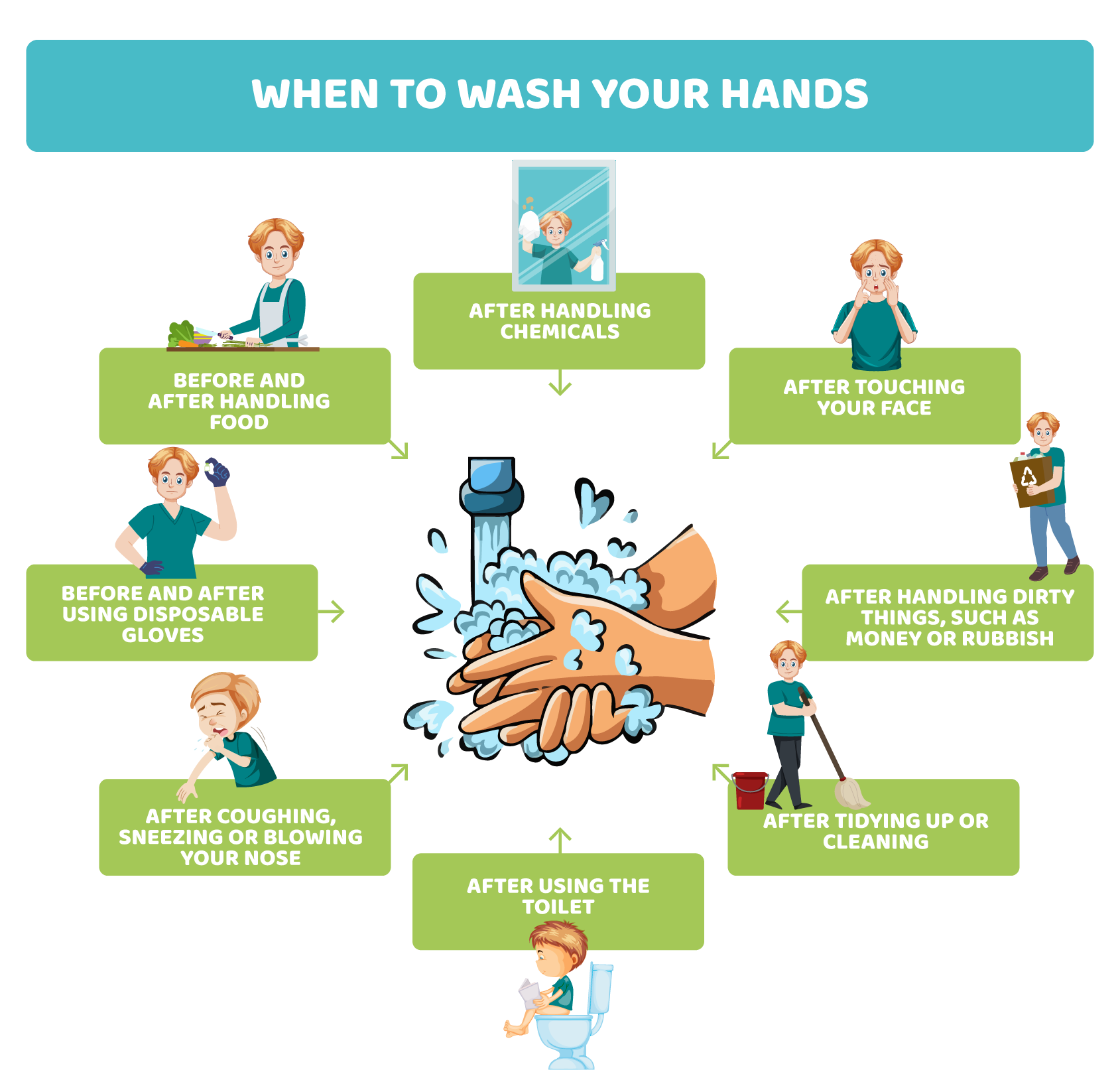
- wash your hands with soap and water for at least 20 seconds
- tie your hair back and wear clean clothes
- avoid rings, bracelets and watches
- cover wounds with a waterproof plaster
- don’t cook if you’re ill
- wear a clean apron
Anyone who has recently had food poisoning should avoid handling food for 48 hours after their symptoms have subsided.
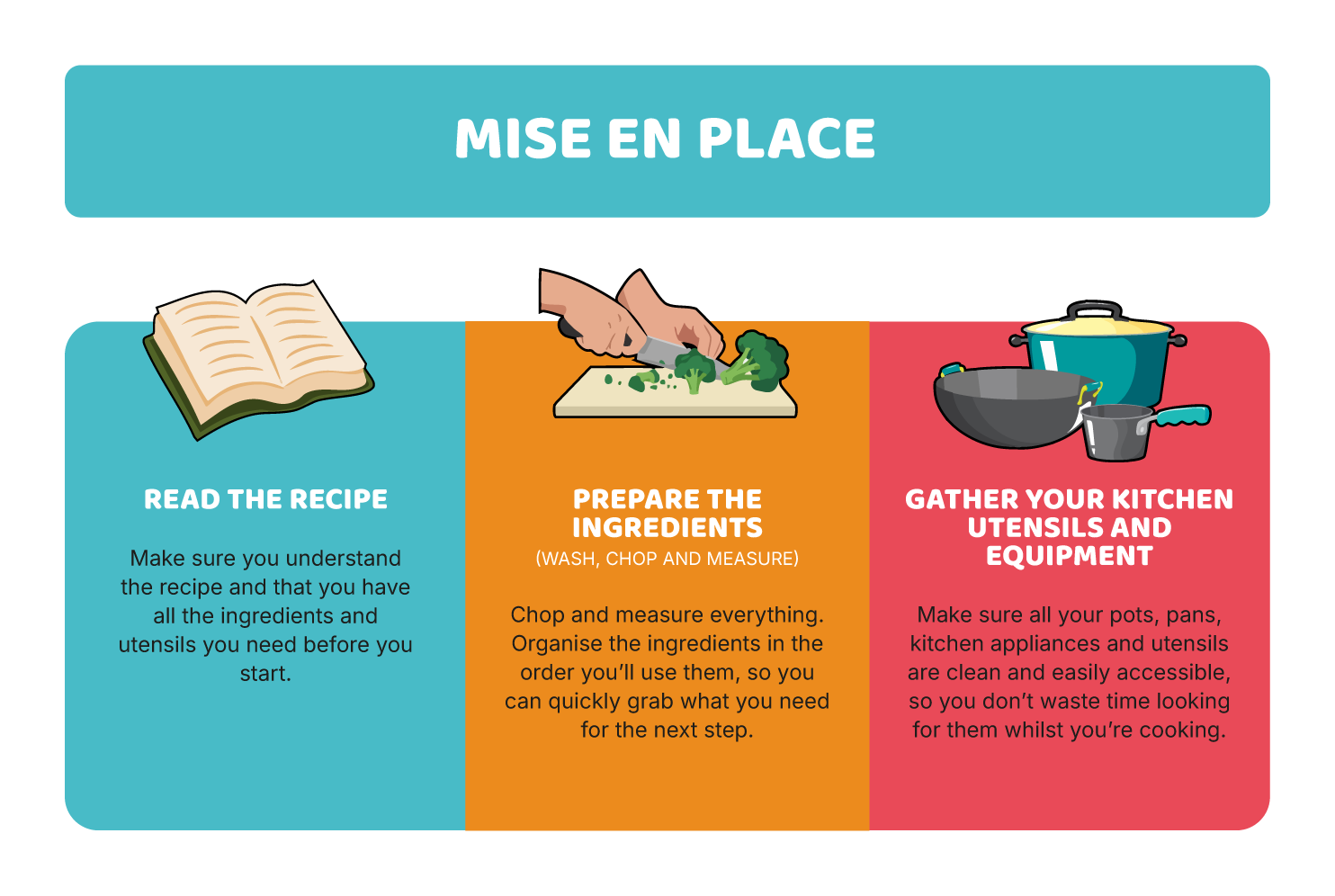
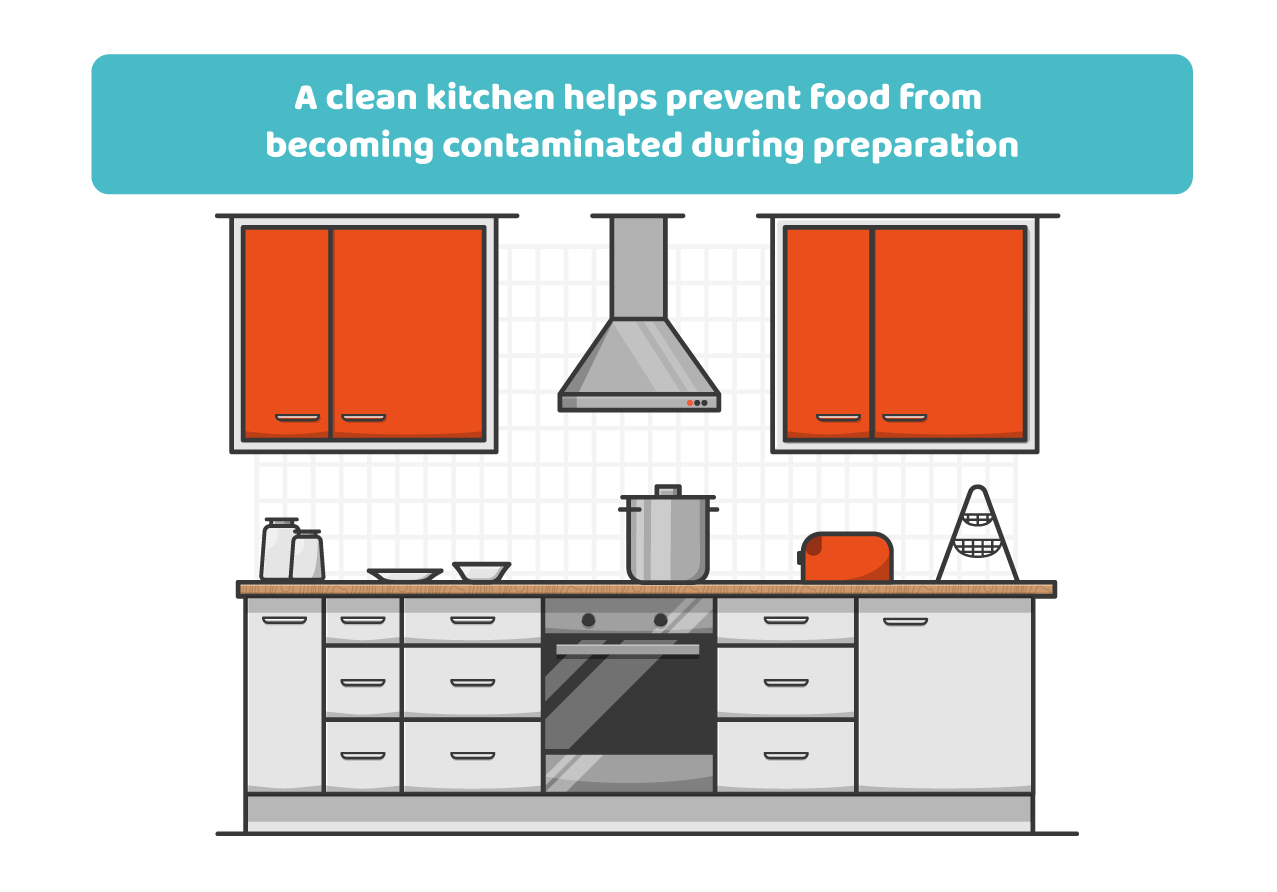
Organising your space properly before you start cooking makes the whole process easier and reduces the risk of accidents. The kitchen can be divided into three zones: preparation, cooking and cleaning.
Before you switch on the hob, make sure everything is in its place — just as a scientist sets up their laboratory before an experiment.
Essential steps:
- clean and disinfect worktops
- check that the utensils are clean and in good condition
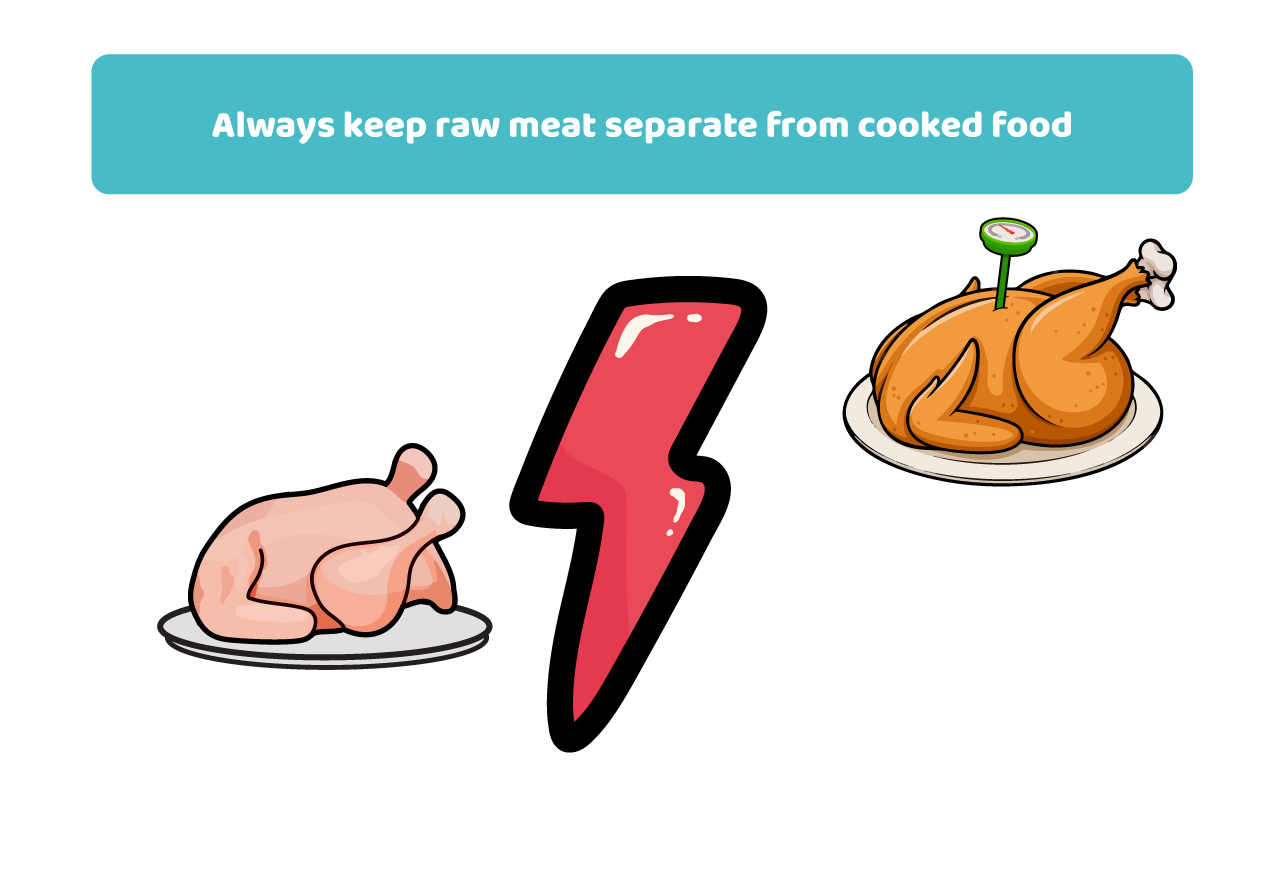
- keep raw and cooked food separate
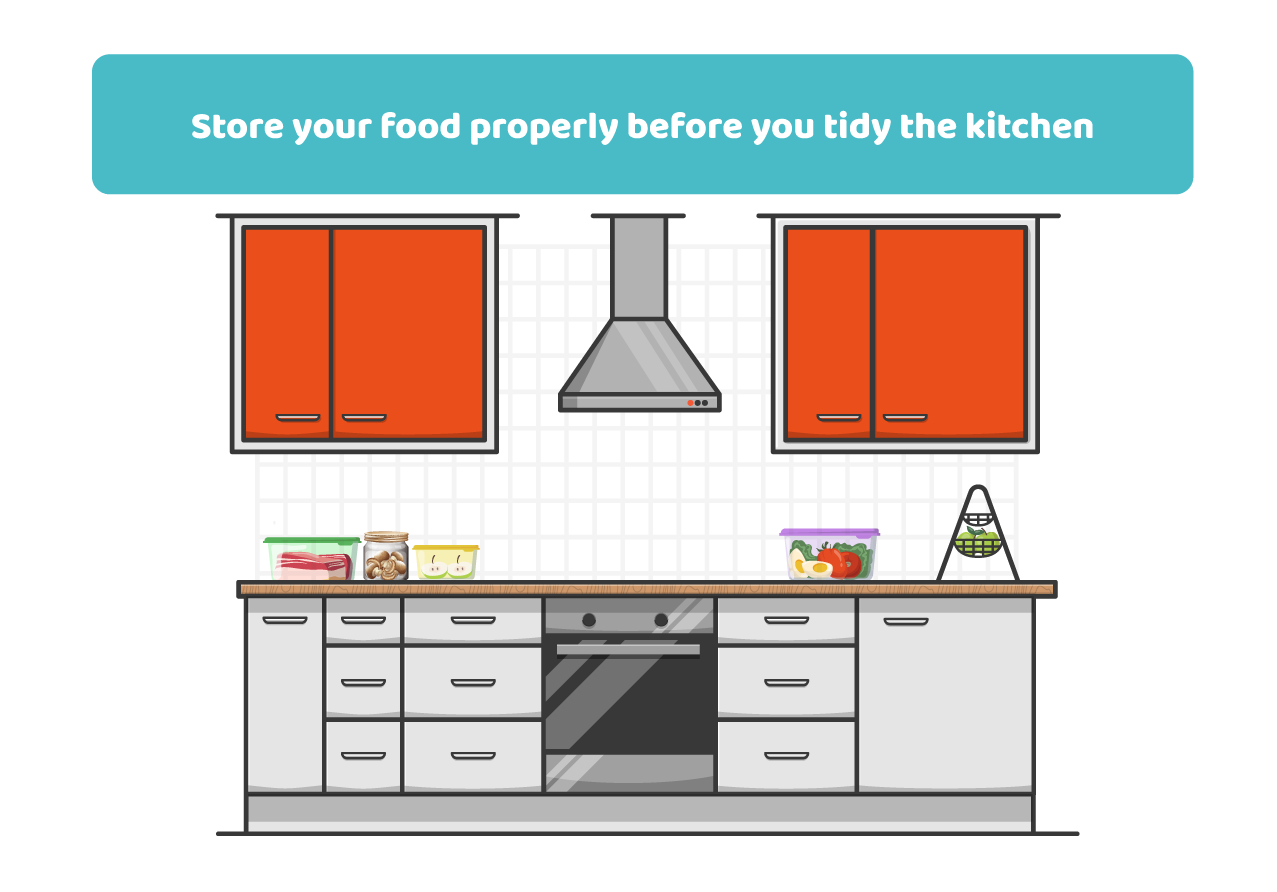
- prevent the accumulation of objects
- wash, chop, measure and prepare ingredients
Reading the recipe before you start and making sure you have all the ingredients will help you avoid interruptions and mistakes.
Preparing meals
Start mastering the tools of the kitchen
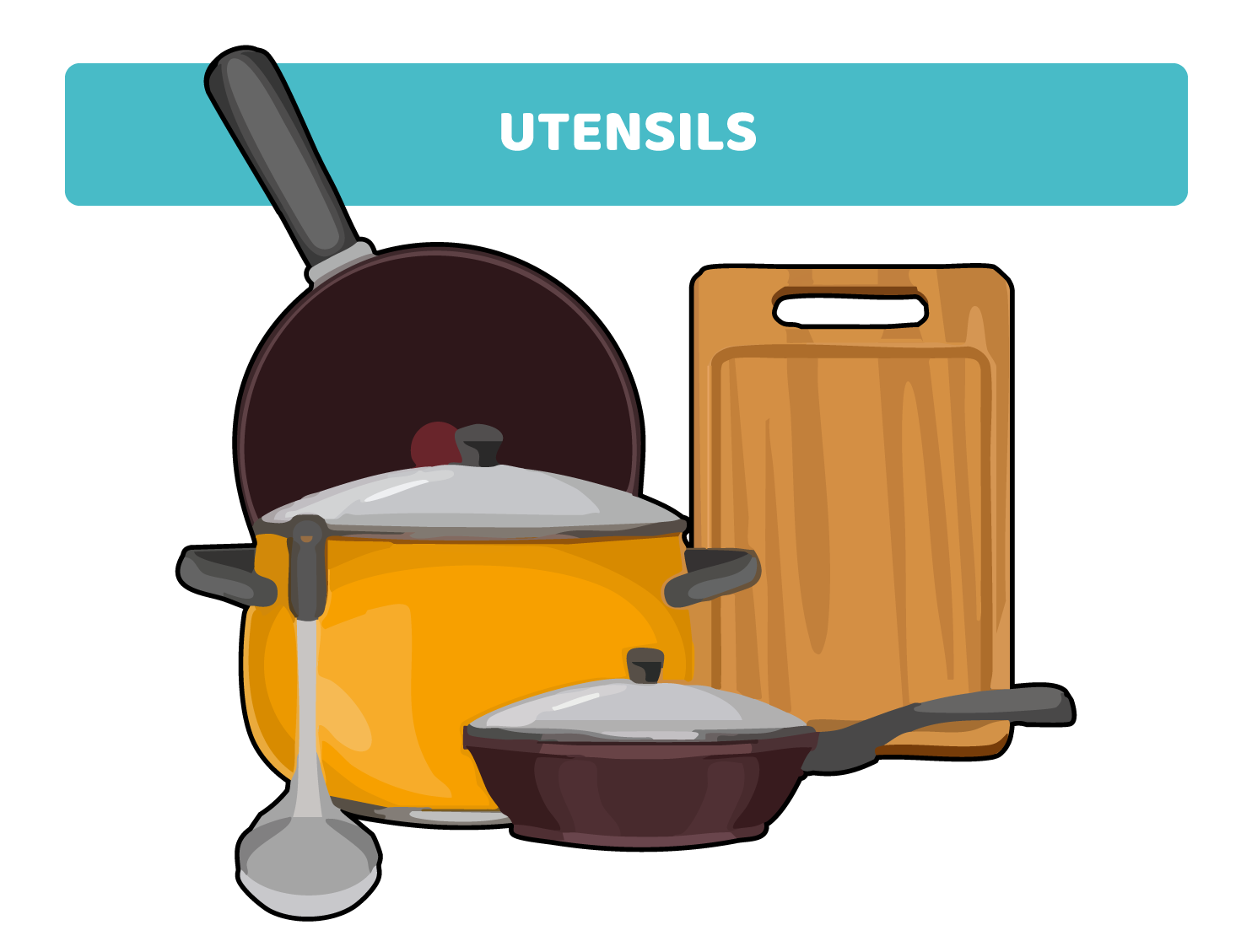
Having the right utensils to hand makes cooking quicker and safer.
Small kitchen equipment includes: colour-coded chopping boards, a grater, a colander, measuring spoons and jugs, a mortar and pestle, kitchen scissors, baking tins, spatulas, tongs, wooden spoons, a hand blender, amongst others.
The colour-coding of the boards helps to prevent cross-contamination:
- red: raw meat
- blue: raw fish
- brown: unwashed vegetables
- green: washed vegetables and fruit
- yellow: cooked food
- white: bakery and dairy products
- purple: gluten-free foods
Large appliances include a fridge, hob, oven, microwave, grill, food processor, blender or toaster.
Before using any new appliance, read the instructions and check that it is safe to use.
Cleaning removes visible dirt. Sanitising eliminates invisible microorganisms.
You should wash utensils and worktops with hot water and washing-up liquid, rinse them, apply a suitable disinfectant and leave it to take effect. Whenever possible, allow them to air-dry or use clean tea towels, avoiding damp cloths which harbour bacteria.
FOODWISELab Tip: tidy up as you cook to keep your kitchen safe and tidy.
Avoiding unwanted visitors
Insects and rodents are one of the main causes of contamination.
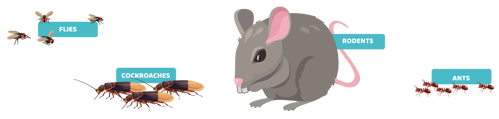
Pests are attracted to places that provide them with food, water and shelter.
To prevent them:
empty the bin regularly / store food scraps away / avoid leaving crumbs on worktops / fit insect screens to windows and doors
A clean space is a safer space.
Hygiene, organisation and sustainability

Looking after hygiene also means looking after the environment. By planning and organising your space properly:
- you avoid waste
- you reduce unnecessary water and energy consumption
- you can preserve food better
In this way, you are practising sustainable eating, one of the cornerstones of the Mediterranean Diet and of FOODWISELab.
Summary: the food safety cycle
Clean hands → Clean environment → Safe food → A healthy body
When you take care of what you can’t see – micro-organisms, temperatures, tidiness and cleanliness – you’re protecting your health and turning your kitchen into a real laboratory of wellbeing and sustainability.
FOODWISElab challenge
 Recognise the importance of hygiene and organisation before cooking, to ensure food safety, prevent contamination and reduce waste.
Preparation starts with hygiene and organisation