
NUTS AND SEEDS
What are
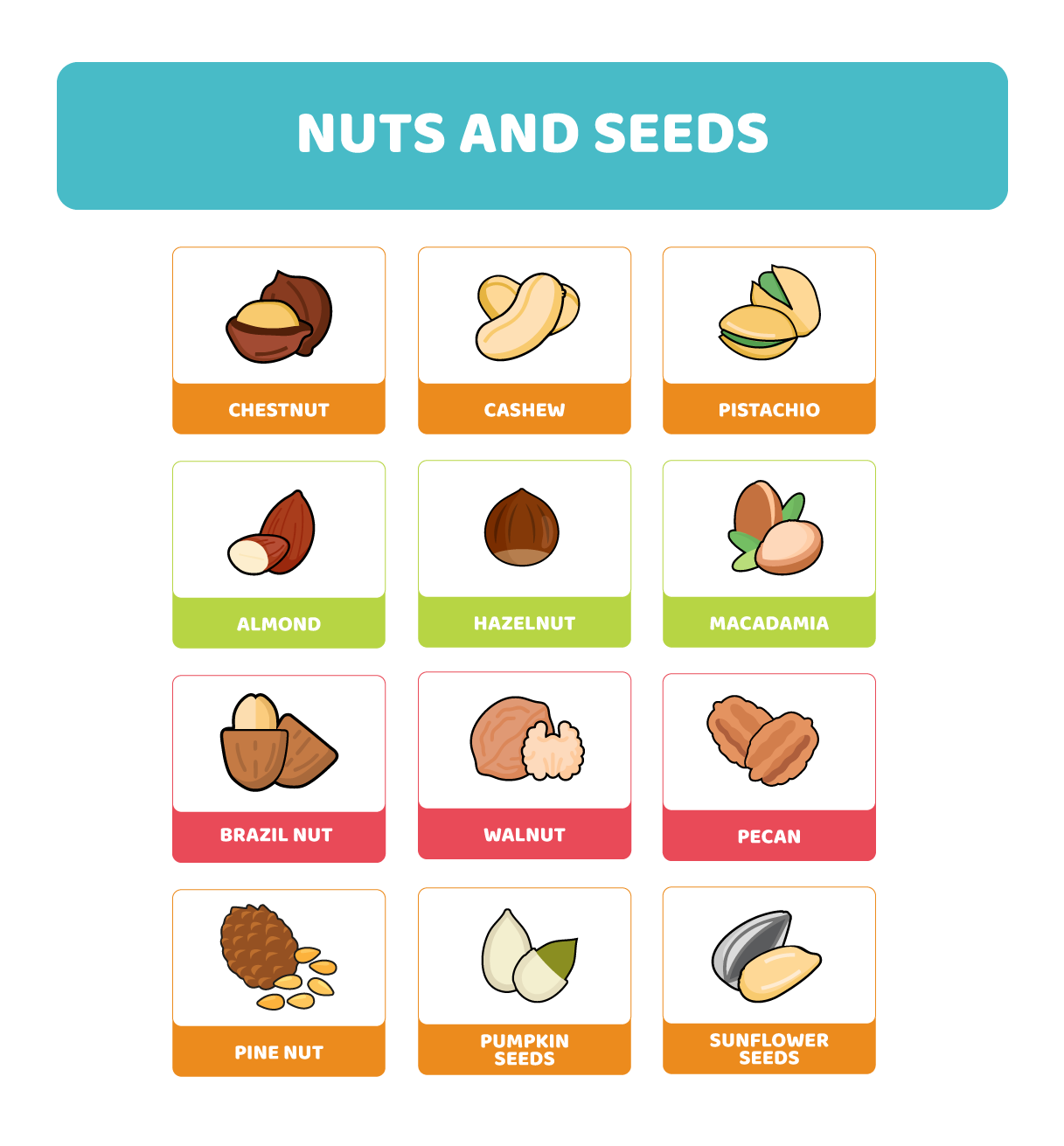
Nuts (almonds, walnuts, hazelnuts, pistachios, peanuts*) and seeds (sesame, linseed, sunflower, pumpkin, chia) are nutrient-dense foods. They provide plant-based protein, unsaturated fats, fibre and various minerals and vitamins.
*Although peanuts are botanically legumes, they are included in this group because of their similar nutritional profile.
- Nuts: edible parts of plants (mainly trees), rich in unsaturated fats, protein and fibre. They differ in their micronutrient content: for example, almonds tend to be rich in vitamin E and calcium; walnuts are notable for their omega-3 fatty acid ALA.
- Seeds: plant embryos (e.g. pumpkin, sunflower, sesame, linseed, chia), which are also rich in healthy fats, protein, fibre and minerals (magnesium, iron, zinc). Many are good plant-based sources of alpha-linolenic acid
WHY INCLUDE
Regular consumption of nuts and seeds is associated with an improved blood lipid profile, a lower risk of cardiovascular disease and greater satiety. Although they are energy-dense, they are not associated with weight gain when consumed in moderation. Rich in magnesium, iron, potassium and vitamin E, they help to round off adolescents’ diets. Walnuts, linseed and chia seeds provide plant-based omega-3 fatty acids (ALA).
HOW TO PLAN
- Breakfast: plain yoghurt with fruit, a tablespoon of seeds (ground linseed or chia) and another of chopped nuts; or multigrain bread with 100% peanut butter and apple slices.
- Snack: A handful of unsalted nuts with a piece of fruit; or hummus with sesame seeds on a sandwich with vegetables.
- Lunch/dinner: salads with chickpeas and pumpkin seeds; wholemeal pasta with walnuts and spinach; brown rice with flaked almonds and vegetables.
- Cooking: lightly toast in a dry frying pan to bring out the flavour; grind to sprinkle over soups and vegetable dishes.
Reference amounts (12–14 years)
1 portion ≈ 1 handful (25–30 g) of nuts or seeds, with no added salt or sugar.
Include small portions almost every day, adjusting the amount according to your physical activity and appetite.
Safety and conservation
- He prefers plain versions, without salt or sugar.
- Avoid sweet or chocolate-flavoured toppings.
- Store in tightly sealed bottles, away from light and heat.
- Throw them away if they smell rancid.
- Allergy warning: always check the labels, especially for the warning ‘may contain nuts’

Nuts and linseeds are good sources of plant-based omega-3 (ALA).
Some of the fat in nuts is not absorbed, which helps with weight management.
Nuts and seeds are good for the heart and for sustainability: more plant-based foods, less environmental impact.
Lightly toasting brings out the flavour without significantly altering the nutritional value.
FOODWISELAB CHALLENGE

To promote the regular inclusion of seeds and oilseeds in the diet, in a planned, balanced manner that is in line with the Mediterranean diet.